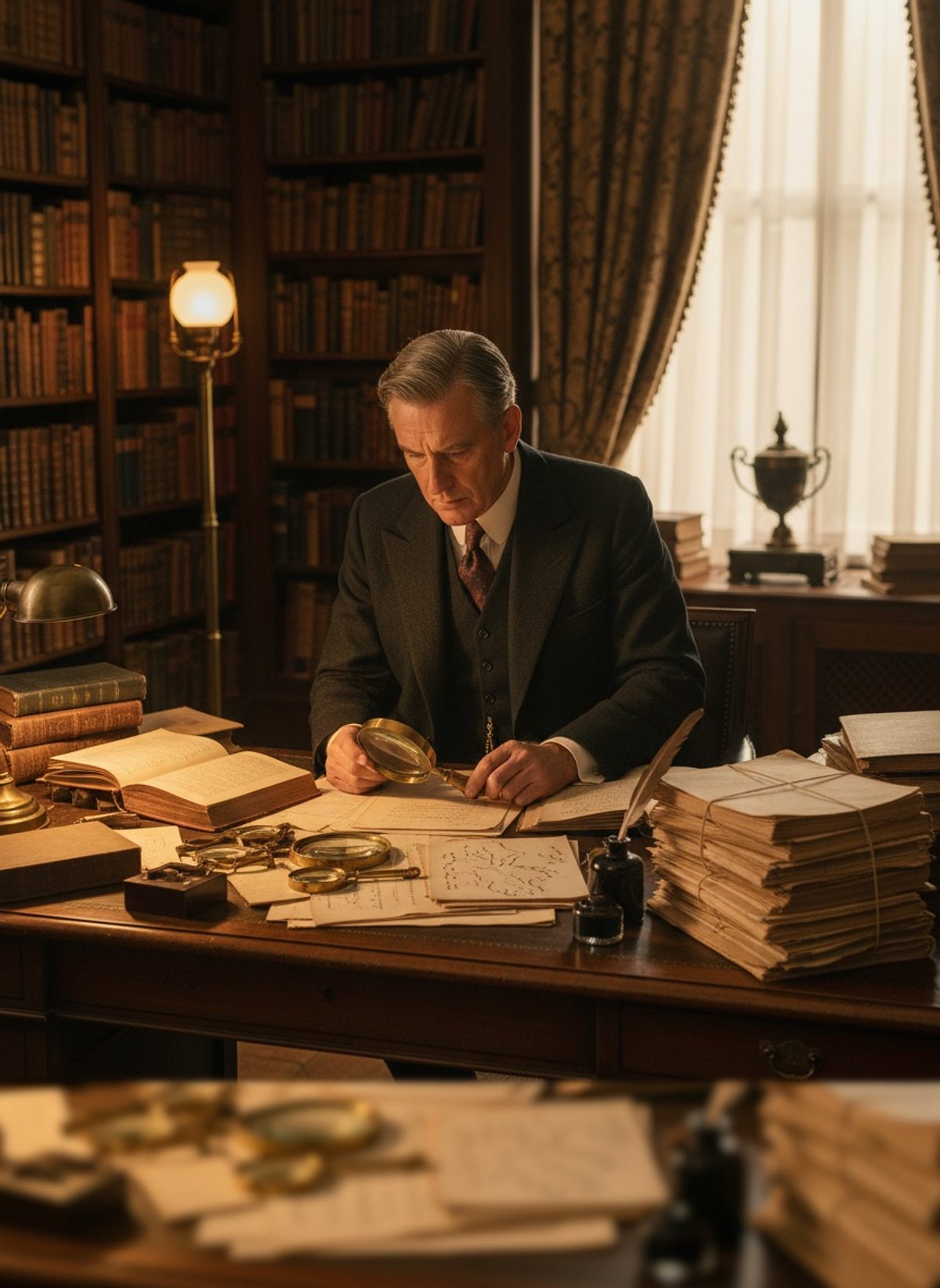
The waxy pages rustled softly against each other as the young librarian leaned closer, studying the intricate webbing of wormholes with an intensity that belied their apparent insignificance. The British Museum library breathed around him, a temple of countless histories held in delicate balance. As sunlight trickled through the high windows, he traced the familiar blemishes connecting book to book, scarcely believing where they led.
The Illustrious Collector
For decades, Thomas James Wise had been the doyen of British bibliophiles. To erudite circles across Britain and beyond, he was nearly a deity, a scholar whose collection boasted volumes that others dared not even dream of discovering. Lauded by venerable institutions such as Oxford and Cambridge, Wise's gatherings of rare first editions were considered peerless both in number and significance.
His journey to literary superstardom began in apparent earnestness. In Victorian England, a time enamored with antiquarianism and vocal in its adoration for the printed word, Wise innovated by focusing not just on authors' magnum opuses but on their incunabula, ephemeral first utterings that lacked the polish yet held the spirit of creation. His success lay in hunting down these rare beasts — or so it seemed.
The great British Museum itself housed many of these treasures, offerings Wise crowed about, his generosity gilded with the suggestion of modesty. Here, giants of the printed age thronged the hallways, each book whispering the stories of civilization, reverberating with histories that Wise professed to preserve. His glamor lay not simply in the acquisition but in weaving these volumes into a tale of literary reverence, solidifying his mythos as a protector of the word.
Read next: When English Common Law Became the Bedrock of India's Courts
Suspicions of a Hoax
Yet, beneath this veneer of prestige, murmurs of suspicion had begun to ferment. Unseen to the public eye, two librarians delved into the heart of Wise’s revered tomes, driven by persistent inconsistencies they viewed with a scholar's skepticism. These tales are woven tightly, but something was amiss. The paper stock, typefaces, and most damningly, the watermarks—though subtle, these aspects rang false, like whispered contradictions in an otherwise booming declaration.
The meticulous examination of Wise's collections yielded discoveries previously unfathomable. Tools of their trade, dating methods and keen eyes, transformed these seemingly innocuous details into damning evidence. Signed emblems of authenticity grew eerily uniform, watermarks across alleged centuries mirrored each other disturbingly, leaving them no choice but to question these volumes' lineage.
A Catalogue of Forgeries
In 1934, the crescendo of such quiet investigation breached the walls of hushed circles, exploding into public consciousness with the publication of a damning report. The librarians' findings were exhaustive and precise, a veritable indictment of Wise's catalog. Thirteen pages meticulously penned shattered Wise’s carefully crafted empire, each word revealing the systematic forgery that lay beneath his touted 'rare first editions.'
These findings paved the way for the unauthorized biographies his manuscripts cloaked. The great expose revealed Wise not as a singular genius of the tender art of collection but as a master forger, embroiled in a grandiloquent lie sustained over decades. The library, both divine sanctuary and deceitful theater, served as the stage where Wise's mythos teetered on the brink of collapse, each wormhole now a visible testament to his duplicity.
The Methodical Deception
But how did Wise manage such an elaborate deception? His was a ruse both audacious and shrewdly executed. He specialized in literary pamphlets, ephemeral works that by their nature, lacked the rigorous documentation of more significant volumes. By systematically creating forgeries spanning entirely fictional editions or enhancing existing volumes with falsified signatures and introductions, Wise manipulated the mythos surrounding an author’s oeuvre to suit his purposes.
The many wormholes that betrayed him served their purpose well; each one in its individuality mapped the provenance of the paper. Turn by turn, hole by hole, his deception unraveled, each minor inconsistency coalescing into a robust testament of his culpability.
Though his reputation crumbled, one can’t help but marvel at Wise's audacity, the ingenuity it required to sustain such a legacy for years. Yet, beneath this ingenuity lay a tragedy of misguided ambition and loss. Such is the timeless tale of humanity, where brilliance is sometimes shadowed by the specter of deceit.
The Legend Left Untold
Today, the narrative of Thomas Wise invites a reflection on the nature of authenticity, legacy, and the human thirst for acclaim. In a world where the lines between genuine brilliance and forgery can blur, Wise's tale serves as a poignant reminder of the vigilance required to safeguard cultural treasures. His story, now unearthed, is a cautionary tale about the fragility of truth cloaked beneath the shimmering allure of perceived greatness.
Beyond the layers of intrigue lies an enduring question: In the quiet corners of our most revered institutions, what other stories whisper from their bindings, waiting to be discovered? As we tread the storied halls of history, let us remember—from beneath the dust of time, the truth may lurk beneath even the most gilded of covers.