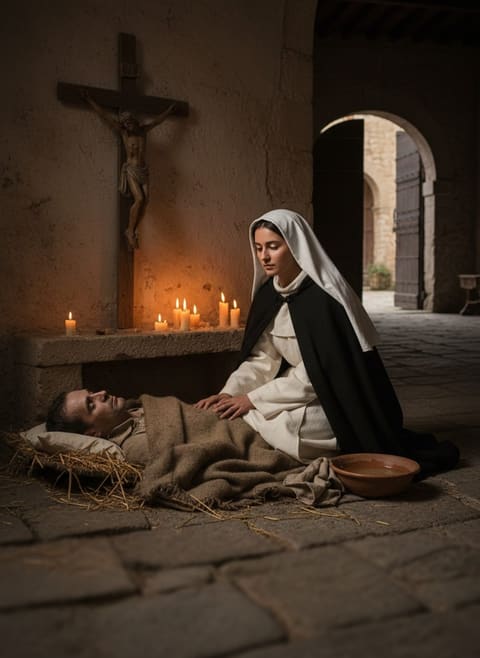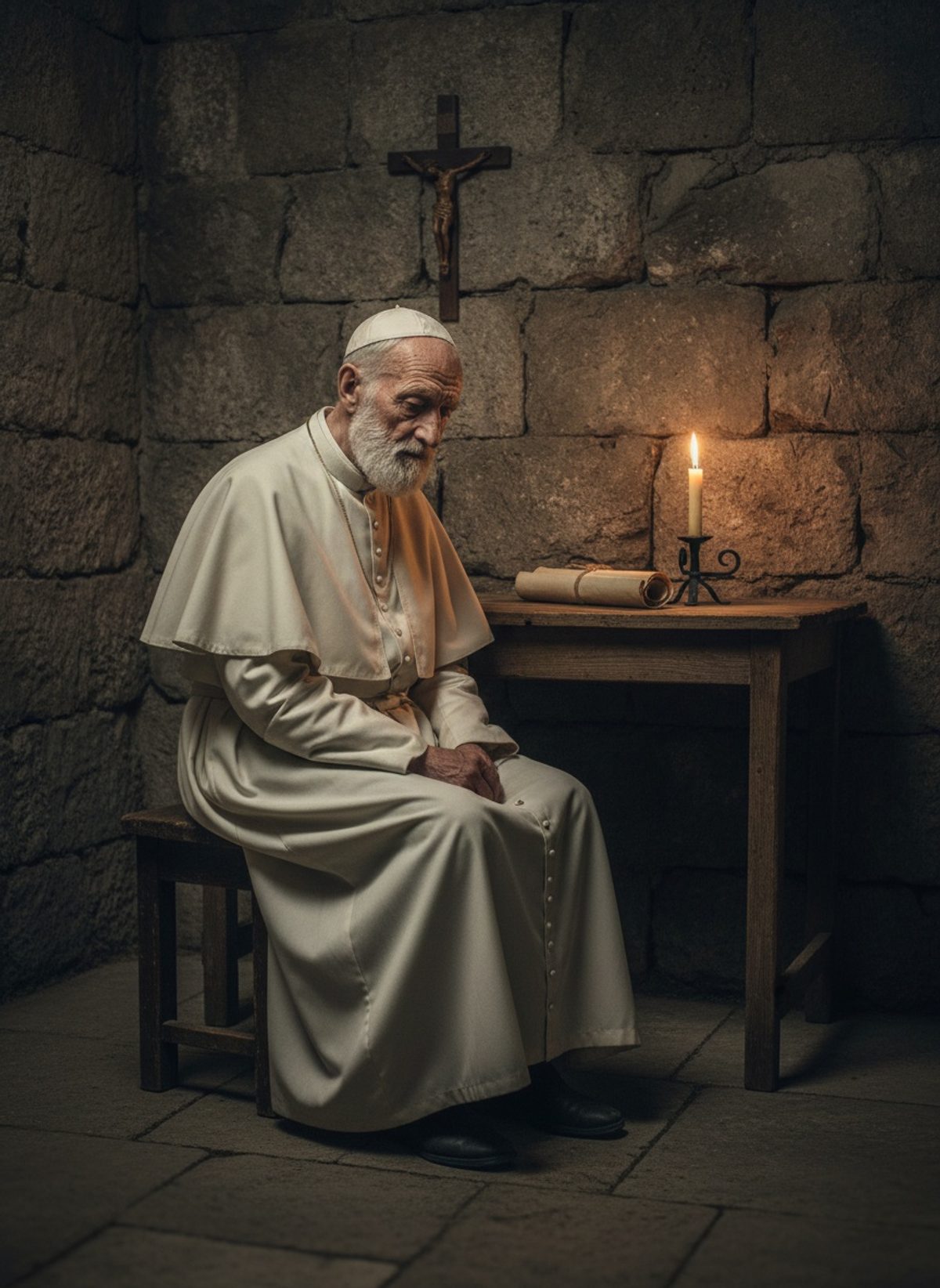
He was 85 years old. It wasn’t power he desired, but the quiet of a stone cell, seclusion over a throne, and prayers over politics.
The Reluctant Pope
In the turbulent winds of 1294 CE, amidst the deep political turmoil that plagued the Holy See, Pietro del Morrone was thrust unwittingly into the limelight. A revered monk and hermit whose life had been dedicated to silence, his election as Pope Celestine V astonished not only Christendom but himself. He lived a life led far away from the decadence and corruption often associated with the papacy, in the remote, mountainous Abruzzo region of Italy. Here, underneath the simple arches of his hermitage, his days were filled with prayer and reflection. The idea that someone of such humble and introspective nature would be chosen to lead the Catholic Church seemed almost absurd—and yet, in July of that year, the College of Cardinals elected him as the 192nd Pope.
The papal conclave had been deadlocked for over two years following the death of Pope Nicholas IV. Factionalism and political strife among the cardinals had stalled the election of a new pope, leaving Christendom without spiritual leadership. This old man, who had spent decades eschewing civilization for solitude, was their unlikely choice. His simplistic, ascetic charisma was seen as a balm to the Church's ailing reputation. Surely, such a pious man would steer the ship tightly back on course, they thought.
The Struggles of a Saintly Leader
Yet, the monumental pressures of the world quickly began grinding against Pietro’s sense of spiritual duty. Within the Roman Curia, the air was heavy with intrigue and manipulation. Celestine V found himself ill-prepared for the responsibilities and intricacies of Church politics. His kindness became a weakness; his inexperience, a liability. He was unable to wield the enormous power and navigate the treacherous waters shrouding the papal office.
Read next: He Walked Into the Emperor's Hall. He Named His Price.
In the grand Papal Palace, Celestine V felt more prisoner than pontiff. As the weeks turned to months, the old monk's health and spirit deteriorated. He missed the quiet conversations he used to hold with the mountains, the calming echo of winds against the rock walls of his hermitage. He longed for the divine intimacy of solitude rather than the divine right of kings. Ironically, it was Celestine’s own devotion and simple faith that convinced the cardinals of his unsuitability. The political beasts within the Church walls sought a more adept hand to guide their future.
The Papal Resignation
Amidst this harrowing isolation within the papal splendor, Celestine V came to an unprecedented conclusion. Just five months into his papacy, he made a decision that would ripple through history—he would be the first pope to resign. The decision was radical, breaking with centuries of tradition that held the papal office as a divine appointment that could not simply be renounced. But Celestine’s heart yearned for the sanctity he had left behind, not the gilded cage his life had become.
The man who aided this deeply introspective move was none other than Cardinal Benedetto Caetani. An astute political figure, Caetani drafted the decree of resignation for Celestine. He supported the Pope’s right to leave the office, albeit with motives steeped in political machinations. With Celestine’s abdication looming, Caetani calculated his chances and ensured his own path to the chair of Saint Peter. On December 13, 1294, amidst cold breaths and whispers cascading through the corridors of power, Celestine V escaped the papal web.
From Resignation to Refuge
Celestine’s departure from the papacy was swift, but he would not return to his tranquil mountains. Concerned for the unwanted attention this might bring, he sought refuge in safer places. Unfortunately, Caetani’s ambitious pursuit of the papacy ensured that Celestine’s life post-resignation was hardly peaceful. Having been elected as Pope Boniface VIII shortly after, Caetani feared that Celestine’s existence outside papal confines posed a potential threat to his own legitimacy.
Read next: He Stood Before the Emperor. He Returned the Gold.
Under the guise of protective custody, Celestine was detained. The hermit pope was housed at the Castle of Fumone, where he lived out his remaining days in a stone cell, a far cry from the serene abode he longed for. Yet, even amid the bars of his captivity, Celestine remained a figure of awe and respect due to his unparalleled humility and spiritual dedication.
A Legacy of Humble Defiance
The saga of Celestine V is one that speaks to the soul of leadership, humility, and the struggle between personal convictions and public demands. In resigning, he demonstrated profound defiance against the ingrained norms that dictated ecclesiastical life. This narrative does more than recount the tale of a hermit turned pope and his brief reign; it highlights the fundamentally human struggle of holding onto one's principles amidst a tide of expectation and political pressure.
Today, the story of Celestine V serves as a reflective lens into the history of leadership, power, and personal sacrifice. In a world that still often glorifies authority and ambition, his life remains a testament to the strength found in humility and spiritual sincerity. As history unfolded from the quiet cells of monasteries to the turbulent halls of papal courts, the legacy of this humble hermit continues to offer inspiration to choose integrity over influence, solitude over sovereignty.