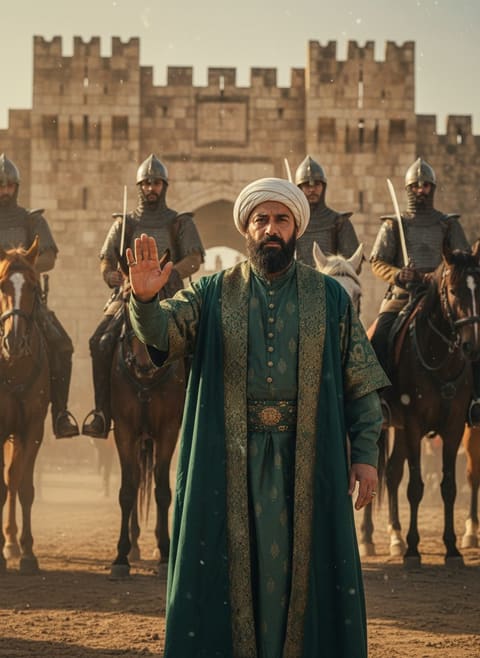
1262. Dust hung in the air over the vast Mongol encampment, a testament to the hordes that had devastated cities across Persia.
In the time of Genghis Khan's successors, the Mongol Empire appeared unstoppable, an ocean wave crashing over the world from China to Eastern Europe. This unyielding force known for its brutal efficiency and ferocity had, in recent years, turned its relentless gaze towards the Islamic world, leaving a trail of despair and destruction in its wake. Baghdadi streets, once thrumming with scholars' debates and the clatter of merchants' trade, now lay in ruins, echoing with the cries of the lost and the anguished. The conquerors left behind flames and ashes, and with them, chains for the multitudes captured in their path. Within this seemingly unstoppable tide of conquest stood Hulagu Khan, grandson of the Great Khan himself, a figure of power and fear, a scourge to many, especially those who had embraced Islam.
The Mongol incursions were many things; expeditions of both terror and awe, they signaled not just a shifting of empires but the redefinition of borders and cultures themselves. Among the captured, huddled helplessly amidst disorder and despair, were thousands of Muslims, a once-thriving community reduced to mere spoils of war, their fates seemingly sealed within the Mongol's sweeping hand.
Yet, into this gloom walked a man armed with neither sword nor shield but with intellect, conviction, and determination. Nasir al-Din al-Tusi, a scholar of great renown, revered for his contributions to mathematics, astronomy, and philosophy, seemed an unlikely champion amidst the violence. Often confined to his scholarly pursuits within hushed libraries and observatories, al-Tusi appeared fragile against the robust and battle-hardened Mongol forces. Yet. he possessed a fortitude unusual in times of such bleakness.
Read next: He Stood Before the Sultan. He Freed the Captives.
The tale of this lone scholar venturing into the conqueror's camp is one shrouded with intrigue and a testament to the power of persuasion in the face of what seemed like absolute power. Al-Tusi knew that to venture into this domain was perilous; after all, Hulagu Khan was not renowned for kindness or leniency. Yet the scholar walked into the encampment with the solemn resolve of a man entrusted with the morale and destiny of thousands.
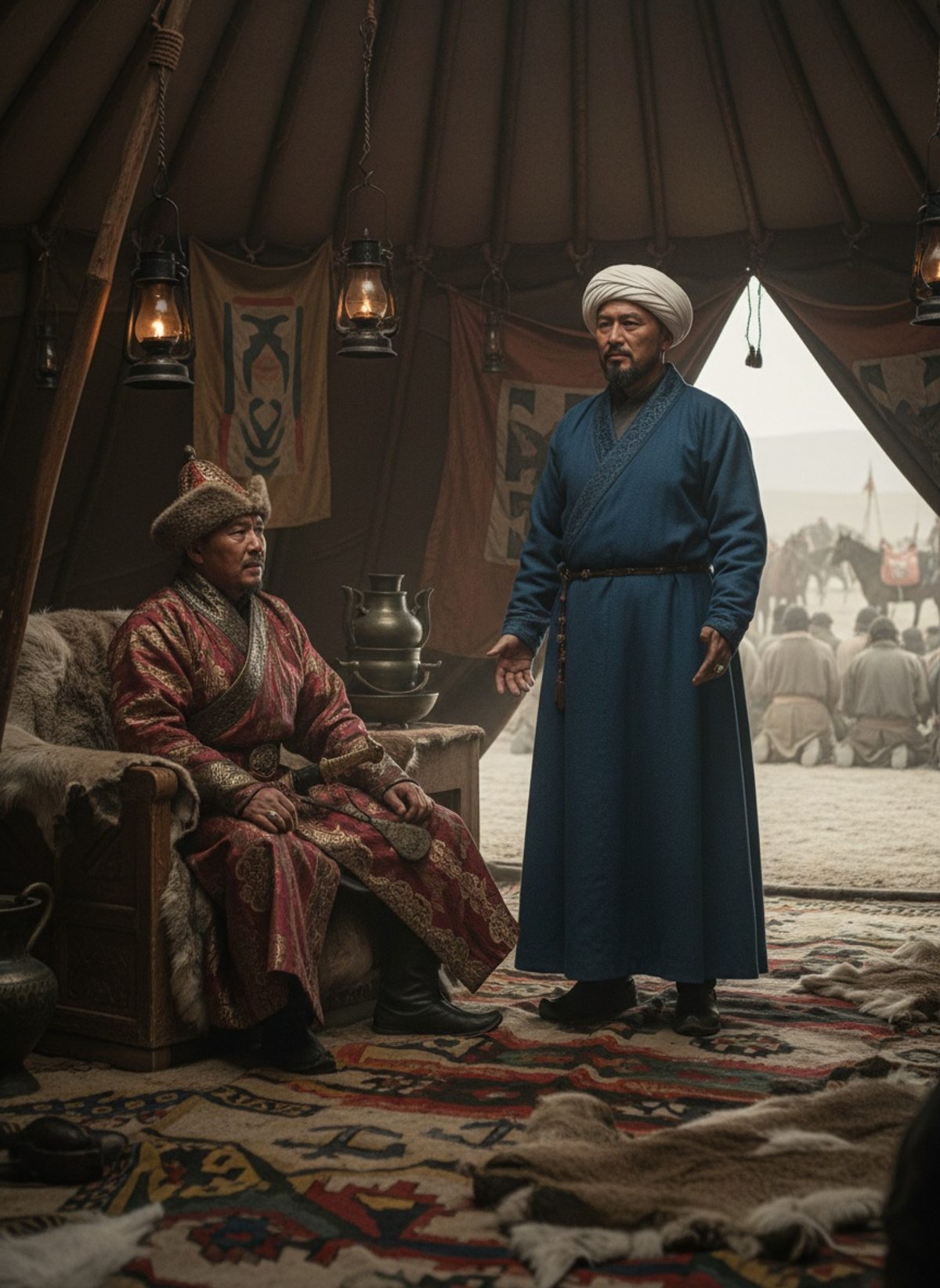
In the Khan's tent, amidst the opulence and martial order, al-Tusi faced Hulagu, his mind razor-sharp, his heart fortified by purpose. The meeting was a convergence of worlds; Hulagu's nomadic warrior spirit contrasted starkly with al-Tusi's intellectual vigor. Despite the odds, al-Tusi engaged with Hulagu, weaving a tapestry of words that spoke of mutual benefit and understanding. He asserted the value of sparing not just lives but intellects that could contribute significantly to the empire's future. The words of al-Tusi did not merely seek mercy; they envisioned a collaborative strength that history has rarely witnessed between conqueror and conquered.
In an unexpected twist, Hulagu Khan, seemingly impervious to diplomacy, listened. Perhaps it was the spark of curiosity or the realization of commonality that bridged their disparate worlds. The Mongol leader, responsible for countless cities' obliterations and civilizations' collapses, stood before this scholar and reconsidered brutality as the sole path to power.
The result of this encounter was nothing short of miraculous. Hulagu Khan commanded the release of ten thousand prisoners into al-Tusi's care, a gesture so magnanimous it still resonates through the annals of history. For those freed, it was a resurrection, an unexpected return from the brink, a testimony to the power of a single voice speaking against a tide of fury.
Read next: She Walked Into the Khan's Court. She Spoke for the Dead.
Nasir al-Din al-Tusi's success lay not just in his wisdom but in his ability to align the essence of faith and knowledge with the might of an empire unwilling to yield to anything but destruction. His efforts transcended mere negotiation; they created an unexpected fusion of Mongol ambitions and Islamic enlightenment, proving that human intellect and compassion held the capacity to alter even the most formidable destinies.
This episode from the medieval canvas, where the pen stood audaciously before the sword and prevailed, serves as more than a historical footnote. It challenges perceptions about power dynamics, illustrating how articulate dialogue can sometimes achieve what armies cannot. Through al-Tusi, the narrative spun beyond mere survival; it was about fostering a future, a legacy where libraries would eventually rise from ashes and where peace could be forged from the remnants of conflict.
As we look back across time, this tale of courage, wit, and salvation reminds us why it remains relevant today. It speaks to the enduring human spirit and the belief that even in the darkest hours, a single voice, guided by reason and determination, can carve out hope from the seemingly inevitable, changing the course of history for generations to come.