He was confined to write history. He chose chronicles over confinement.
The Gathering Storm
In 99 BCE, the Han Dynasty was seething under the constant threat of the Xiongnu, a formidable confederation of nomadic tribes that loomed large on the northern frontiers. As tensions reached a boiling point, the stage was set for a confrontation that would test the mettle of both the Chinese military and its leaders. Among those sent to repel the Xiongnu was a general named Li Ling, a man respected for his courage and tactical expertise. But what began as a calculated military offensive swiftly devolved into a desperate struggle for survival.
Li Ling had set out with a contingent of five thousand men—an army not insignificant in number, but dwarfed by the tens of thousands commanded by the warriors of the Xiongnu. Confident and resolute, Li Ling believed skill and strategy would compensate for sheer numbers. Yet as the Xiongnu forces enveloped them, one by one, strategic options started to dwindle. The days of fierce combat and dwindling supplies turned the situation dire, creating a tense air of desperation among Li Ling's men.
Li Ling, accompanied by his troops, fought valiantly for days on end, driven by an unwavering sense of duty to the Han Emperor and the promise of eternal glory. Despite their valiant resistance, circumstances forced Li Ling’s hand. With no escape in sight and the realization that further resistance could mean certain death for thousands, surrender became the only viable option. It was a decision born out of pragmatism, sparing his men from annihilation, albeit at immense personal cost. Yet, what those left in Han wouldn’t understand was that Li Ling’s choice was not one of cowardice, but of survival.
Read next: He Played the Fool in a POW Camp. He Remembered Everything.
The Court's Wrath
Back in the imperial court of the Han dynasty, the news of surrender reached the Emperor's ears to a cacophony of outrage and demands for blood. In a court where military honor was sacred, the humiliation of surrender to the Xiongnu was unthinkable. Whispers called Li Ling a traitor, his surrender seen as an insult to the Empire, a stain on the prestige of its military might.
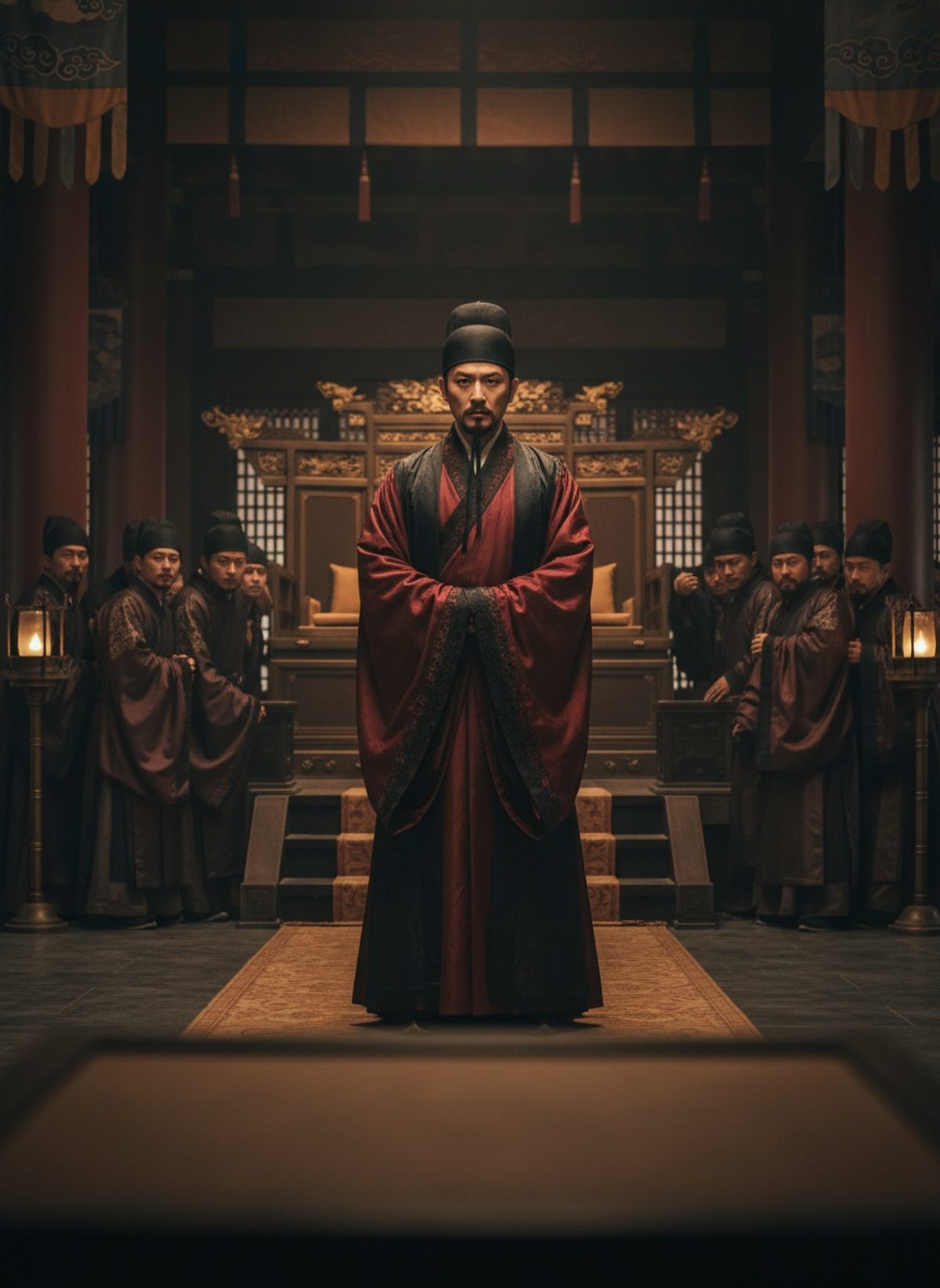
The court’s fury was cold and palpable. The Emperor, under immense pressure, saw only one solution fit to cleanse this perceived dishonor—punishment by death. Yet amidst the swirling storm of accusations and declarations of betrayal, there stood one man who dared to speak out, a historian by the name of Sima Qian. Known for his intellect and dedication to truth, Sima Qian rose to defend Li Ling at great personal risk. His defense was not a mere act of defiance but a compelling plea for understanding and justice in a court more inclined toward retribution than truth.
Sima Qian implored the court to see past their wrath and understand the conditions under which Li Ling had capitulated. His arguments did little to sway an indignant Emperor. For his audacious defense, Sima Qian was subjected to one of the greatest shames of his life—castration, a punishment then deemed suitable for those who dishonored the Emperor. Yet despite such a horrific sentence, Sima Qian’s legacy would become something altogether unexpected, and his commitment to historical integrity remained unbroken.
Read next: Churchill Said No Men. Then He Changed Everything.
Legacy Written in Exile
Sima Qian's exile was both a personal dispensation and an opportunity; it was a forced retreat from the political arena, granting him the solitude necessary to complete his magnum opus, the *Records of the Grand Historian*. This work would not only elevate Sima Qian to posthumous fame but also change the face of historical documentation forever. Through his writings, Sima Qian not only honored Li Ling's complicated legacy but also provided the future with an honest and insightful record of China’s history.
The *Records of the Grand Historian* chronicled Chinese history from the mythical Yellow Emperor to Sima Qian’s contemporary Han Dynasty, a comprehensive work incomparable in scope. It was within these writings that Sima Qian conveyed the complexities of leadership and choices in warfare, illustrating a broader vision where human motivations and the nuances of honor played as much a role as battle strategies and political machinations.
Sima Qian's defense of Li Ling was one moment within a broader life dedicated to preserving truth and understanding nuances in the face of political and social forces that sought simpler narratives. From his adversity, the world inherited not only one of history’s great works but also a lesson on the importance of nuance in the broader sweep of human endeavor.
Why does this story matter in the annals of history? Because it reminds us that sometimes the truth is worth speaking even under the shadow of perilous consequences. Sima Qian stood by his principles, enduring condemnation for advocating a more profound understanding of his time’s events. As we sift through both the victories and blunders of the past, Sima Qian’s resolve teaches us the invaluable nature of integrity, enduring across centuries to inspire the historians of tomorrow. In the chronicles of human history, his words echo—a single voice emanating from a time long past, urging us to listen more deeply, even when the world prefers to speak louder.