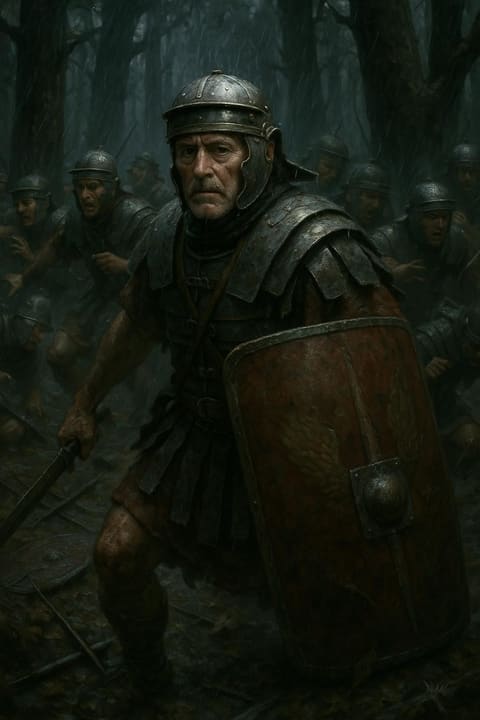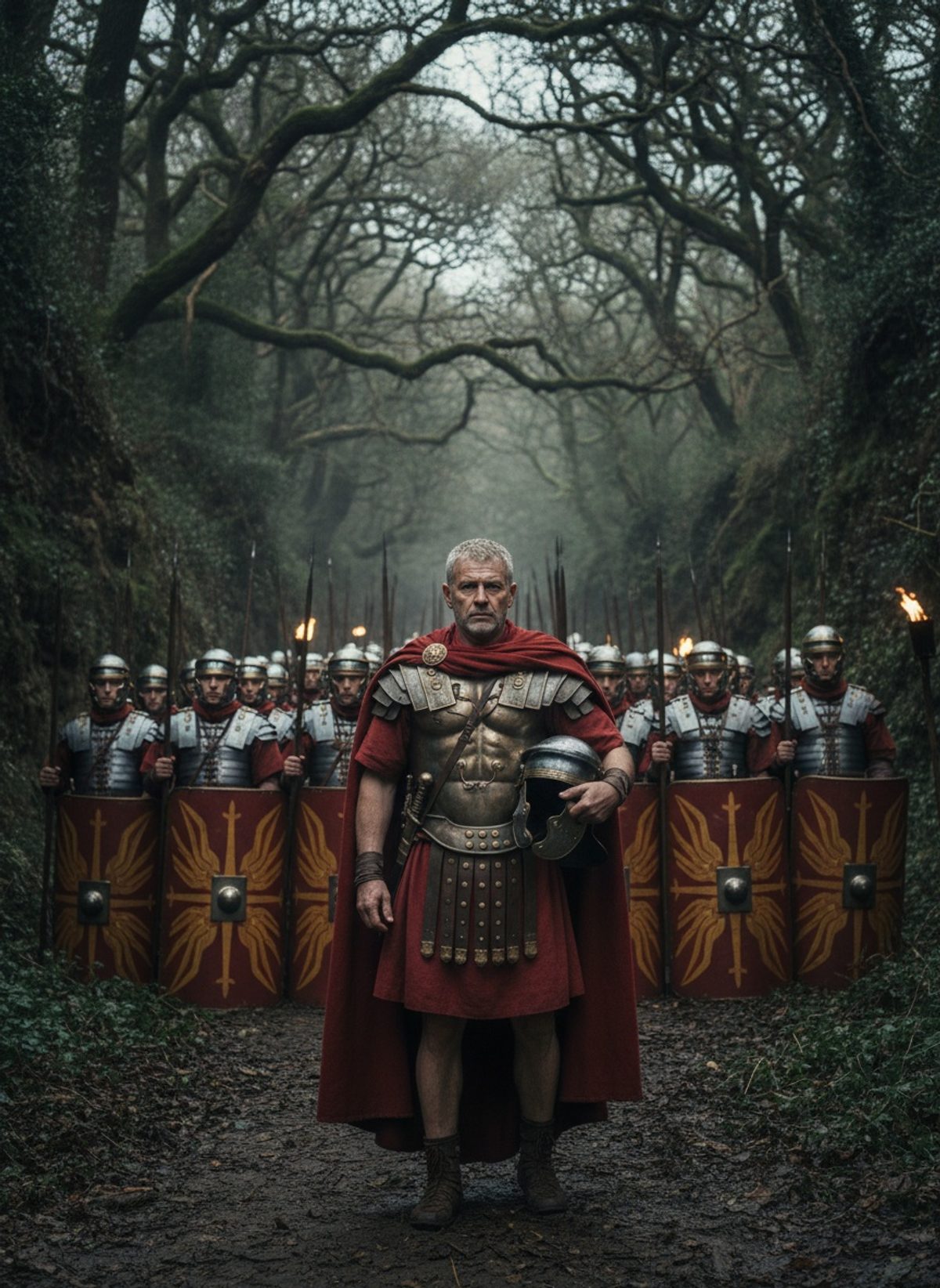
Gaius Suetonius Paulinus had a single legion. Boudicca led an army that swept like a tidal wave across Roman Britain.
Choosing the Battlefield
In the tumultuous days of 60 AD, the world of Roman Britain was ablaze. The rebellious fires were sparked by Queen Boudicca of the Iceni, who, with vengeance burning in her heart, surged forth with an army that reportedly numbered as many as eighty thousand strong. Fresh from ransacking Londinium, Verulamium, and Camulodunum, Boudicca’s forces left a trail of ruin and terror across the land. Roman authority, seemingly invincible, stood on the brink of collapse.
Gaius Suetonius Paulinus, the Roman governor, faced this crisis with formidable determination. He was far from untested; Paulinus was an experienced commander, known for his previous campaigns in far-flung corners of the empire. Yet the odds were daunting. Against him, Boudicca’s horde seemed insurmountable—each warrior a storm unto themselves, driven by fury and the desire for freedom from Roman rule.
What Paulinus lacked in numbers, he sought to counterbalance with strategy. Knowing he could not meet Boudicca’s forces in open fields, where their numbers would quickly overwhelm, he carefully selected his battlefield. Paulinus chose a narrow gorge, a place where the sprawling expanse of Boudicca’s army would become a tangled mass, their numerical advantage reduced. The gorge, flanked by thick woods, forced the rebels into a bottleneck. Roman discipline and tactics, honed over centuries, would become their greatest weapon in this natural fortress.
Read next: He Stood Before the Senate. He Spoke for His Enemy.
The Battle Beckons
As dawn broke over the battlefield, Paulinus mustered his men with speeches carved from the stone of necessity and survival. The warriors of Rome would be like a rock amidst the crashing waves of the Celtic revolt. The single legion, perhaps ten thousand men strong, was reinforced with auxiliary troops—archers and cavalry positioned to maximize the tight confines of the gorge.
Across the divide, Boudicca’s army stretched nearly to the horizon. Her warriors were a patchwork of clans, united by their shared indignation and fueled by the havoc they had already wrought. They sang songs of defiance, their weapons adorned with markings to honor their gods and fallen comrades.
The initial clash reverberated like thunder. Roman shields, interlocked and disciplined, absorbed the initial barrage of Celtic fury. Paulinus’s foresight in choosing this narrow ground now paid off. The rebels found themselves cramped, their superior numbers imprisoned by the very landscape. Arrows rained down in deadly arcs, harrying the massed ranks of Boudicca’s warriors. Cavalry, expertly maneuvered by Roman riders, struck out, retreating and charging in calculated sweeps.
It was not long before chaos took hold among the rebels. The confident advance of Boudicca’s forces faltered against the meticulously ordered defense. Shouts for retreat began to intermingle with battle cries. Soldiers tripped over their own ranks, thickening the disorder that now spread like a contagion. Where the Celtic forces were a tide, the Roman lines stood firm like an immovable cliff face.
Read next: He Stood Before the Senate. He Refused to Leave.
The Aftermath of Defiance
The day ended with a staggering defeat for Boudicca. Despite their numbers, the rebels were outmatched by the discipline and tactical acumen of Paulinus’s forces. Thousands lay dead, the tumultuous tide finally broken against the unyielding Roman defense. The battle was a testament to the intricate art of warfare employed by the Romans, who transformed a seemingly impossible scenario into a definitive victory.
The aftermath saw Boudicca retreat into obscurity, her legend immortalized both in defeat and valor. Some accounts suggest she took poison to escape capture, while others say illness claimed her. The truth, lost in the annals of history, remains as mysterious and compelling as the queen herself. Her legacy, undoubtedly, highlighted the volatile dynamics between Rome and its conquests—an empire sustained not merely by its might but also by the strategy and will to confront the unknown.
Paulinus’s precarious stand preserved Roman rule in Britain, asserting Roman dominance in the region for a century to come. The victory was a reminder that empire is sustained not only by the strength of its legions but by the sharpness of its leaders’ minds. The encounter at that narrow gorge continues to resonate through the pages of history as an extraordinary reversal—a triumph of strategy over numbers, and of one man’s nerve against all odds.