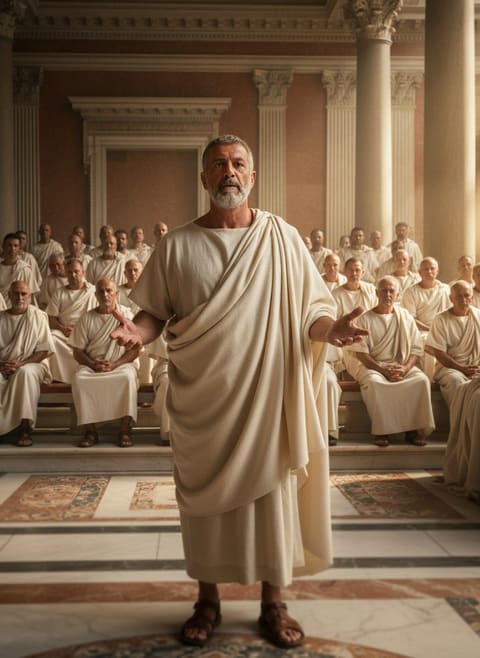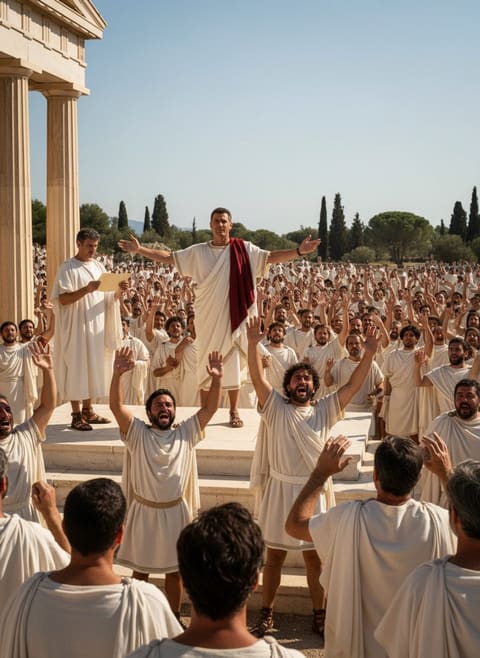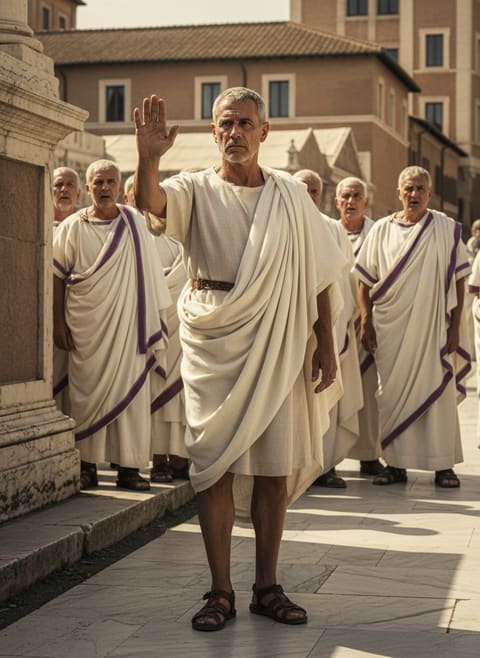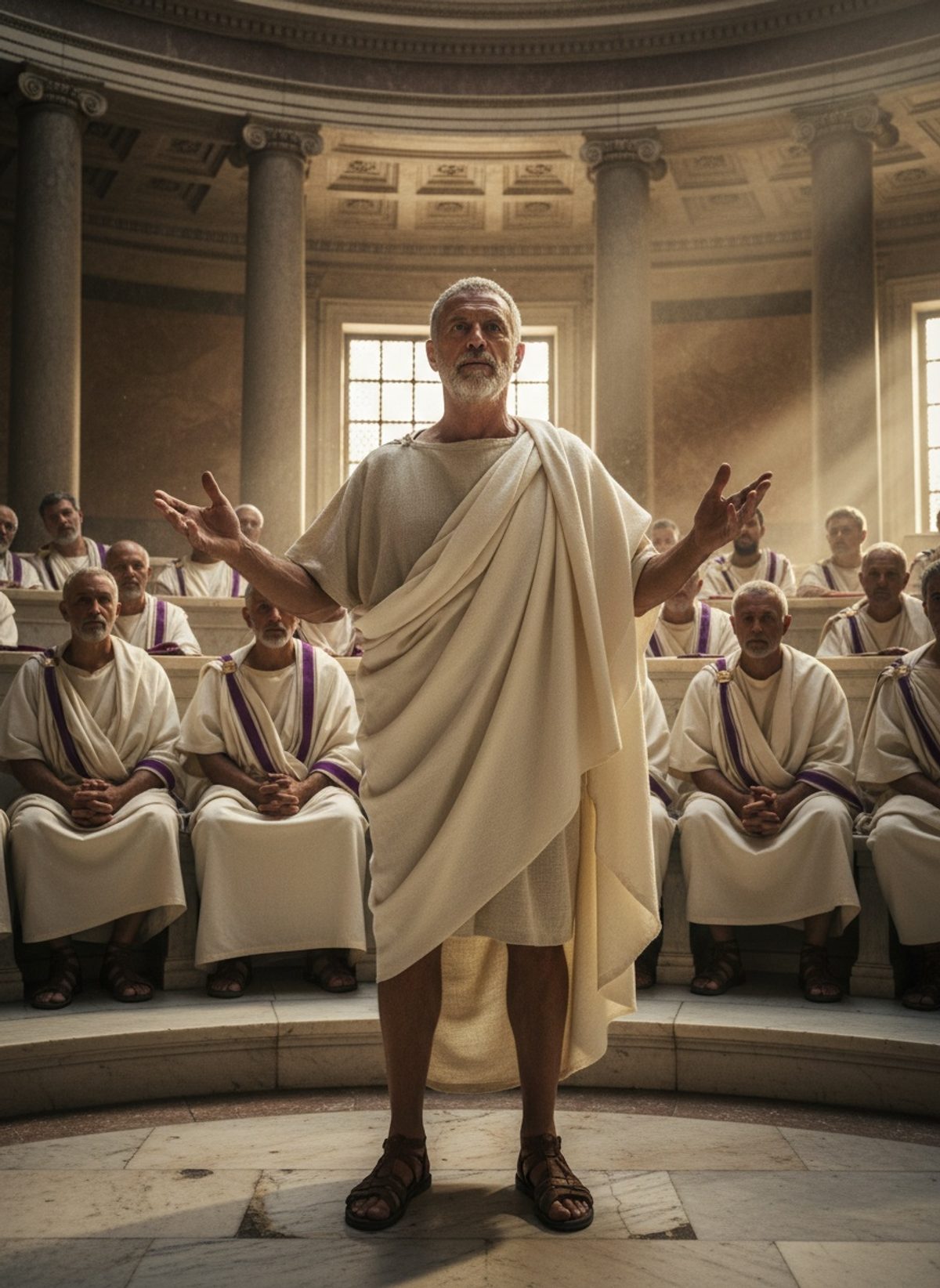
The midday sun hung ominously over the Italian Peninsula, casting a stark light across the bustling city of Rome. The air hummed with the anticipation of assembled crowds, a reverberation of not just the physical presence, but of the weight of history being forged. The Senate house, where decisions of eternal significance were made, stood at the center of this scene, its imposing silhouette looming like a bastion of Rome's indomitable spirit. Yet, on this day in 255 BC, it also witnessed a profound moment of human resolve and sacrifice as a man who bore the title of general, yet now wore the rags of a prisoner, prepared to deliver a verdict that defied all expectation.
Prisoner of Honor
The man standing before the Senate was Marcus Atilius Regulus, a Roman hero whose name was once synonymous with the very power of Rome itself. Regulus had been captured during what had already been a devastating First Punic War with Carthage, where two mighty nations clashed for supremacy over the Mediterranean world. His capture was a blow not only to the military campaign but also to the morale of a city that prided itself on its invincibility.
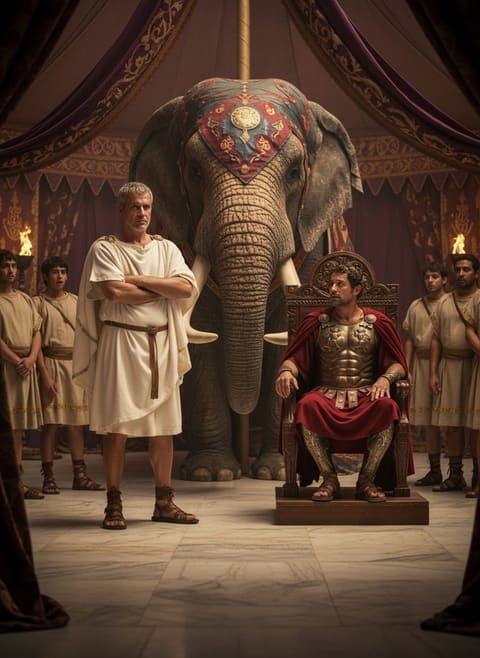
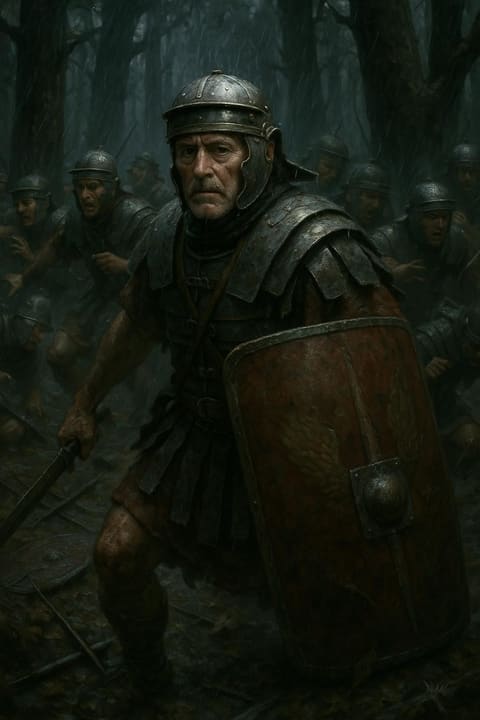
The sun of the African battlefield had witnessed Regulus's downfall, as the Roman legions, pushed to their limits, succumbed under the tactics of their North African adversaries. Carthage, with its storied military tradition, had managed to ensnare Rome’s prized general, a chess piece on the board of an ever-widening war. It seemed fortune had shifted, and Carthage sought to capitalize on their gain, sending Regulus back to Rome with a desperate bid for peace.
But this was no mercy; it was a mission laced with insult and a dare older than the walls of Troy itself: bring peace terms to the Senate and, should they refuse, return to his captivity. For many, such terms might offer an avenue for escape, but for Regulus, a man molded by the iron-clad ethos of Roman honor, it was a pact to be fulfilled. With solemn dignity, he stood in the Senate, not as the savior he had once been celebrated as, but as a harbinger of relentless determination.
Read next: He Stood Before the Senate. He Refused to Leave.
Counsel of Defiance
Within the cold confines of the Senate, the gravity of Regulus's message weighed heavily. Spectators craned their necks in anticipation as shadows loomed long in the chamber from the high midday sun. Beyond the political rhetoric lay a critical juncture: peace or continued warfare?
Many senators had anticipated a plea for agreement with Carthage, perhaps even a call to light the torches of diplomacy anew. But Regulus, with stentorian clarity, shattered these assumptions. With every syllable, the air became electric; his countenance unyielding, a visage carved from the very stone of the Roman hills. Regulus urged the Senate to refuse the terms, to sustain the fight, asserting that victory was not only attainable but inevitable.
His discourse was steeped in the righteous conviction of one whose soul was intertwined with the fate of the Republic. It was not just strategy he imparted, but a reminder of Rome's destiny and an exhortation to fulfill it. His words reverberated through the chamber, a haunting echo of both reason and madness; for Regulus, this was no mere counsel of war, but an invocation of ancestral honor.
Senators debated fiercely, their voices clashing like the legions they commanded, but the spell cast by Regulus had already shifted the tide. Through the haze of political deliberation, it became clear—they would not bow to Carthaginian demands. Victory, costly as it might be, would be pursued at all costs.
Read next: Marcus Atilius Regulus Walked Back to His Death
The Return to Oblivion
As the echoes of the Senate's decision permeated through the city, Regulus braced himself for the path that lay ahead—a journey of no return. The cobblestones of Rome, and the eyes of its people, bore witness to his departure, each step resonating with the profound weight of valiant sacrifice.
It was a solemn procession, the kind that sculpted myths and imprinted legends on the annals of time. As he traversed the landscapes from Rome to Carthage, his journey became a march toward martyrdom. Some say his resolute demeanor never wavered, not even when the familiar sea winds of Carthage stirred once more, whispering of fate's cruel whims and the torturous welcome that awaited him.
Regulus, once adorned in the armor of a general, entered Carthage not as a triumphant negotiator, but as a man ready to embrace his fate, bound eternally by his unwavering code. His choice, inscribed by the unyielding threads of honor, was not an act of defiance but an embodiment of the highest loyalty—of a kind that epitomizes the resolve to put duty above self, a narrative seldom seen even in tales spun of heroes.
This is more than a tale of warfare or patriotism; it is about the enduring power of conviction and the sacrifices demanded by the ideals we choose to live by. Regulus’s march to death serves as an eternal echo of the ultimate commitment to duty, a story untold in classroom textbooks but alive in the spirit of those who dare to abide by honor, even when its price is life itself.