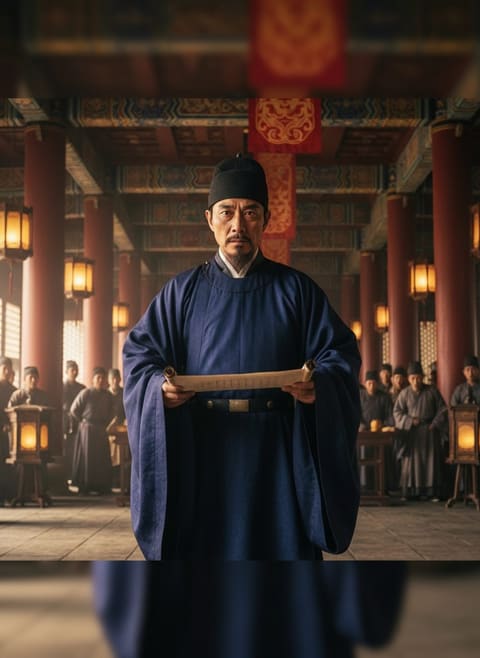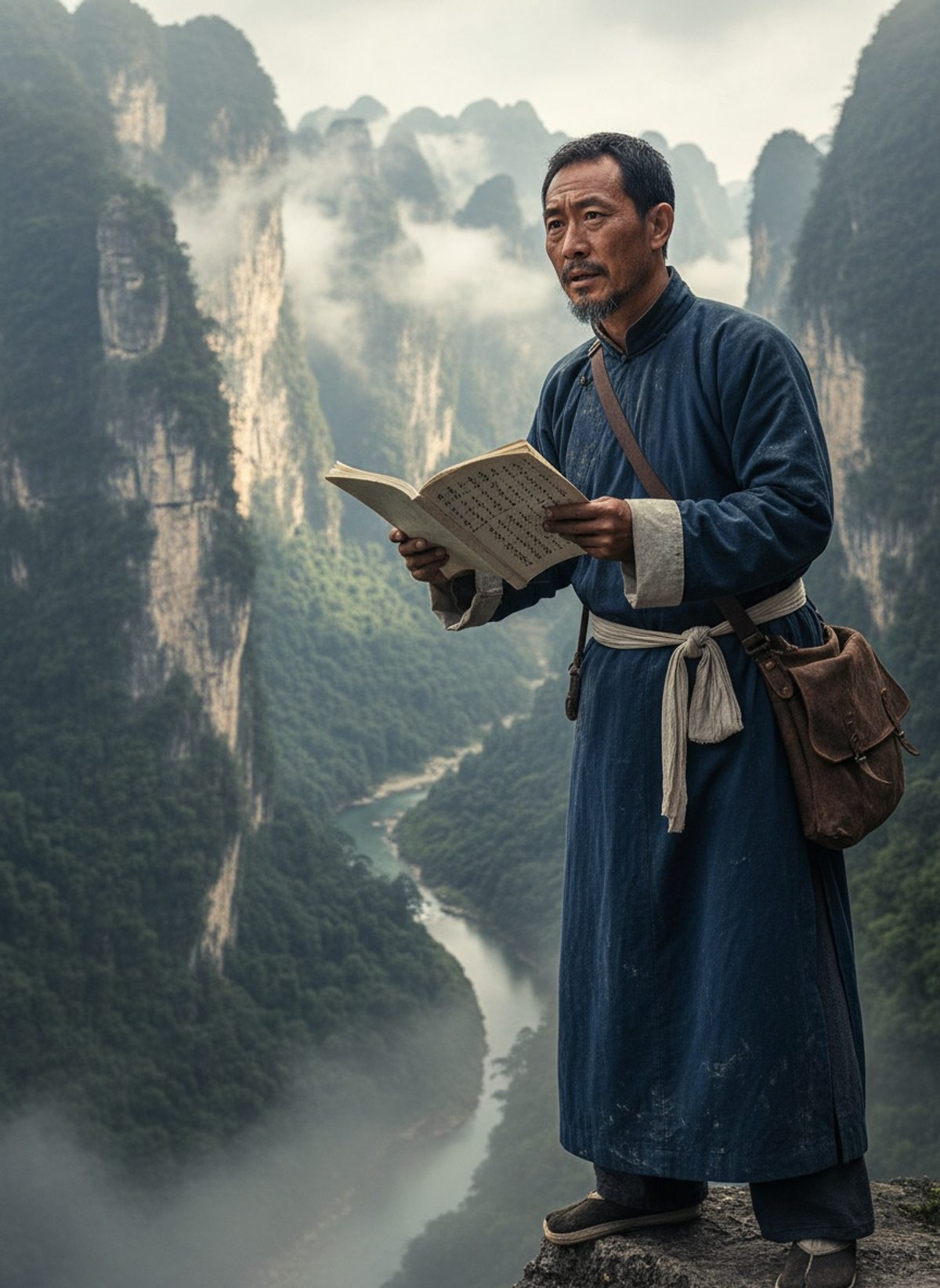
The icy wind howled through the mountain pass, cutting like a thousand tiny swords and biting into Xu Xiake’s skin. Xu, undeterred and wide-eyed with the curiosity that had driven him across China's vastness for over three decades, pulled his robe tighter and pressed onward. The peaks of Yunnan loomed around him, solemn sentinels in the cold dawn light, their secrets coaxed into Xu's weathered journal one observation at a time.
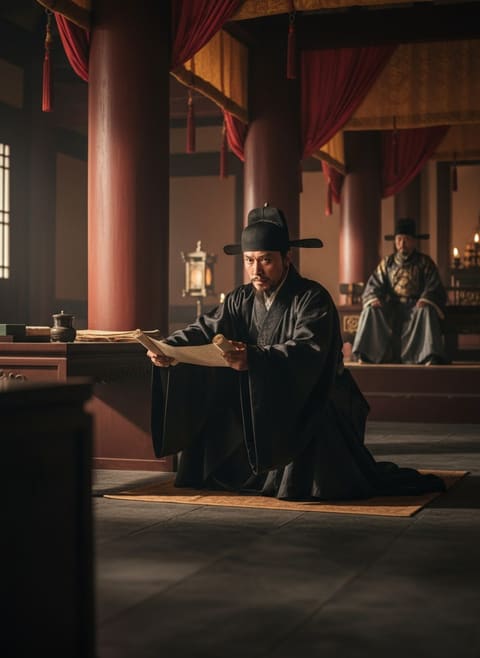
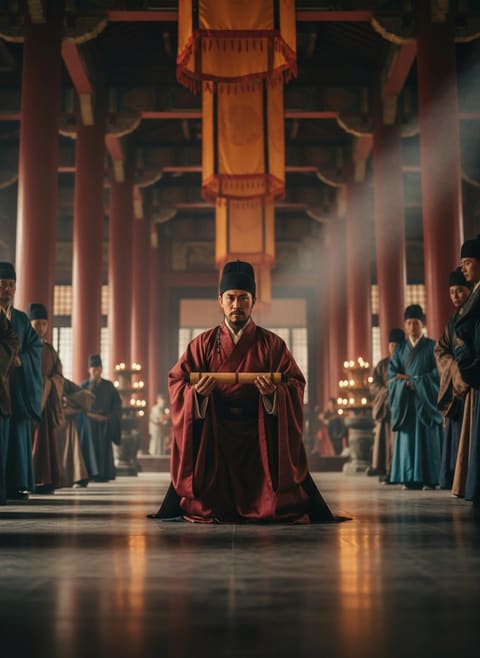
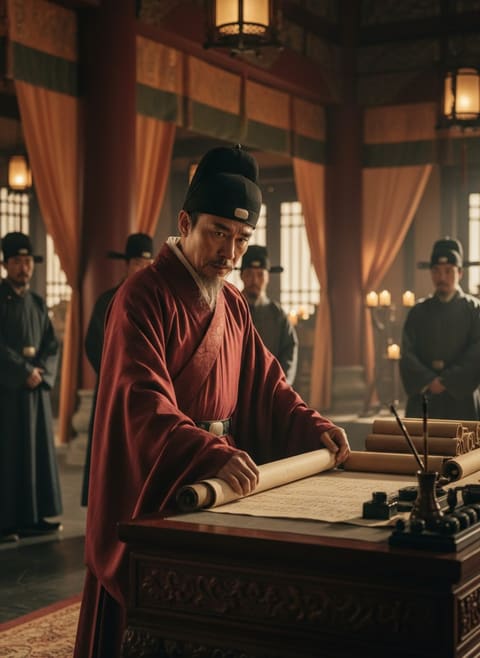
Born Xu Hongzu in the year 1587, in what is today Jiangyin, Jiangsu province, the path that led Xu to these rugged highlands diverged dramatically from societal expectations of his era. In Ming China, scholarly achievement was revered above all else, measured in the precise strokes of an examination brush. But Xu Xiake marched to the rhythm of nature, not bureaucratic drums. While other scholars sought governmental posts, Xu sought the world's hidden corners, eager to unravel the mysteries held by valleys, rivers, and mountain peaks.
His journey was largely shaped by his formidable mother, Wang Ruren, who herself defied convention by encouraging Xu to explore rather than settle into the security of an official career. This single mother's unusual guidance placed a spirit of adventure in the heart of her second son, a spirit that would see him traversing terrains as varied as the snowy passes of Sichuan and the humid jungles of Guangxi and Yunnan.
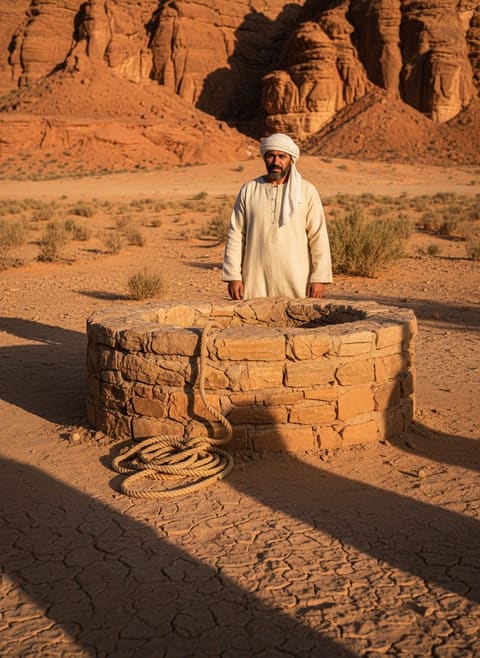
Xu's travels were solitary save for his loyal servant, Gu Xing, who accompanied him through thick and thin, bearing witness to Xu's encounters with both nature's splendor and mankind's unpredictability. Robbers once relieved them of their possessions, episodes of misfortune recounted in the candid lines of his travel diaries. Yet the hospitality of Buddhist abbots and the charity of local scholars often soothed the hardship, providing respite in exchange for the record of their local histories and landscapes.
Read next: Qin Liangyu Led the Army. She Did It Herself.
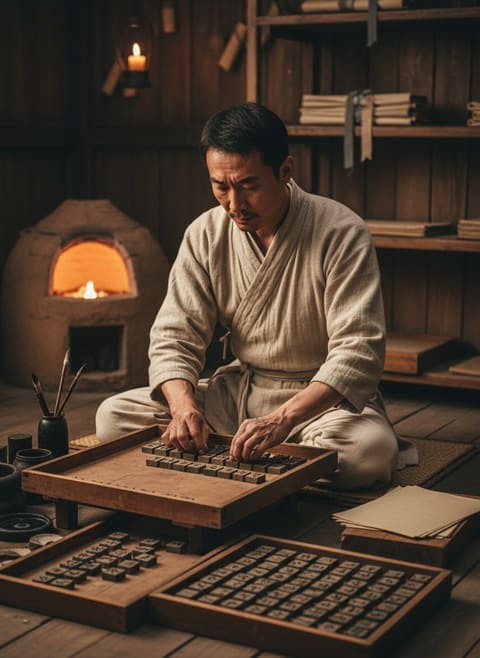
Xu's writings, with a staggering 404,000 Chinese characters, detail not only his travels but the soul of the lands he ventured through. Each page brims with observations as precise as they were revolutionary — the meticulous notes of a scholar and explorer with an unerring eye for geological and geographical phenomena. In Guizhou, he discovered the true source of the West River, a revelation that illuminated its lifeline through southern China like a thread of silver. He realized that the Mekong and Salween rivers were, contrary to earlier belief, independent systems with distinct watersheds, mapping them for the first time as separate entities.
Most notably, Xu corrected a geographical error that had persisted since the days of Confucian classics. Within the pages of his diary, he articulated the truth: the Jinsha River, not the Min or Yalong, forms the primary headwaters of the Yangtze River. This revelation was tectonic, it reshaped China's understanding of its greatest river, a muscular vein of water that runs through the heart of the nation. Xu's insights were profound, achieved not in the cloistered halls of academia but on the untamed trails of the Chinese wilderness.
Yet Xu Xiake's tales are not just chronicles of geographic discovery but a testament to his indomitable spirit, revealing as much about his inner landscape as the outer. Chen Jiru, a friend of Xu, dubbed him "one who is in the sunset clouds," evoking not just the colors of the dying light he often pursued by day’s end, but the serenity of a man who found peace where nature embraced chaos. Xu sought not the adulation of his peers, but the serenity of high hills and the songs of unknown rivers.
Read next: She Ruled the Silk Road. No One Saw It Coming.
The journals would only be compiled posthumously, and their true impact felt centuries later, their significance recognized as field surveys akin to those conducted with modern precision. Xu's work reached a wider audience when later translated by Ding Wenjiang, casting the explorer not just as a geographical pioneer but as a man ahead of his time, possessing a worldview as expansive as the land he chronicled.
Even in his era, the sheer scope of Xu's travels earned him a legendary status among those who dared to look beyond China's cities and their comforts. Within the literary tradition of 'youji wenxue' or travel record literature, his accounts blazed as vividly as his beloved sunset clouds, illuminating a world that many of his contemporaries viewed as mundane. To walk the paths Xu trod was to step back into a time when the world was wider, waiting just beyond the horizon, where lore and landscape entwined in a dance older than empires.
Why does Xu Xiake's journey matter to us today, buried as it is beneath layers of modernity and digital discovery? Because his story whispers of the courage to look beyond the immediate, to exchange comfort for the kind of understanding that only the uncharted wilderness can provide. It reminds us that the value of life is not merely in the positions we hold or the accolades we acquire, but in the unexplored trails we dare to traverse. Once written off by an empire blind to its own geography, Xu Xiake's unwavering pursuit uncovers something remarkably human in us all—the yearning to journey beyond the visible, to understand and to leave a legacy woven into both maps and memory. The reverberations of his step into the wild still echo, an invitation to all who listen: to walk, to discover, and to write our own pages in the world’s story.