The morning air in London was brisk and damp, clinging to the skin of those bustling through cobblestone streets. The sun, still low in the sky, cast long shadows from the spires of St. Paul's Cathedral, hinting at another chilly day in the Georgian era. Above the subdued murmur of horse-drawn carts and market vendors, a new kind of anticipation crackled through the air. It wasn't just the usual hustle of commerce that filled this part of town near Westminster. This was a different sort of gathering—a crowd driven not by trade, but by the clamor of justice in its most elemental form.
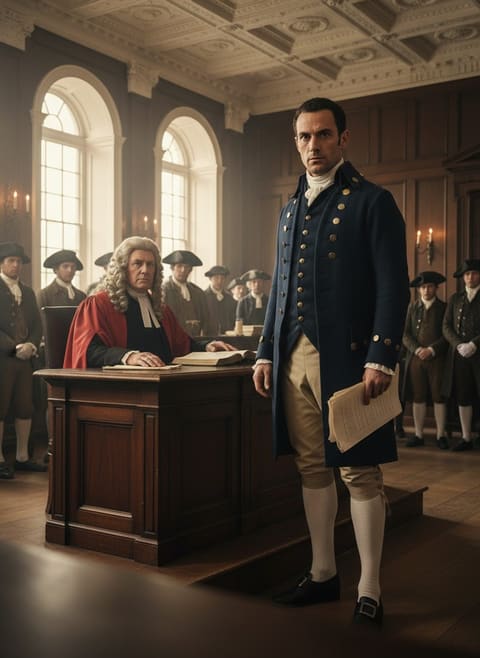
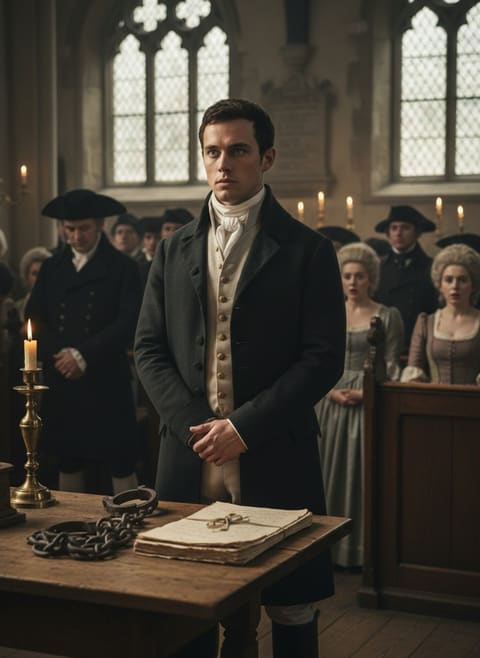
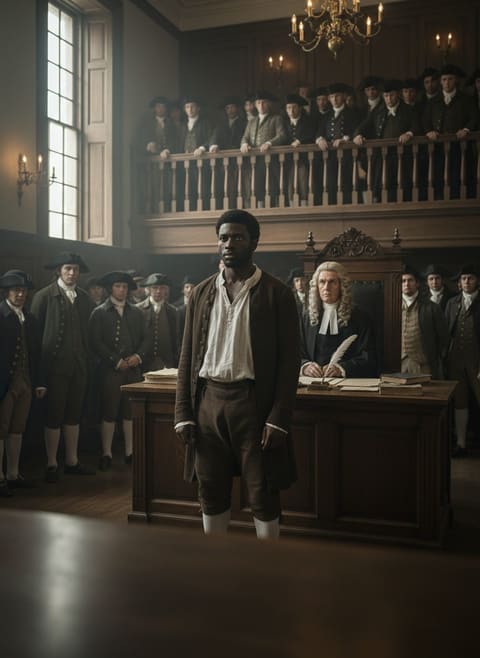
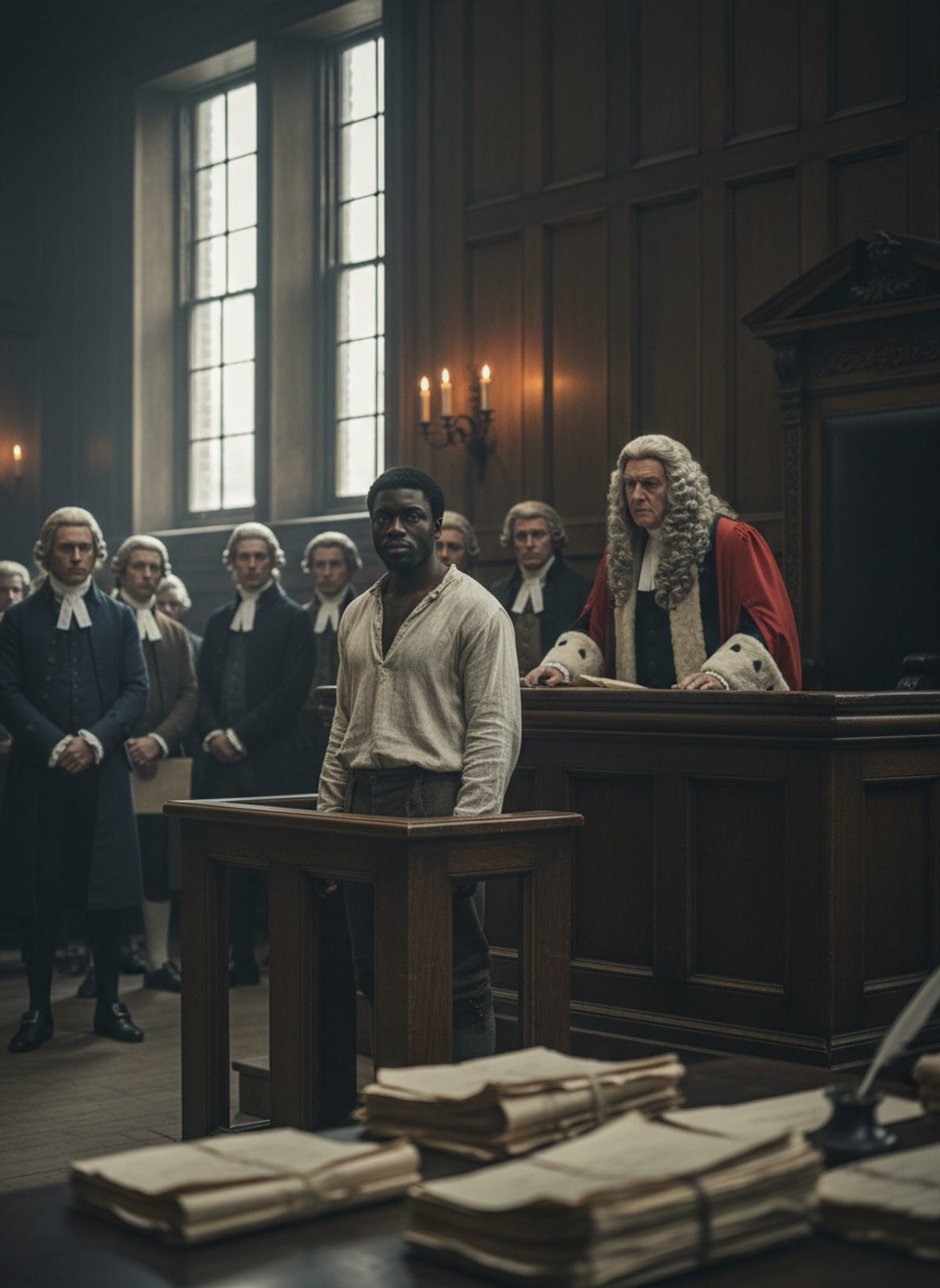
Inside the imposing walls of the courthouse, a rather modest courtroom played host to a drama both stark and subtle. The focal point was a man whose mere presence challenged the accepted order of things beyond the sea and across the empire. James Somerset, a man who had been bought, sold, and shipped as though he were cargo, stood before the Lord Chief Justice in chains not of metal, but of a societal decree that whispered he was less than human. Somerset's stance defied the weight of history as he dared to become a fulcrum by which the world might pivot toward something unfamiliar—perhaps even something righteous.
This was a day both ordinary and extraordinary, unfolding within the wooden pews of a courtroom that smelled of varnish and old leather. Lord Mansfield, a man aged by experience and wisdom rather than years, presided over this momentous occasion with an air of impartial authority. His gaze was steady, yet one imagined it bore the burdens of an empire stretched across oceans; an empire that thrived, in part, on the very bondage now questioned. It was against this tense backdrop that Mansfield prepared to deliver a ruling far larger than the panel of legal minds gathered in that room, far larger, even, than the stone confines of the building could contain.
James Somerset had arrived in England as the 'property' of one Charles Stewart, a Scottish customs official returning from the colonies. But the whispers of liberty carried by the English air proved intoxicating. No longer willing to be confined by the chains of ownership—literal or legal—Somerset took the bold step of escape in an unfamiliar land where the definitions of freedom were themselves undefined. Yet, like a migratory bird lured by uncharted westerly winds, Somerset's journey was intercepted. Recaptured by men paid by his former master, he was dragged toward a ship bound for Jamaica—a journey many feared would render him a ghost among figures already erased by distance and time.
Read next: The Day a Black Sailor Walked Into Court and Freed Himself
Yet as fate—or perhaps providence—would have it, Somerset had allies among the community of abolitionists thriving in the London of the late 1700s. Granville Sharp, a name whispered among reformers and zealots alike, had heard of Somerset's plight. Sharp, whose previous forays into legal advocacy had earned him repute and reproach in equal measure, saw in Somerset's case a chance to lay bare the cracks within the veneer of British justice. Petitioning for Somerset's right to liberty, Sharp and his allies brought the matter before England's legal highest sanctum.
The courtroom was filled with an eclectic gallery, ranging from those sympathetic to Somerset's plight to those concerned about the implications of a ruling in his favor. Invisible yet palpable, the spirits of countless others who had endured—and continued to endure—similar fates made their silent presence felt. And then there were those like Charles Stewart, motivated perhaps by fear that the lifeblood of their economies might be siphoned away by a single court ruling.
As arguments unfolded, a silence heavy with implication enveloped the room, broken only by the rustling of quill on parchment and the occasional cough echoing off the walls. The day's testimony was not only of legal parlance but of human decency and decency’s fragile footing in the 18th-century world. Legal counsel presented evidence and argued over precedents—Tangents of the law stretched thin over churning questions of humanity and morality.
Finally, on the 22nd of June, 1772, the air in the courtroom felt as though it held its breath, the atmosphere thick with expectation. Known for his meticulous consideration, Lord Mansfield approached the bench with a ruling that would ripple outward and unleash a tide of dialogues and discourses. No longer would men like James Somerset be forcibly taken, their ties to the people and lands they touched severed by the silent, steely grasp of the maritime world.
Read next: The Day a London Clerk Walked Into Court for a Dying Slave
Instead, Mansfield proclaimed, "The state of slavery is of such a nature that it is incapable of being introduced on any reasons, moral or political," and with these words, the soles of countless enslaved children yet unborn lit upon the soil of potentiality—their steps untracked by sand, unspoken by wave. Slavery had not been struck down or erased from the Empire's laws, but legally now in England, as the sympathetic air buzzed in hushed relief, a slave who would not go back could stand as a free man.
The crowd spilled once more into the streets, released from the charged air of verdict and the stifling grip of imperial tradition. In that moment, James Somerset was more than one man. He was every man, woman, and child whose silhouette still flickered in the dim reaches of shadowed decks and distant plantations.
History would not hand James Somerset the broader emancipation his case heralded—an abolition slow to unfurl, tangled in the grasp of an empire reluctant to let go. Yet this one man's relentless stand, mirrored in every shackle-free step he took toward a future unclaimed but possible, set a precedent echoing through decades of struggle and resistance. England would not become a sanctuary—yet, like wind over the British Channel, the whispers of freedom could not be caged.
In stepping forth to name his price—defiance paid in what liberty he could claim—James Somerset lent a voice to the unvoiced and grounded the abstract promise of freedom into something tangible, insistent, and real. It is through such stories, quietly fought in the modest enclosures of a courtroom, that worlds are reborn, not in splendid revolution but in the quiet, inexorable promise of a just tomorrow.