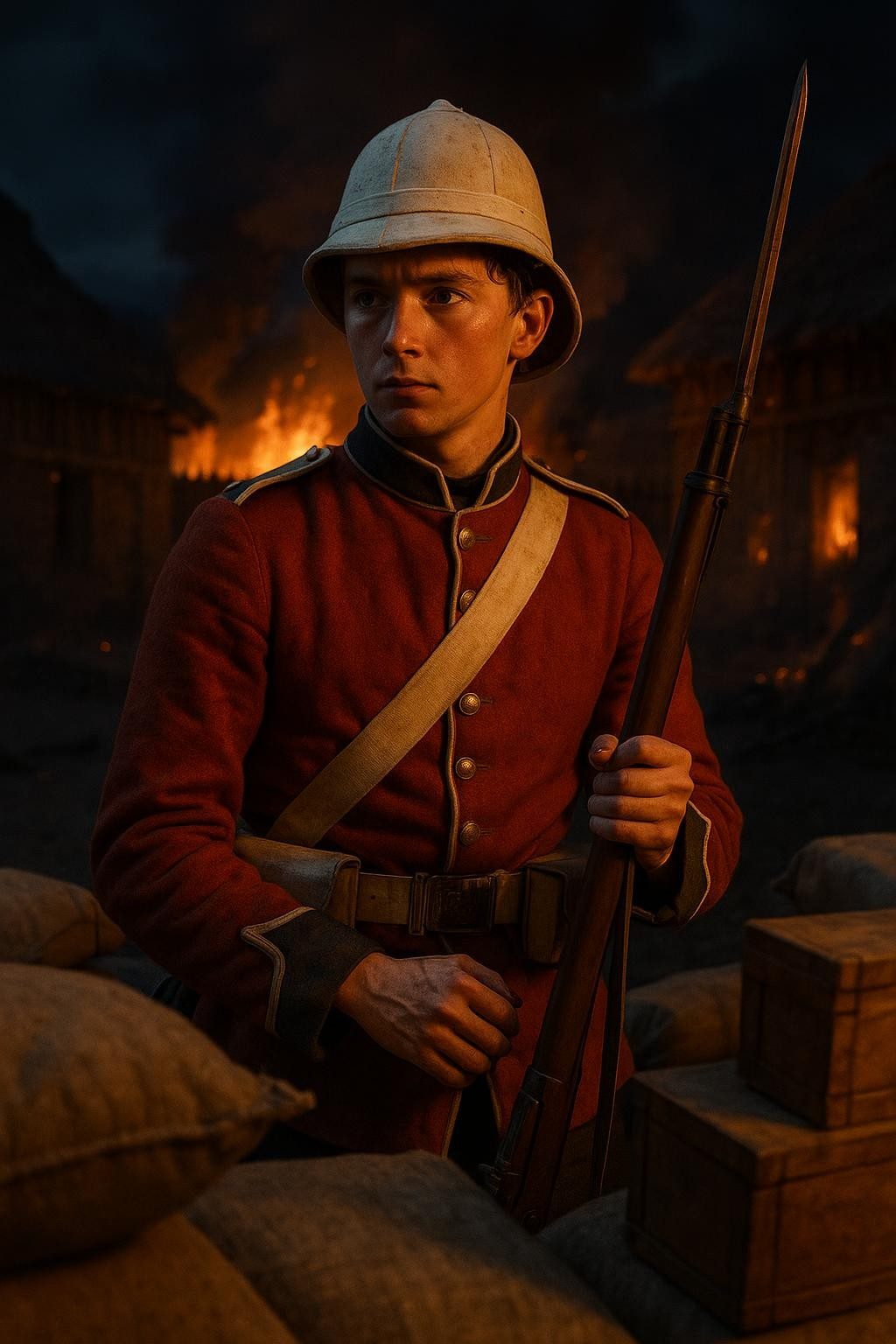
He was seventeen years old. His enlistment papers claimed he was eighteen, but Robert Jones had concocted a minor deception to sign up — a common wartime fiction for boys with more bravery than years.
The Quiet Hero Behind the Barricade
While legendary tales of Rorke's Drift often highlight the valor of officers and Victoria Cross recipients, the name Robert Jones barely makes a whisper. Yet, in the desperate hours of the Zulu assault on January 22, 1879, his was a story of youthful courage metamorphosing into soldierly steel. At the tender age of seventeen, Jones fought at a missionary station, a mere speck of British red coat against the swarm of some four thousand Zulu warriors sweeping down the slopes.
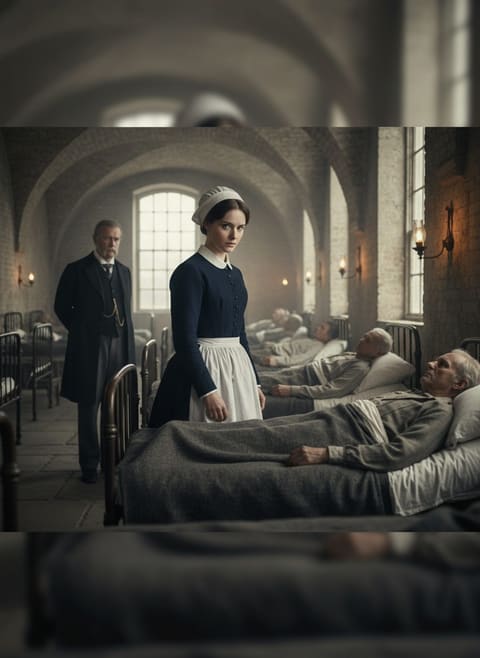
Despite the overwhelming odds, Jones’ comportment was steadfast, his resolve unshakeable. Amid the cacophony of clashing assegais and the defensive bluster of rifle fire, he displayed a remarkable blend of fearlessness and ingenuity. He wasn’t supposed to be there, and yet his youth did not diminish his determination to hold the line. In darkness thick enough to confuse friend for foe, he and Private William Jones defended a doorway leading into the patients' hospital, their rifles roaring persistently through the night.
Lying for Duty, Living for Honor
Rorke's Drift was a catalyst for legends, steeped in the bravery of those who defended the hasty fortifications they constructed. Robert Jones, having borrowed a year for the privilege to wear His Majesty’s uniform, didn’t expect to find himself in a crucible of war so vicious and immediate. The military life that promised so much adventure was suddenly the setting for a fight far more savage than sweeping romantic fantasies.
Read next: The Day a Surgeon's Son Chose Death Over Silence
This teenage boy, like several others who had woven similar tales about their ages to join the ranks, saw military action not as a distant possibility but as a blazing reality. His enlistment was an act of defiance against the mundane, but also a testament to a Victorian spirit that lauded duty over hesitation. The defense of Rorke’s Drift proved that youthful zest and mischief could germinate into profound acts of gallantry, painting the night with a heroism sharply contrasted against the fiery glow and shadows dancing against the barricades.
The Dead of Night: The Test of the Rifle and the Will
Surrounded and outnumbered, the small contingent of British soldiers at Rorke's Drift assembled a makeshift defense. In the hospital, Robert Jones faced what undoubtedly felt like a never-ending night. Flares and lanterns flickered perilously, weaving salvation and doom into fleeting glimpses. The noise was ceaseless — a mix of ululating war cries and the sporadic crack of musketry punctuated by the screams of wounded men and the loud pronouncements of steel meeting bone.
Read next: The Day a Chimney Sweep's Son Shamed a Whole Parliament
Jones was tasked, alongside his comrades, with holding what critical ground they could while evacuating patients from the makeshift hospital. The heat and smoke were stifling, and yet there appeared no limit to the boy's reservoir of courage. His rifle became an extension of himself, an instrument of survival against an enemy painting the night with both fear and awe. Each bullet spent was a chance at life, every shout directed at his fellow boys in scarlet a command for steadfastness in a crucible none had sought but all strove to endure.
A Lesser-Known Name with the Weight of Greatness
As dawn broke over Rorke’s Drift, exposing the disarray and devastation that echoed with the whispers of fallen warriors of both sides, the sun also illuminated a peculiar truth. Among those who received commendations for their valor, young Robert Jones was recognized and recommended for the Victoria Cross, a nod to his bravery that went beyond his fabricated year. The ages of heroism, some falsely extended, some intrinsically noble, had conspired to etch his name into the annals of gallantry, though history would later obscure it.
The story of Robert Jones, the boy soldier who bore more than just arms at Rorke's Drift, is a narrative of unheralded courage lurking beneath the surface of grander heroic accounts. It prompts us to eye historical records critically, realizing that what's omitted often reveals just as much as what's recorded. His tale sheds light on the embers of youthful valor that ignite under the shadow of duty and the enduring spirit of ordinary people thrust into extraordinary events. In remembering a seventeen-year-old who stood firm when the world around him threatened to collapse, we come face-to-face with the legacy of the overlooked soldiers who, against the backdrop of history, performed feats of quiet greatness. His is a name worth remembering.