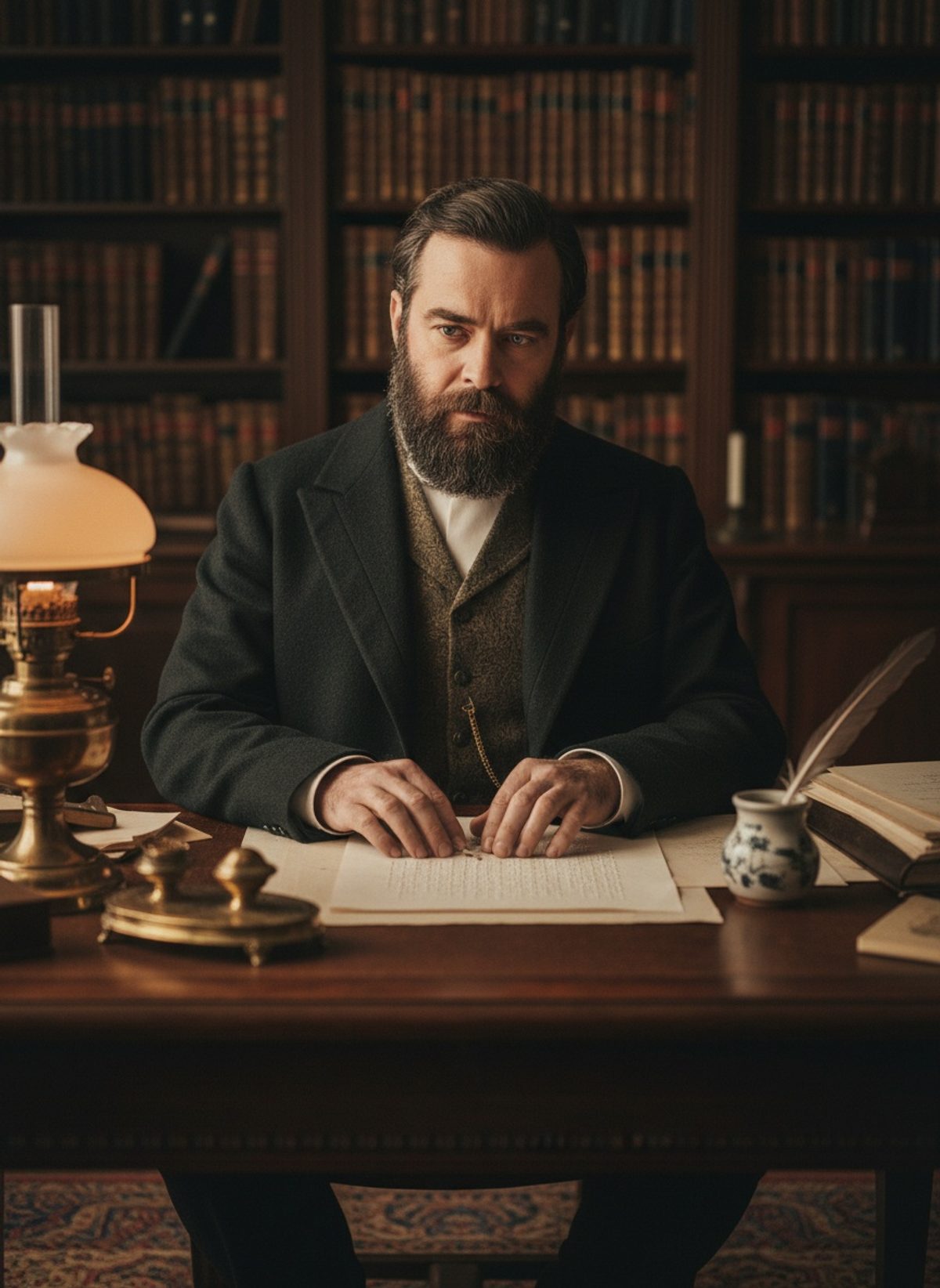
He wore spectacles instead of a grimace. Joseph Lister's hands were always clean, even when no one else’s were.
Bloodstains and Beliefs: Surgery's Dangerous Fashion
In the mid-19th century, the Victorian operating theatre resembled more of a horror show than a healing place. Surgeons wore their bloodstained frocks like battle scars, each fresh mark a testament to their prowess and experience. These men were modern gladiators, their arena walls echoing with the groans of the afflicted. But this blood-soaked bravado masked an unacceptable truth—many patients were better off avoiding surgery altogether, as the knife's cut often paved a grim path to grave infections.
Glasgow, 1865. The streets were smog-filled, bustling, alive with the sounds of industry. It was a city on the cusp of modernity but still tethered to the superstitions and practices of an era past. And within its hospitals, infection was rampant and mysterious, the misunderstood specter lurking in every incision. Few questioned the inevitability of death from surgery; infections were attributed to "bad air" or a mere twist of fate.
Enter Joseph Lister, an unassuming surgeon who bore no interest in following the tainted footsteps of his colleagues. Unlike his peers, who saw pus as a healthy sign of a wound's healing, Lister recoiled from the putrid odor of infection. Instead of accepting it, he sought to understand it. This stance made him an outlier in a world where dissent from established medical thought was rare—and risky.
Read next: The Day a Victorian Woman Walked Into a Courtroom Alone
The Invisible Enemy: A Paradigm Shift in Medicine
Lister's search for answers found unlikely allies in the unseen world of germs and the pioneering work of Louis Pasteur. Pasteur had recently revolutionized microbiology, proving that fermentation was the result of living organisms—not spontaneous generation as once thought. Inspired by this, Lister theorized that infections after surgery were also caused by invisible agents.
It was a radical thought. The concept of microorganisms extending their malevolent influence into the flesh of humans was still embryonic and, for most, too foreign to entertain. But for Lister, Pasteur's work offered a glimpse into a hidden world, one where cleanliness might just be next to godliness—and survival. To Lister, it became clear that combating infection meant combating the invisible.
His approach diverged from the norm, favoring precise incisions and an anathema to the 'more blood the merrier' ethos of his peers. Cleanliness became his mantra, whether others were listening or not.
Carbolic Acid: The Wonder Weapon
The pungent scent of carbolic acid soon became synonymous with Lister's unprecedented methods. Originating from coal tar, this substance had already proven its worth in transforming the malodorous foulness of sewage into something bearable. Lister pondered its potential applications in surgery. If it could combat the filth so effectively, perhaps it could wage a silent war on germs, too.
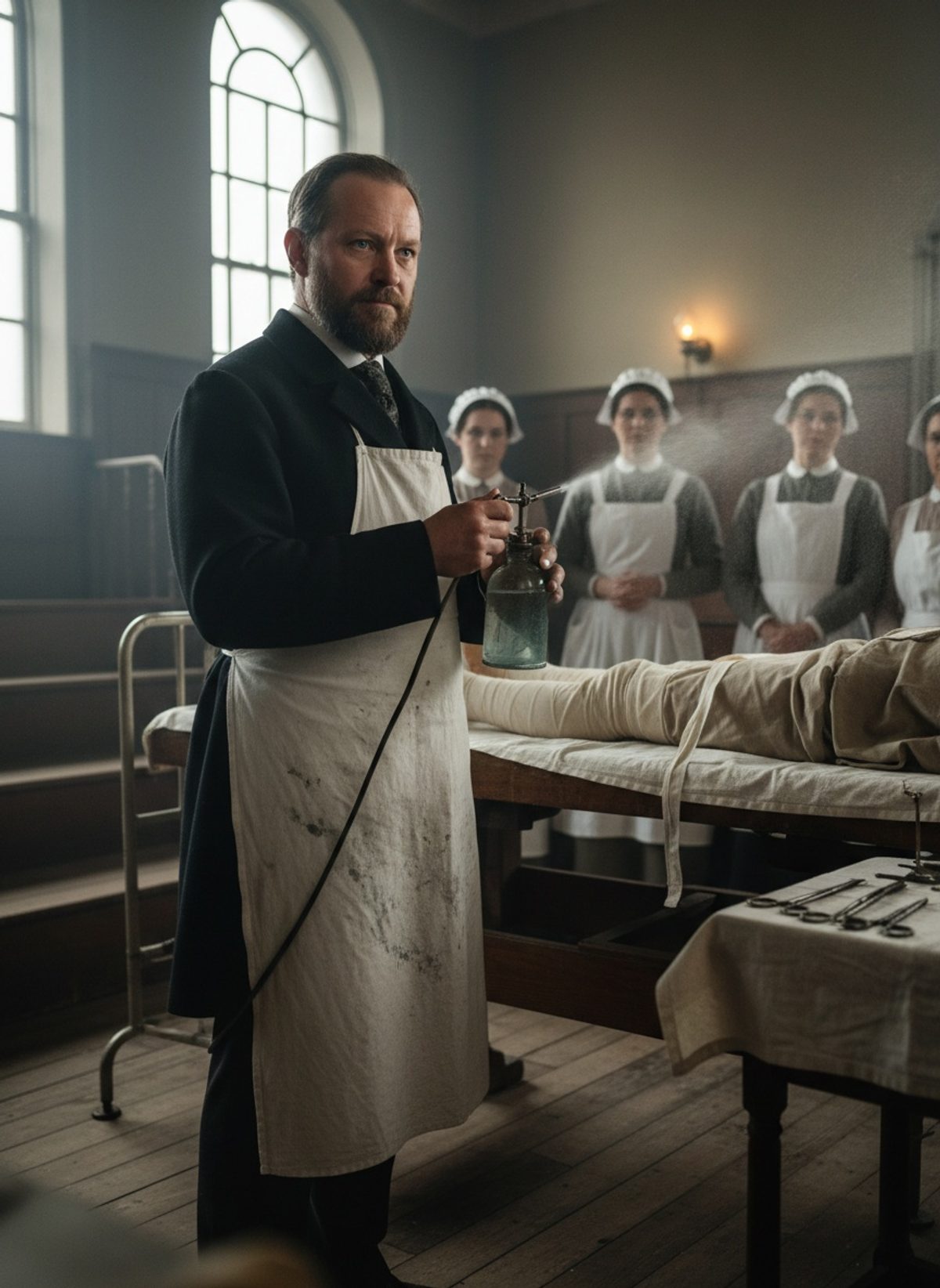
With cautious optimism, Lister began spraying carbolic acid in his operating rooms. He dipped his instruments in it, washed his hands with it, and swathed patients' wounds in its antiseptic embrace. The effect was almost immediate; where there was once pus, there was now clean, healthy tissue. Where death once lingered, the patient found life.
The results were astonishing and met with incredulity. A hush fell over the wards, broken only by muffled whispers questioning if this new practice was working miracles or madness. Yet the evidence spoke louder than disbelief: Lister's patients survived in numbers that defied the received wisdom of his era.
The Skeptics and the Silence
If innovation is the path to progress, skepticism is often the tollgate. Lister's methods faced resistance from the outset, not just from wary colleagues but from an entire medical establishment wedded to its customs. Doctors grumbled that antiseptic surgery was needless fiddling, while others balked at the extra work it required. Yet Lister's unwavering dedication didn’t falter, as each successful operation became another pillar in the edifice of antiseptic surgery.
In an era where communication was slow and the dissemination of ideas even slower, Lister's antiseptic methods gradually seeped across the channel to England, Europe, and eventually, the Americas. With each successful surgery, skepticism ebbed like a receding tide, replaced by an acknowledgment that infection need not be the butcher's boon it once was.
And still, Lister toiled in relative obscurity, his accomplishments recognized only in hindsight. Though his techniques ultimately became mainstream, it took persistent education and relentless demonstration before antiseptic surgery was heralded universally.
A Legacy Felt But Not Counted
Today, it's easy to overlook the impact of a clean hospital environment. For most, the concept of antiseptic practice is as natural as breathing. Rarely do we consider the roads paved before us, the risks endured, and the conventions overturned to make the sterile the standard. Lister's journey into the microscopic turned the tide on surgical infections, saving countless lives not just in Glasgow but across the globe. This is a legacy that defies enumeration and credits its victory over infection to understanding the unseen.
To understand Lister’s contribution to modern medicine is to be reminded of the unseen battles fought to make what seems inevitable today. It's about moments in history not scored by wars or kings but by silent revolutions fought for human lives. And such stories, though not commonly featured in textbooks, are the true tales worth telling for us to learn and marvel anew.