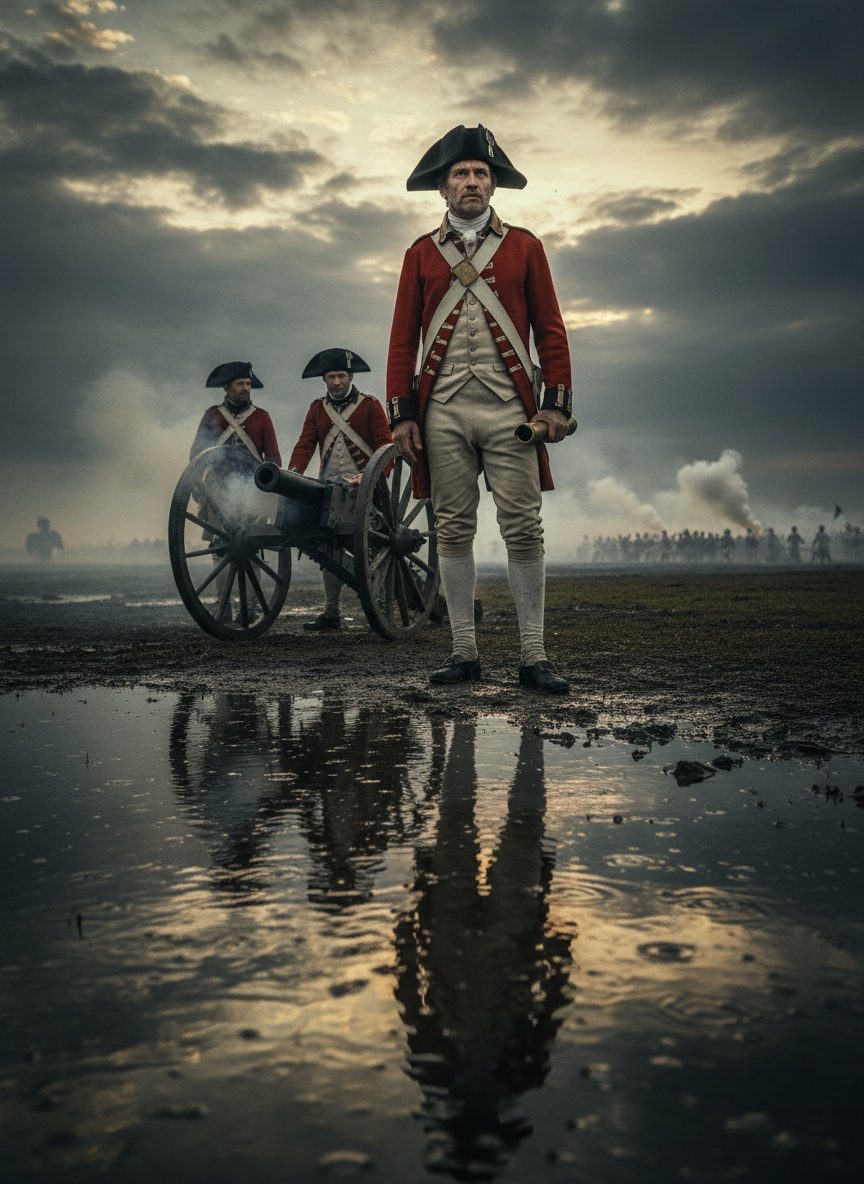
June 23, 1757. The humid air hung still and silent over the plain near the mango grove of Plassey.
What happened on that sweltering day was unlike anything the Indian subcontinent had seen—or rather, not seen. At stake was nothing less than the control of Bengal, one of the richest provinces of Mughal India, yet this pivotal contest was marked by a curious absence of carnage and clamor. Instead, the unfolding drama behind the battleground would alter the trajectory of empires. At the heart of it all was a man named Robert Clive, who had first arrived in India not as a soldier but as a clerk, destined by many to tally columns rather than command armies.
Robert Clive stepped onto Indian soil in 1743 as a humble employee of the British East India Company, more accustomed to managing paper than men. Described by some as a brooding youth prone to bouts of melancholy, Clive initially seemed an unlikely candidate to shape history. And yet, less than fifteen years later, he would orchestrate an audacious coup that would elevate the company's status and his own—an enterprise partly built on cleverness, partly on circumstance, and partly on a fortuitous storm.
Before the clash of arms, the real battle had already begun in secret meetings and whispered agreements. The existing Nawab of Bengal, Siraj ud-Daulah, beset by enemies internal and external, was unaware he had already lost the supportive loyalty of a faction of his court. Among them was his commander, Mir Jafar, disillusioned and dissatisfied. Clive saw an opportunity. Over months of clandestine negotiations, he brokered a deal: Mir Jafar would switch sides at the critical moment, ensuring Clive's small contingent could leverage the element of surprise against what appeared to be an insurmountable force.
Read next: The Day a Black Sailor Walked Into Court and Freed Himself
Thus, as dawn broke on June 23, Clive's meager force of less than 3,000 faced an army nearly 17 times its size. The odds seemed hopeless. The Nawab's 50,000 were equipped and ready, while Clive relied on determination and a fragile web of promises. Just as surely as he relied on this alliance, he also bet on fortune, and fortune, it would seem, favored him in unexpected ways.
Shortly after the battle commenced, the heavens opened, releasing a torrential downpour that muddied the plains and stalled gunpowder stores on both sides. Yet only Clive's men had prepared for rain, their artillery carefully tarped and ready. In contrast, the Nawab's forces found themselves exposed, their muskets rendered useless, their cannon failed.
The battle, which seemed it might rage for hours or days, took less than a morning to decide. As the skies cleared, the Nawab's army faltered first—with Mir Jafar's promised assist feeling more like a creeping betrayal than open support. He hesitated, feigned ignorance of the mighty English artillery, and by the time his real intentions became apparent, the shift in momentum was undeniable. The Nawab's divisions fell into chaos, and Siraj ud-Daulah fled, confounded by the forces of nature and man conspiring against him.
In victory's wake, the strategic brilliance of Clive's maneuvering came to full light. The outcome was a realm surrendered not to sheer force but to the subtleties of intrigue. Word of the victory did not merely signal a change of power but heralded an epoch—the beginning of British colonial dominance in India. Clive, departing the battlefield, had not merely gained a province but had constructed a fulcrum upon which the British Empire would pivot and expand.
Read next: The Day a London Clerk Walked Into Court for a Dying Slave
As celebrated as Clive became, the victory at Plassey is a reminder of the intricate dance between planning and happenstance. Did Clive foresee the storm as he laid down his plans? Probably not. Yet, he prepared for the unpredictable; he embraced the chaos rather than cower from it. His readiness to seize every advantage, natural and orchestrated, was itself a decisive act.
Beyond the climatic quirks and the cunning pact lurks a tale just as potent today as it was two and a half centuries ago—it is the story of ambition and opportunism, the duplicity of allies, and the lasting power of turning fortuity into fortune. For the British East India Company, and Clive in particular, this was more than a battle won; it was the spark that ignited a colonial blaze.
It reminds us still of how history is often shaped not solely by the might of arms but by the furtive ink of contracts, sealed not in blood, but in the thunderous, unexpected torrents of possibility. In this, the clerk who rose to conquer would leave a legacy of empire, stark as the silken ink that first charted its course.