October 25, 1854. The Crimean sun cast long shadows across the barren plains.
The Thin Red Line Begins
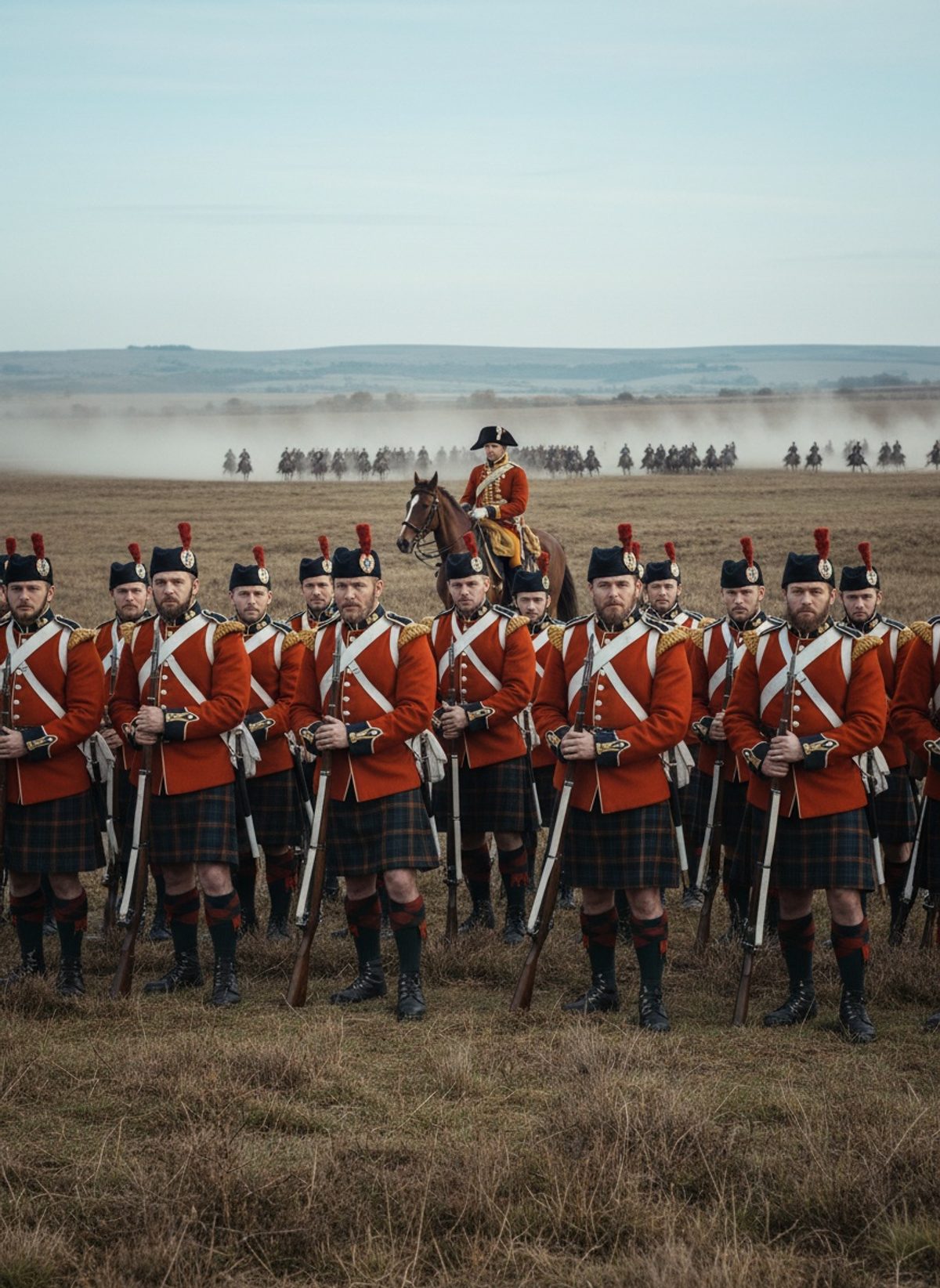
On that fateful morning, the pale light of dawn revealed two great armies facing each other near the small Black Sea port of Balaklava. This was a scene that would soon echo through history and forever change military tactics. As the chill of the early hours wore off, the Russian cavalry prepared an aggressive charge, determined to break through the British defenses and wreak havoc upon the small force of Highlanders holding the line.
At their head was General Sir Colin Campbell, a seasoned veteran whose piercing eyes scanned the landscape. With a decision that defied centuries of military training, he commanded his men to form a single line, two ranks deep, stretched across the vast expanse. The traditional doctrine taught to every European army would have demanded forming a square against cavalry, a hedgehog of bayonets that could resist horsemen from any direction. But Campbell trusted the skill and discipline of his Highlanders more than the dusty pages of textbooks.
In the Shadow of the Heights
The men of the 93rd Highland Regiment had seen warfare before, but never like this. Behind them lay the vital supply port of Balaklava, the gateway for the British Army's lifeline in the ongoing Crimean War. Ahead of them, more than 2,000 Russian cavalry surged forward, an unstoppable tide of men and horses driven by the thunderous beat of hooves.
Read next: The Day a Surgeon's Son Chose Death Over Silence
As the noise of the advancing charge grew louder, an eerie calm settled over the Highlanders. It was said that Campbell reminded his men with steely resolve, "There is no retreat from here, men. You must die where you stand." Inspired by their leader’s steadfast determination, they prepared to defend their ground to the last man.
The Roar of the Calvary
The Russian cavalry crested the ridge with all the majesty and terror one would expect of a thunderous wave of horsemen. As they bore down upon the Highlanders, it became clear that the 93rd did not flinch nor falter. The regiment braced, raising their rifles, ready to meet the charge with nothing more than two ranks in defiance.
The order was given: the frontline of Highlanders knelt, presenting bayonets, while the rear rank stood ready, rifles aimed with precision. At the heart of this standoff, the famed "Thin Red Line" held its ground against the brutal force of cavalry—a feat unheard of in the tactical handbooks of the day.
The Unyielding Stand
Cannon fodder? No. The 93rd fired in perfectly timed volleys, the gunfire overlapping like a deadly symphony. Jazzy tunes had no place here; not now. It was fearlessness, determination, and an unwavering belief in their course that painted the Russian cavalry in retreat.
Read next: The Day a Chimney Sweep's Son Shamed a Whole Parliament
The enemy, stunned and unable to break the resolve of the thin red line, wheeled around and retreated. It was over almost as quickly as it began—a standoff of epic proportions, where the audacity of a single line of Highlanders defied expectations and brought an empire to a halt.
A Legend Takes Root
As news of the confrontation spread, the legend of the "Thin Red Line" grew, capturing the imagination of the British public and military minds across the world. This seemingly impossible feat became a symbol of stoic bravery, a testament to the strength and courage of those who stood their ground.
The phrase "thin red line" has since entered the English lexicon as a metaphor for a small, determined force holding back much greater opposition. It underscores the extraordinary courage and discipline of the underdog in the face of overwhelming odds—a legacy that lingers well beyond the plains of Balaklava.
In a rapidly changing world where technological and military innovations push the boundaries of what we know, the resolve of the 93rd Highland Regiment remains a powerful reminder of human might and spirit. It is a tale of bravery born not only of weapons and tactics but of sheer will, a lesson resonating across generations that some lines, no matter how thin, cannot be crossed.