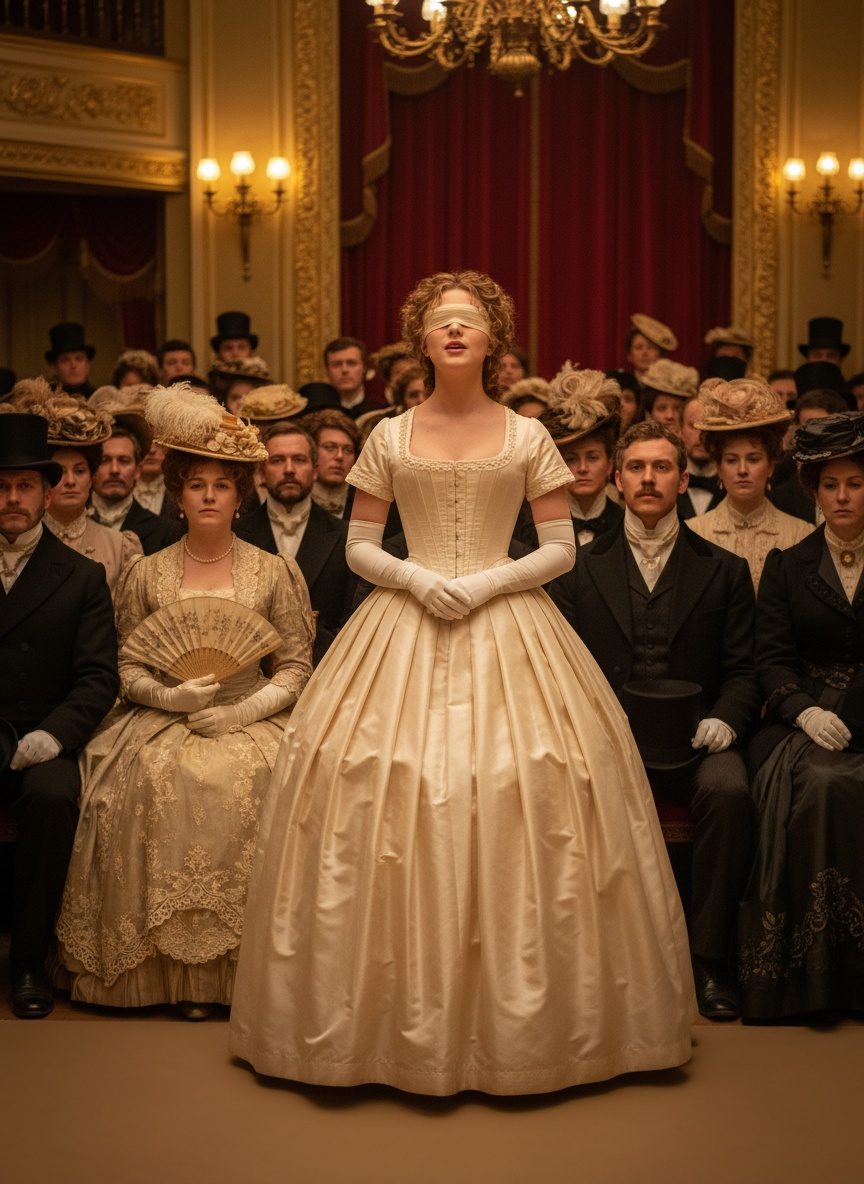
The gentle hum of conversation swelled through the grand concert hall, punctuated by the rustle of elegant gowns and the soft tread of polished shoes on marble floors. Suddenly, like a ripple through still water, a hush fell over the room. A diminutive figure emerged, guided carefully towards the center stage. Her name was Anna Draper, and though she could not see the grandeur of her surroundings or the expectant faces of the audience, she could feel their anticipation in the air. Her heart thumped in her chest like a wild creature, but she stood poised, every inch a performer ready to captivate the world, or at least this notable gathering before her.
In the grand hall, beneath the opulent chandeliers casting gentle light over red velvet seats, sat Queen Victoria herself. Although no stranger to performances, Her Majesty was keenly aware that this was no ordinary concert. At just seventeen, Anna's reputation had begun to carve out ripples through the musical circles of Victorian Britain. Blind from birth, she possessed a voice that seemed to channel the very essence of the human spirit — a sound so pure and evocative it could convey emotion beyond mere words.
The moment Anna opened her mouth and the first notes hung in the air, the striking clarity and emotive power of her voice painted vivid imagery on the hearts of each listener. With the first strains of song, an ethereal stillness enveloped the room. Anna's voice soared and dipped, weaving stories of love, loss, and longing — nuances she sensed more deeply than those who experienced the world visually.
Born to a modest family in a small English village, Anna's early life was devoid of the privileges that typically preceded a night such as this. Her parents, practical and resilient people, refused to let their daughter's lack of sight define her potential. Instead, they nurtured her innate talents with love and encouragement. For Anna, the world was a symphony of sound and sensation. Each song she learned was a world to explore, each note a step into unknown landscapes she could traverse only through her voice.
Read next: The Day a Surgeon's Son Chose Death Over Silence
Anna's journey from the simplicity of rural life to the grandeur of Britain's most prestigious concert halls was nothing short of phenomenal. She had honed her skills without the formal training of a conservatoire, a testament to her natural aptitude and perseverance. Her gift was discovered in the most unexpected of ways: during Sunday church services where her unaccompanied hymns left congregations enchanted, whispers of which soon reached beyond the parish boundaries.
This quiet revolution led her to the esteemed stage where she now stood, performing privately for the queen. Her performance was not just a rendition of music; it was an invitation for the audience to experience the world as she did, a realm where feeling mattered more than sight, where each note carried emotion as palpable as a warm embrace.
Read next: The Day a Chimney Sweep's Son Shamed a Whole Parliament
What made Anna's talent remarkable was not just her voice but the way it transcended the limitations life had imposed on her. Music was her language, one she spoke with unrivaled passion and understanding. Her ability to touch the hearts of those who listened, resonating with both the commoner and the crown, marked her as a singular artist of her time.
As her final note faded into silence, the room held its collective breath for a brief, charged moment before erupting into generous applause. The queen, often reserved, rose in recognition of the rare gift she had just witnessed. It wasn't merely Anna's talent that she acknowledged but also the courage and ingenuity that had brought her there. From that day, Anna Draper's name became synonymous with the captivating allure of the human spirit, triumphing over adversity.
Though history has not preserved her legacy as well as it should, the impact of that performance lingered long after the last guest had left. It is a tale not only of talent and triumph but of an era's fleeting moments where human resilience intersected with history, offering a glimpse into how individual stories can indeed stop a nation, if only for an evening. Such is the power of one voice, rising above doubts and limitations to touch the very heart of those fortunate enough to hear it.