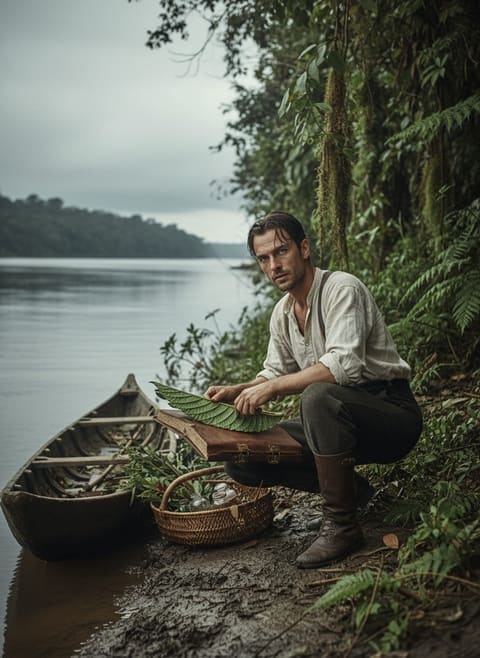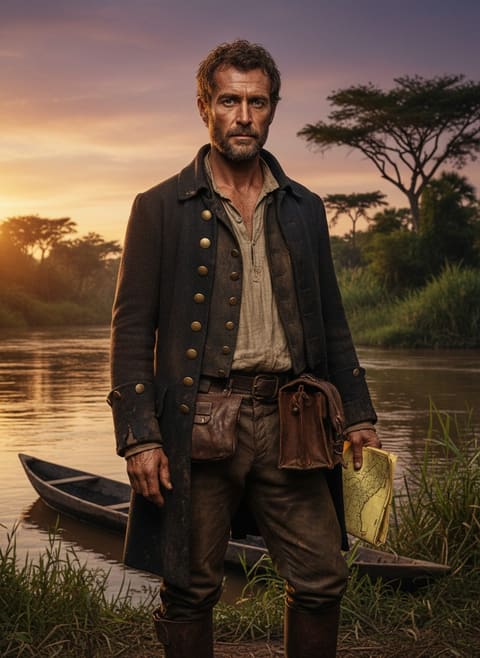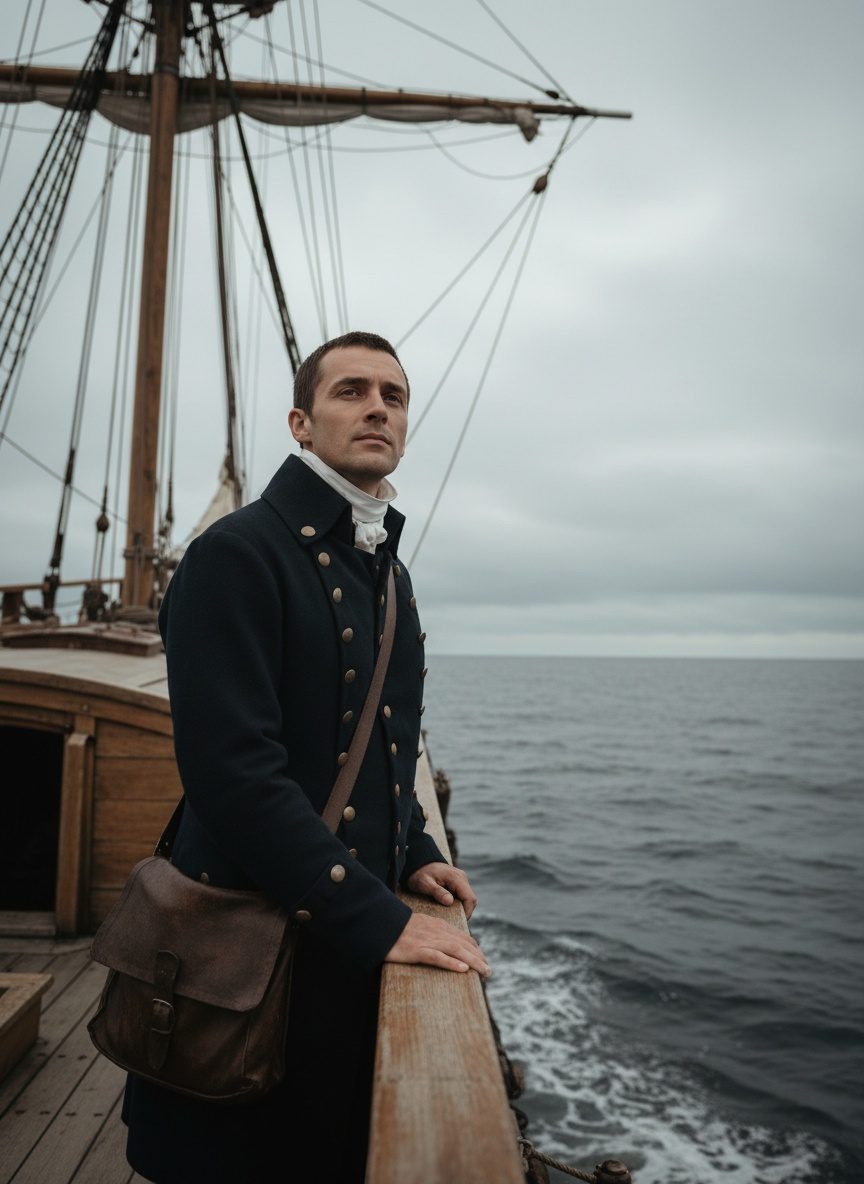
James Holman never saw the oceans he crossed. Yet he navigated them more intimately than most who could.
The Blind Traveller
Born in Exeter in 1786, James Holman seemed to be destined for a typical life of a Georgian gentleman, one enshrined in privilege but also bound by the era's strict social norms. However, fate had a different course set for him, one that would render him both isolated and extraordinary. At the tender age of seventeen, Holman began his career as a midshipman in the Royal Navy, a promising pathway towards honor and adventure on the high seas. Yet by twenty-five, something catastrophic happened. He was struck by a mysterious and paralyzing malady that numbed his limbs and veiled his world in darkness. Blindness, a condition many viewed as an insurmountable barrier, could have relegated him to a life constrained and devoid of its former ambitions.
But Holman was reticent to surrender to confinement. In 1810, after recognizing conventional treatments for his ailment had failed, he sought an escape from his blindness not in the return of his sight, but through independent exploration—a radical concept at a time when disability often equated to invisibility. Disregarding warnings and societal expectations, he embarked on solitary journeys, becoming known as the "Blind Traveller." His sensations were his tools—his hearing, his understanding, and most of all, his fierce will to decipher a world unseen. Not merely a tourist in his endeavors, Holman was a meticulous documentarian, mapping landscapes with descriptive prose, intrinsically painting vivid vistas which he would never witness himself.
Cherishing the Unseen
Holman's commitment to exploration saw him navigating continents and oceans through a remarkable physical and sensory acuity. One of his most ambitious voyages in 1822 pursued the grand scheme of circumnavigating the globe—a mission that eventually saw him touch every continent. Holman's journeys were arduous, often beset with dangers from tropical maladies to precarious terrain and encounters with hostile entities. Yet his disability fashioned him a unique ally in sound and touch. The language of the sea, the rustle of leaves in the wind, the nuances of weather poised to change—all spoke to Holman in ways words could not translate.
He charted maps primarily in the way of descriptions, engaging local guides and relying on his acute memory to forge mental landscapes rich in detail and history. Even when navigating the bustling streets of foreign cities, his cane tapped out both a path and a melody of his making, guiding him through adventures that few of his contemporaries dared even attempt. In many ways, Holman's reliance on senses other than sight allowed him to connect intimately with peoples and places. His blindness perhaps rendered him without prejudice, granting him access to experiences that sighted explorers may have overlooked. It was this holistic approach to understanding the world which allowed Holman to be so revolutionary in his travels.
Read next: The Day a Devon Sailor Mapped the Roof of the World Alone
A Legacy in Shadows
After decades of wandering, Holman returned to Britain, bearing tales that were as detailed as the colorful lands he had touched. Yet his stories, full of nuance and exploration, were often met with skepticism by those who equated sight with verification. His detailed accounts, published and read avidly during his lifetime, faded into obscurity over time as the age of discovery was overshadowed by industrial progress and colonial endeavor. Despite being lauded as the world's greatest traveler of his time, Holman eventually sank from the public eye.
In today's recounting of exploration history, Holman's remarkable life offers a narrative as inspiring as it is instructive. His ability to navigate uncharted territories through non-visual means challenges our preconceived notions of perception. The story of James Holman, the blind man who crossed oceans to chart a world he could not see, reaches beyond mere geographical exploration. It speaks to the indomitable human spirit, the unyielding quest for knowledge regardless of obstacles. In an era that seldom celebrated individualism among the differently-abled, Holman's voyages remind us that limitations exist only where imagination falls short.