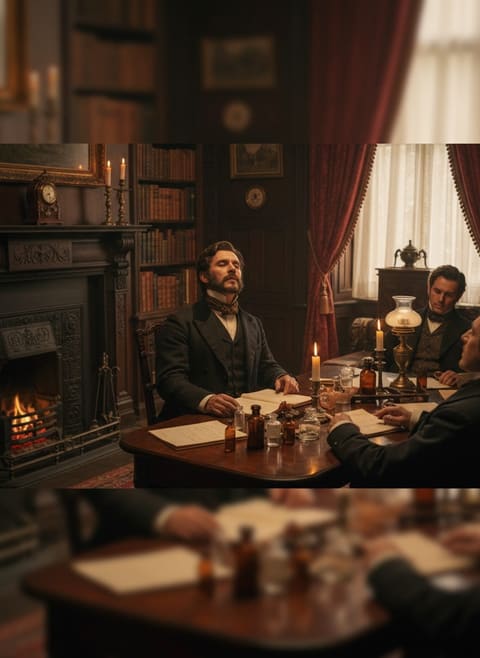
Most believed the air was the culprit. One man knew it was the water.
The Ghostly Fate of Soho
Amidst the cramped and cobbled streets of Victorian London, the district of Soho thrived on its vibrancy and diversity. A cacophony of sounds and a tapestry of faces characterized this bustling hub. Yet, in the summer of 1854, a spectral illness laid claim to its vitality, replacing the familiar hum of life with the quiet of unease and the scent of despair. The disease was cholera, and its grip was iron-clad; hundreds fell victim to its ravages in just days, causing a terrifying ripple effect as bodies accumulated faster than solutions.
The authorities were quick to settle on a cause that aligned with their longstanding reasoning. The prevailing miasma theory, an ancient belief that diseases such as cholera were spread by "bad air," directed their plans of action. Efforts to ventilate homes and sanitize streets were frantically undertaken, yet still, the epidemic raged. The widespread belief in miasma left little room for alternative explanations, rooting the public in misconceptions and steering responses in the wrong direction. In the shadow of this crisis, a young doctor emerged with a contrasting view.
John Snow’s Radical Rejection
The son of a farmer-turned-surgeon, John Snow was no ordinary physician. Exceptionally bright and insatiably curious, Snow bore the resolute conviction of a man who saw beyond appearances. He was driven by a tireless quest for knowledge and truth that pushed him to challenge the accepted norms of his time. Having previously researched and theorized upon the transmission modes of cholera, Snow dedicated himself to proving a radically different cause for the ongoing epidemic.
Read next: The Day a Surgeon's Son Chose Death Over Silence
Snow believed that contaminated water, not foul air, was the primary vector of cholera. While this notion was dismissed by many of his peers, Snow refused to stand down. With determination that bordered on obstinacy, he embarked on an unconventional investigation, opting to engage directly with the community rather than rely solely on existing medical doctrines. Armed with nothing more than a notebook, Snow ventured onto the streets of Soho, knocking on doors and compiling a list of the fallen.
Mapping the Invisible Menace
Every step Snow took was a journey into the heart of the tragedy that gripped Soho. Through his painstaking inquiry, he gathered vital information from the residents themselves, collecting data on how and where cholera had struck hardest. His empirical approach allowed him to observe patterns that others failed to detect. Piece by piece, a grim picture began to emerge. Snow’s dedication led him to create an innovative map that meticulously documented each cholera case in the area.
The map served as a visual testament to his theory, highlighting a cluster of deaths surrounding a water pump on Broad Street. What might have been an ordinary iron staple in the streets of London, this pump, Snow realized, was the breeding ground of death—and he had the evidence to prove it. Snow’s map illustrated the concentration of cases around this single water source, contradicting the miasma theory and leading him to petition for an unprecedented action that many deemed rash.
Read next: The Day a Chimney Sweep's Son Shamed a Whole Parliament
The Handle That Halted an Epidemic
Sensing the urgency and convinced of his findings, Snow approached the local authorities with his case. It was an unusual request—to remove the pump handle and cut off access to its contaminated waters. In a moment that would alter the course of public health history, the handle was removed, and with it, the stream of illness began to subside. While it wasn’t immediate, and certainly not viewed as the sole remedy at the time, Snow's actions marked a turning point in the battle against cholera.
The aftermath was telling. The decline in cholera cases post-handle removal helped validate Snow's hypothesis that water, not air, was the silent carrier of the disease. Though some authorities initially remained skeptical, the dramatic drop in new cases could not be ignored, and Snow’s legacy began to take root. This moment of triumph marked the beginning of a paradigm shift in understanding and addressing communicable diseases, laying foundational stones for modern epidemiology.
John Snow’s resolve in the face of widespread resistance exemplifies the power of inquiry and the impact of evidence-driven conclusions. His tale is one of determination and courage—not simply an anecdote from the annals of medical history, but a lesson in the relentless pursuit of truth. In a world where the winds of misinformation can easily mislead, the story of Snow's defiance serves as a crucial reminder: sometimes, the answers lie in the least expected places, and it only takes one to change the course of destiny.