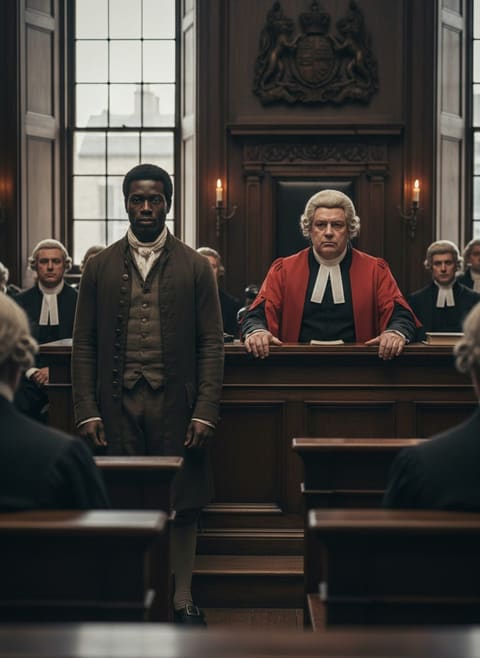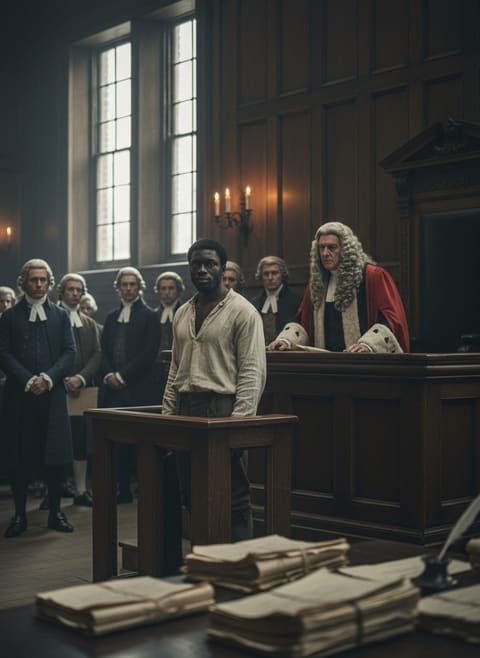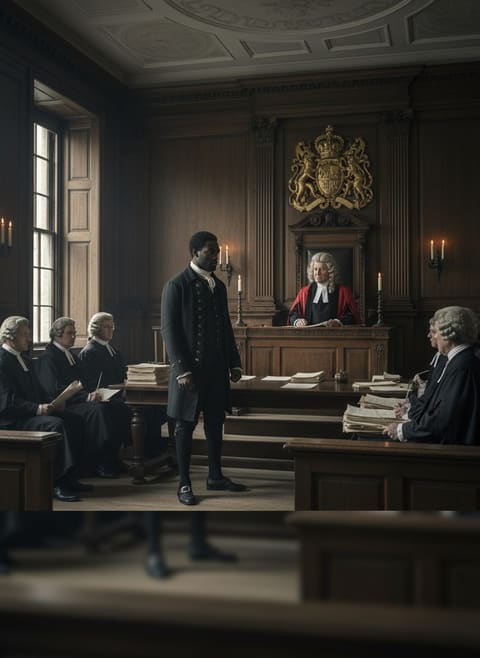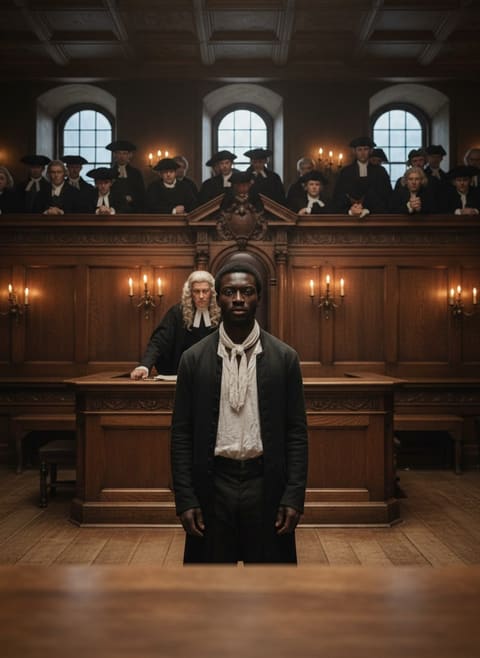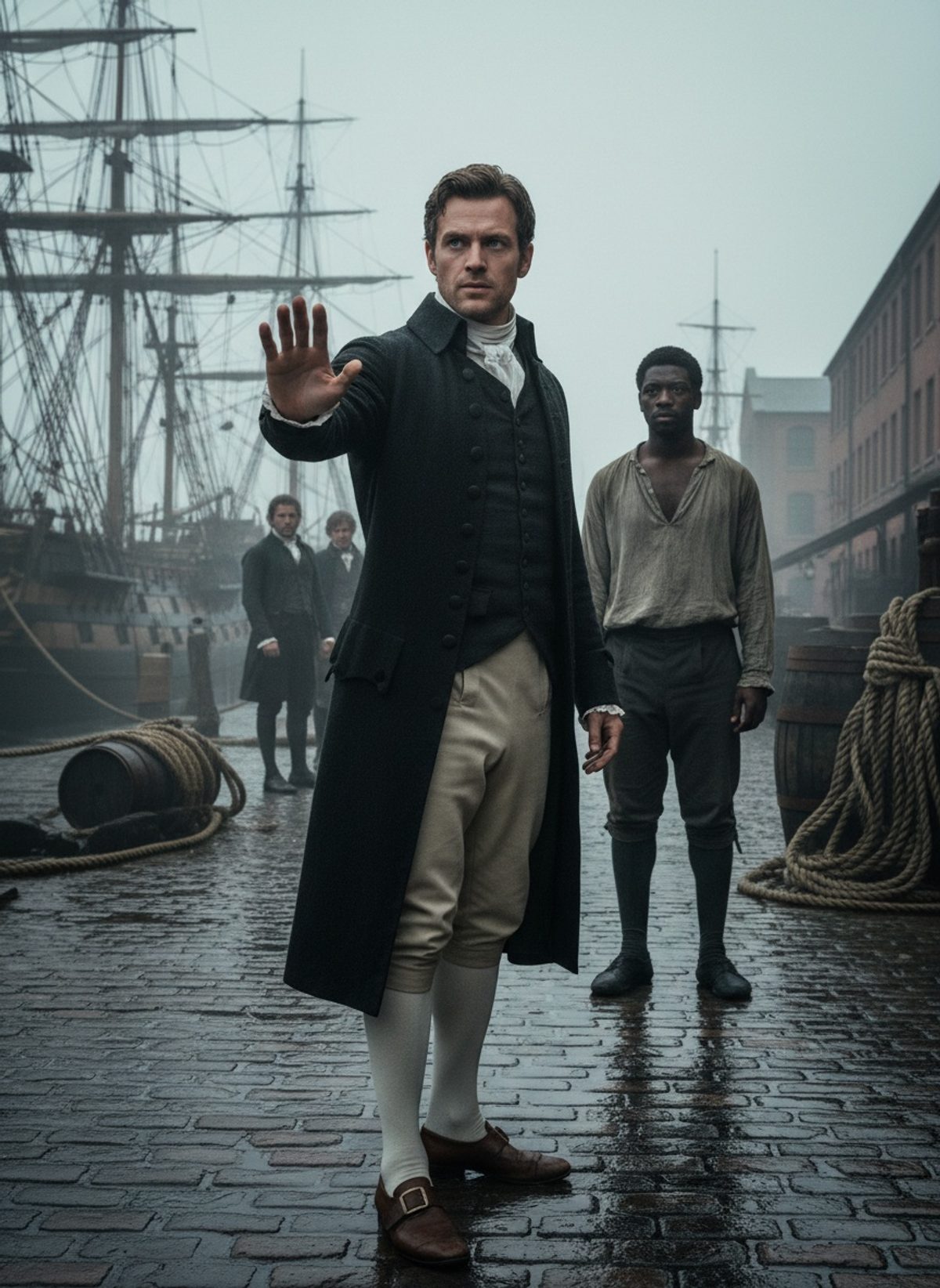
The salt-laden winds of the Bristol Channel swept over the bustling dockside, carrying with them a cacophony of sounds that signaled a city alive with maritime commerce. Seagulls squawked above while the rhythmic clatter of hooves on cobblestones played a percussive undercurrent to the shouts of dockworkers unloading crates and barrels. Yet amidst the everyday bustle of the bustling Georgian port, a scene was unfolding that would forever impact justice in Britain.
In 1772, a Black man named Jonathan Strong, bruised, shackled, and faint from exhaustion, was being thrust into chains along the quayside under the watchful eye of his former master, ready to reclaim what the law said was his. But all laws would meet their trial here in the damp, noisy urgency of the Bristol docks. For standing in the midst of this human tide was a lone figure—a clerk named Granville Sharp—whose refusal to comply with the prevailing norms of ownership and legality would challenge the very circumstances of slavery itself.
The Chains of Ownership
The Georgian Era was an age of dichotomy—enlightenment ideals met brute realities; commerce thrived even as the moral question of human commodification simmered below the surface. On this day in Bristol, Strong bore the evidence of a crueler past. A mere clerk and son of a clergyman, Granville Sharp had perhaps never aimed to alter history, but he was about to do just that. With a deep sense of Christian duty and an unyielding belief in equality, Sharp's presence at this fateful moment was anything but chance. As a witness to Strong’s plight, he recognized the iron-bound cruelty of the situation.
Strong’s history was one that echoed a cruel pattern. Kidnapped from African shores, he had been sold as property, enduring long years in servitude. His escape had been brief, and here he was, caught in a brutal cycle, chained once again to his master’s whims. Sharp, with his quiet unassuming presence, stood in defiance of a law that rendered humans as items to be traded. Though he lacked formal legal training, his ferocious advocacy was spurred by moral conviction and an unswerving commitment to the abolitionist cause. What could one man, with none of the levers of bureaucracy or parliamentary authority, hope to achieve in this cauldron of injustice?
Read next: The Day a Freed Slave Lectured Britain's Finest Minds
Yet, Granville Sharp had honed an understanding of the legal system through past engagements where he'd developed a reputation for challenging the legality of slavery as practiced in England. His correspondence with legal colleagues and sustained campaign with influential abolitionists had prepared him for just this sort of encounter. As he approached the dock, his previous efforts, those petitions and pamphlets questioning the legalities of owning a human being, galvanized him to action. His stepping in was not just an act of defiance but the informed resistance of a determined advocate.
The Clash of Law and Morality
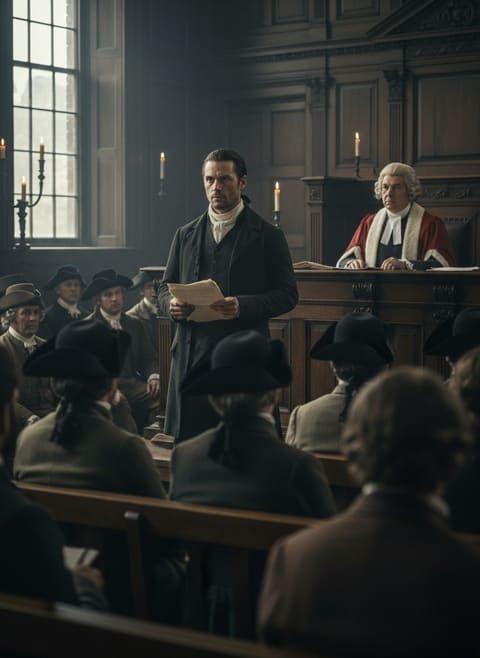
Sharp’s presence halted the procedure, causing confusion and alertness among the bystanders. He demanded Strong's release, insisting on the man's humanity over any claim of ownership. Though Shackled and weak, Jonathan Strong became the focal point of a legal tempest, a test of the prevailing social norms and the moral code that Sharp fervently upheld. As arguments unfolded before a small but growing audience, the quayside scene frothed with tension. The Bristol dock that day was a battleground for the heart and soul of the law.
This was not the first time Sharp had championed a difficult cause. Known in certain circles for his previous involvement in cases contesting the legality of slavery on English soil, Sharp deployed his limited but daringly effective knowledge of legal principles. His stance relied on the premise that English soil could scarcely support the burden of transatlantic laws of ownership and slavery—a radical notion in a society entrenched in colonial profits and rigid social hierarchy. With the aide of high-placed contacts developed through persistent endeavors, Sharp turned a moment into a movement, framing Strong’s release from bondage as moral inevitability.
The argument sharply shifted from quayside to a litmus for the legal system's soul. Sharp’s fervor and well-crafted questions lingered beyond the dock’s steam and overboard cries, reverberating from courthouse corridors to Parliament halls. It was not just Strong’s freedom in contention, but the foundational British tenet of liberty manifesting on a grimy dock in Bristol. The pavement beneath their feet became, in that instance, less the ground of economic exchange and more the grounds of philosophical battle.
Read next: The Winter That Broke Napoleon's Army of Portugal
The Path Ahead
Strong walked free that day, a testament to the ineffable and invincible spirit of those without legal or governmental power who nonetheless wielded the force of conscience. The crowd, having witnessed a theatrical legal drama upon cobblestones and wooden decks, saw with their eyes planted in amazement the chains fall away from a man who, moments before, had been with lesser standing than the barrels rolling by.
The storm Sharp raised set a ripple across the waters of British society. His singular act further fomented discussions which gradually eroded the pillars undergirding the legality of slavery in Britain. Though full abolition was away in the future, the day's impact was unmistakable. Granville Sharp had operated as an everyman thrust into extraordinary responsibility, ushering forth a community dialogue challenging the innate justness of ownership over another's liberty.
Sharp’s courage on that 1772 day illustrates that true justice often begins with individuals' bold stances against what they know to be wrong. Beneath the mercantile facades and unforgiving divisions of social order, the ripples began to rise, unsettling the static acceptance of inequality and echoing through time—a tale of human resilience and the relentless pursuit of dignity. As we map the chronology of change, some scenes—like Bristol's bustling docks—move from obscurity to emblematic significance, reminding us of the enduring spirit forged in the crucible of defiant humanity.