The sun was setting low over the scarred fields of Flanders, casting long shadows that danced eerily across the churned earth. The wind carried the acrid scent of smoke and the dull murmur of distant artillery, punctuated by the crack of rifles and the cries of the wounded. It was April 1918, and the Allied lines were crumbling under the weight of a massive German offensive. Amidst the chaos, where retreat was the only logical order, one unassuming figure defied expectation, moving steadily into the jaws of danger as others fled from it—Padre William Doyle.
The Crucible of Faith and Duty
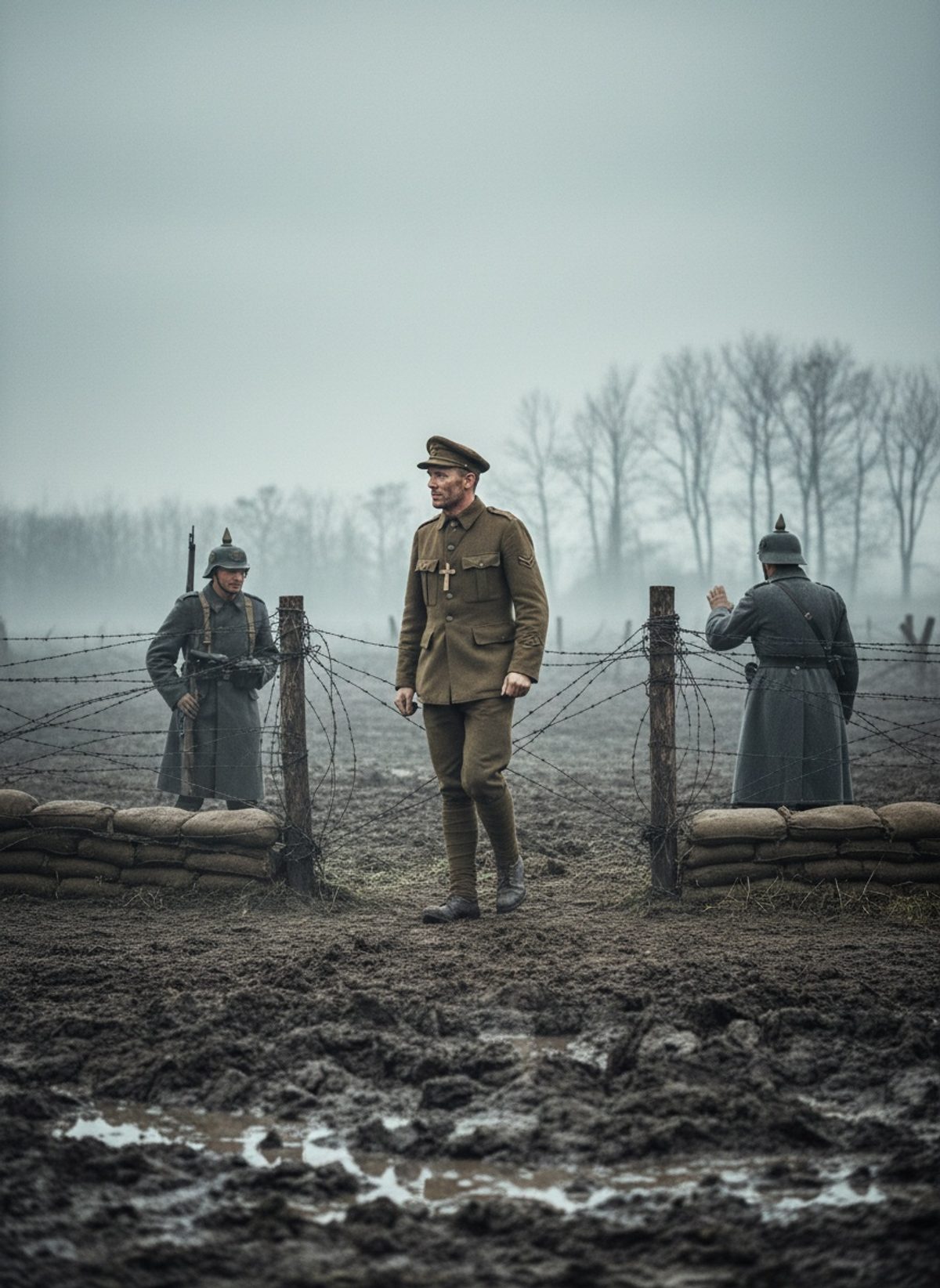
The Western Front in World War One was not just a battlefield of guns and steel; it was a crucible that tested the limits of human spirit and moral courage. Padre William Doyle, an Irish Catholic priest, was a chaplain with the Royal Dublin Fusiliers when the German spring offensive threatened to obliterate the Allied positions. Despite the overwhelming force of the enemy and the tangle of concertina wire and torn earth, Doyle embarked on a solemn mission not driven by orders, but by a profound sense of duty and compassion.
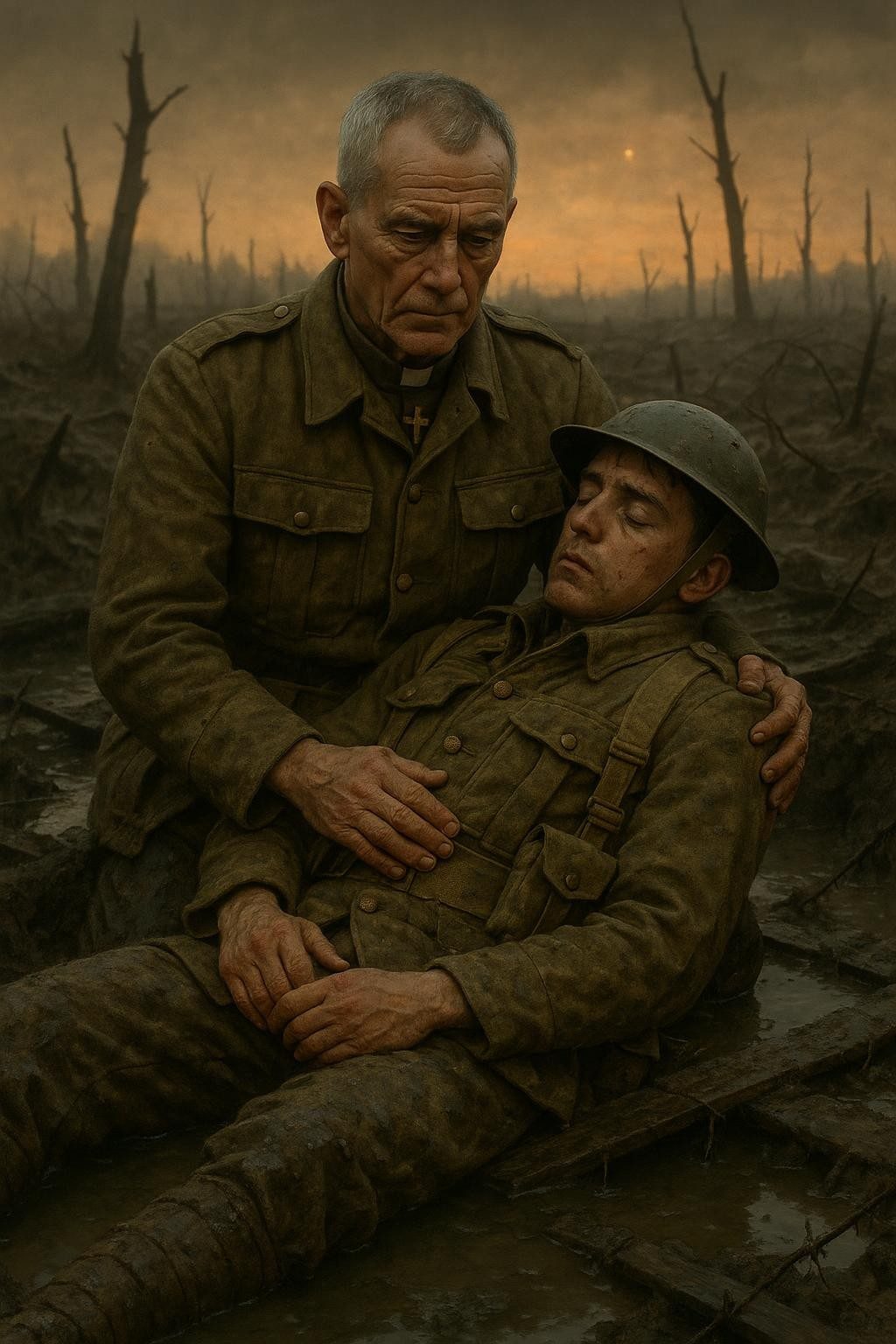
As the order to retreat echoed through the ranks, officers and men alike fell back, mindful of the futility of standing their ground. Yet Doyle, unarmed and clad only in his clerical garb, moved towards the moans that pierced the smoke-filled air. This was not the first time Doyle had ventured into No Man’s Land. He had become a familiar and comforting presence in the trenches, known for his willingness to risk everything to administer last rites or simply offer solace to the dying.
Echoes in the Trenches
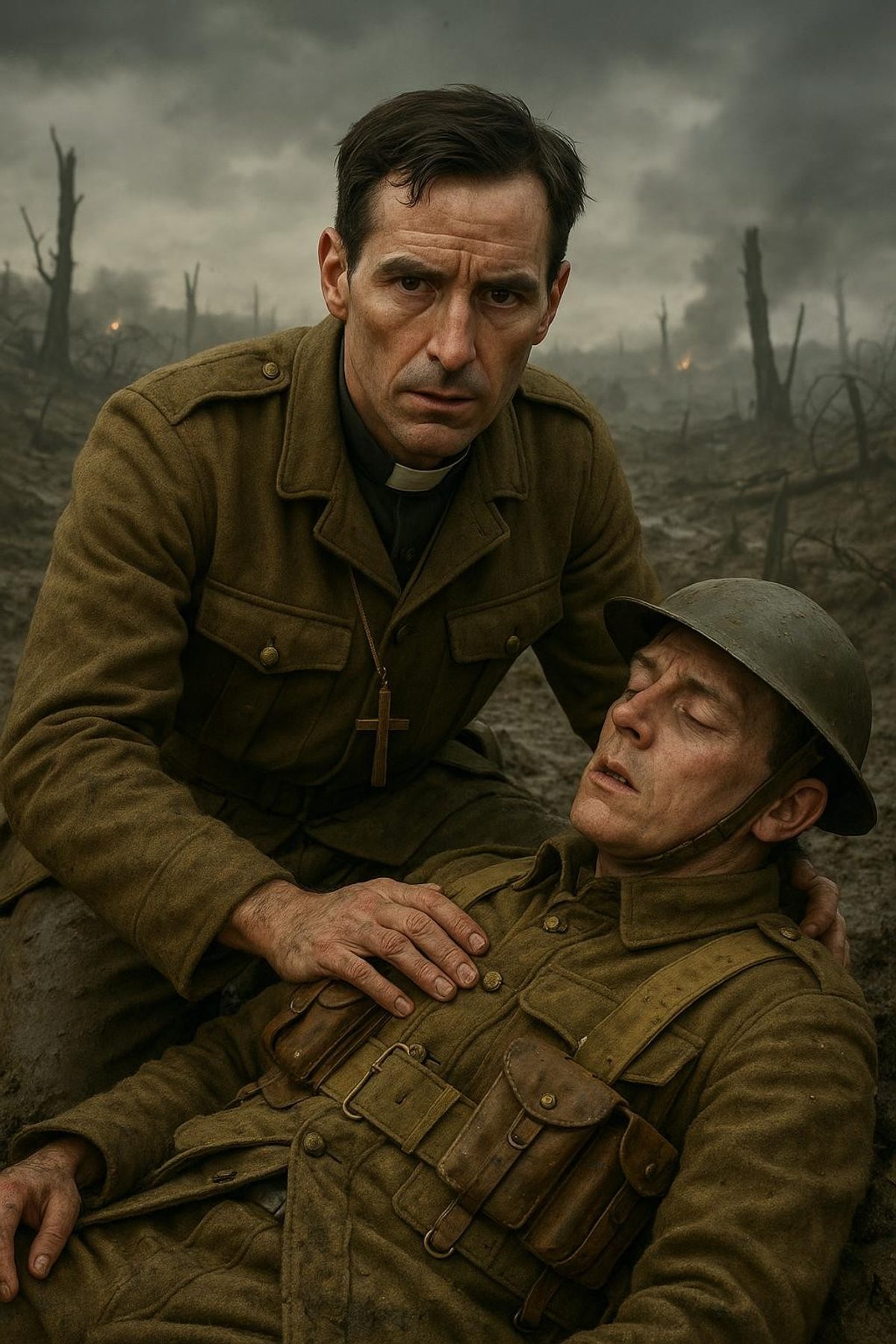
The men who served with Padre Doyle spoke of him with reverence, recounting tales of his unyielding bravery and boundless generosity. During battle, he would drag wounded men to safety, ignoring the hail of bullets and shrapnel that turned the ground into a deadly quagmire. His actions were a beacon of humanity amidst the grim specter of industrial warfare, a reminder that compassion could exist even in the bleakest circumstances.
Read next: The Night a Lone Commando Swam Into a Fortress Harbour
It is said that Doyle carried with him a satchel filled with field dressings, chocolate, and cigarettes—small comforts in a world stripped of pleasure. He distributed these while chanting prayers or humming hymns, a comforting ritual for many soldiers who clung to whatever hope they could find. For Doyle, each wounded man, whether enemy or ally, was not just a casualty; they were souls in need of peace and dignity as they faced their final moments.
The Silent Witness of Sacrifice
On that fateful April day in 1918, Doyle became a silent witness to the carnage, his very presence a testament to the power of sacrifice. He moved from one wounded soldier to another, intent on offering words of comfort or a familiar prayer, willing to bear witness to their pain and provide what little relief he could offer. Despite the relentless advance of German troops and the panic that rippled through the Allied ranks, Doyle’s calm demeanor was infectious, instilling a sense of quiet courage in others.
Doyle’s decision to stay with his men cost him dearly. As the chaos of battle swirled around him, he continued his ministrations, oblivious to the personal risk and singularly focused on his moral obligation. His actions did not go unnoticed. Surviving soldiers recounted how Doyle’s bravery inspired them to keep fighting, to hold the line, if only for a little longer.
A Legacy of Unsung Valor
Padre William Doyle’s story is not one that has found its place in the annals of widely told war legends, yet it occupies an essential chapter in the human narrative of World War One. It is a tale of individual bravery that defies the senselessness of war, a timeless reminder of what it means to serve others selflessly. The men Doyle comforted and saved during those harrowing days carried his legacy with them, long after the guns had fallen silent.
The mud of Flanders fields, today overgrown with poppies, whispers stories of countless anonymous heroes, among whom Padre Doyle’s name resonates quietly. His unwavering willingness to act on his convictions—standing alone on a battlefield of dread—illustrates the extraordinary power of faith and compassion. In the devastating theater of war, where every moment was overshadowed by loss, Doyle’s final walk into the fray underscored the simple yet profound truth: that amid the horrors of conflict, there exists an undeniable capacity for greatness grounded in empathy.