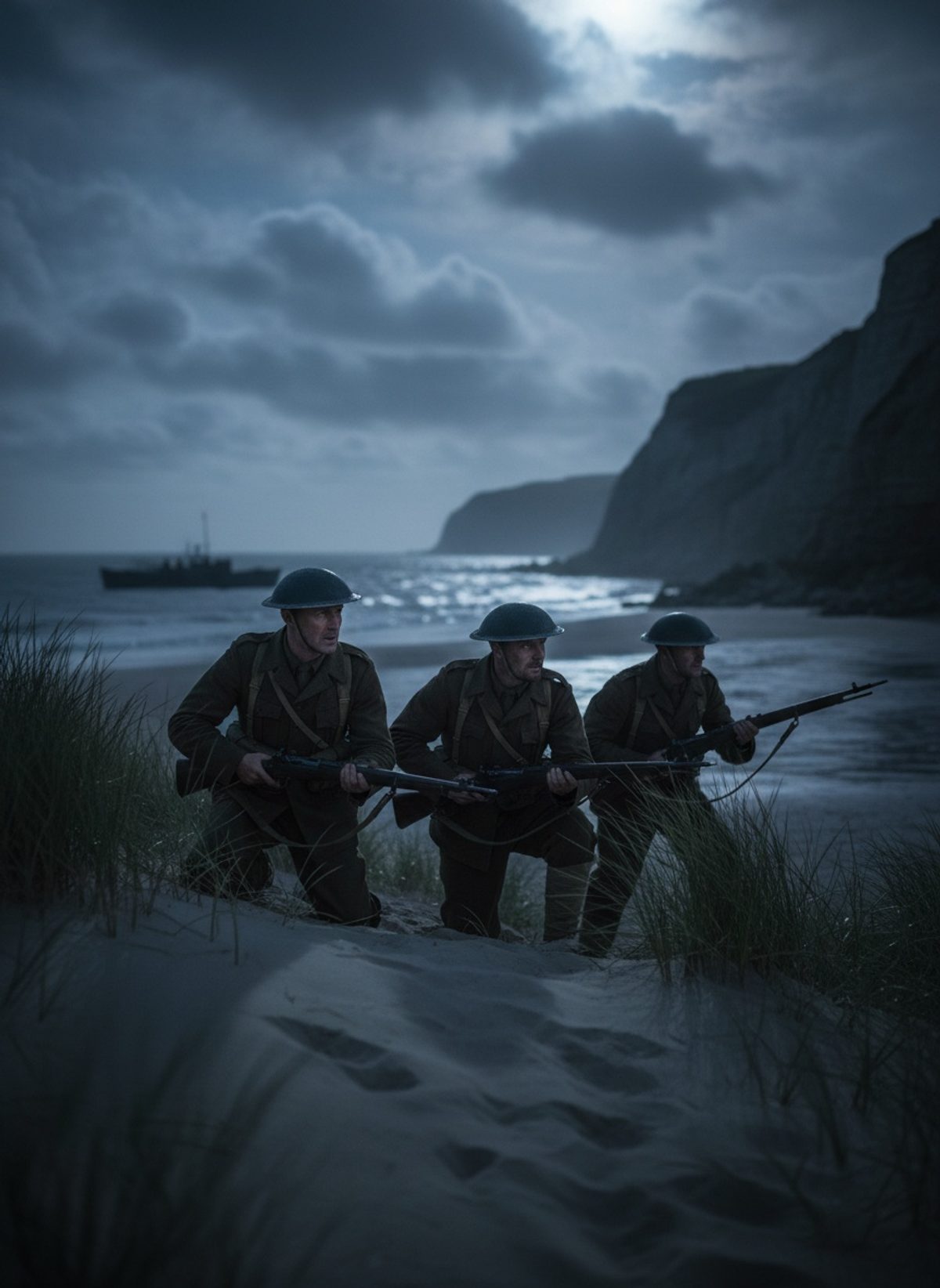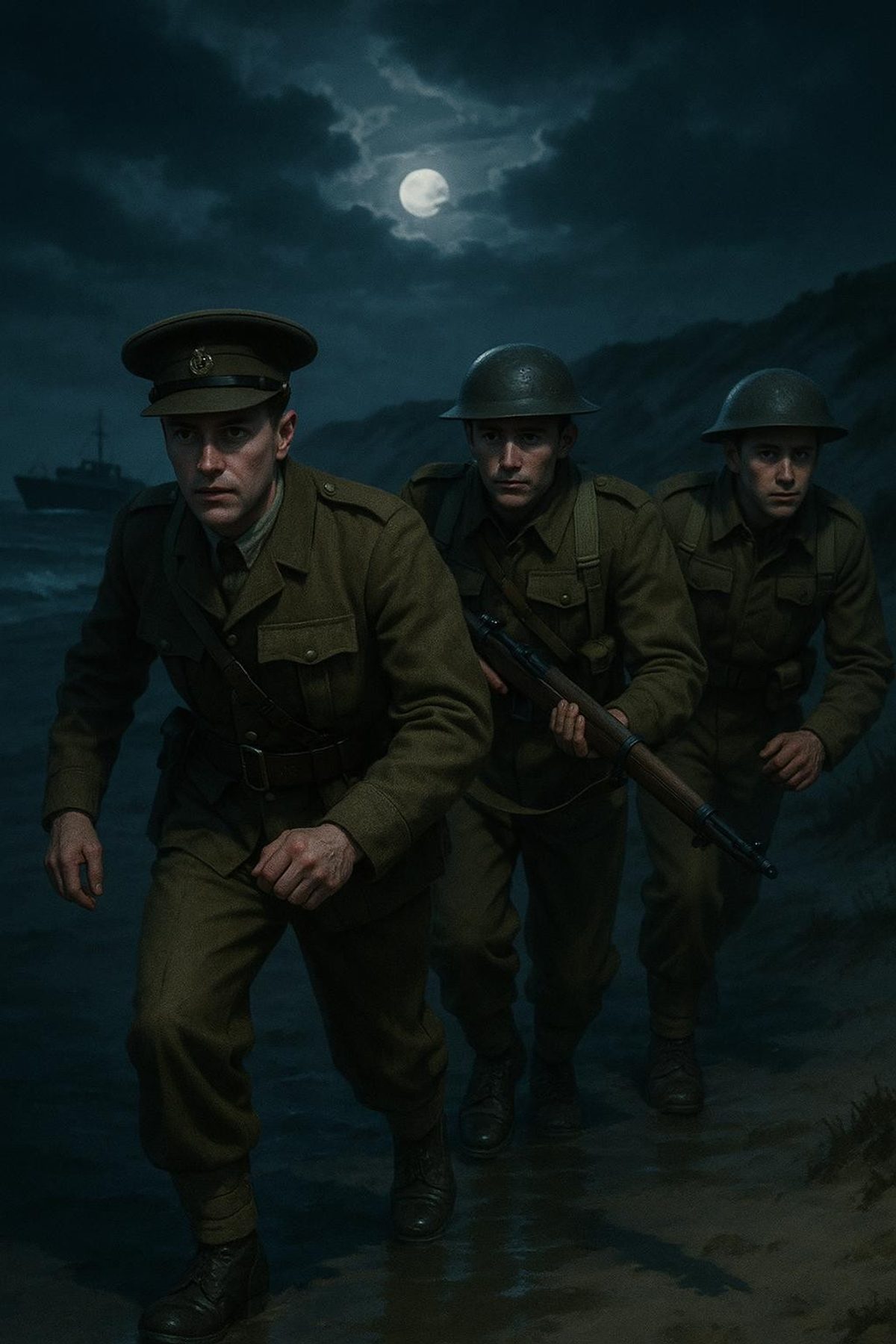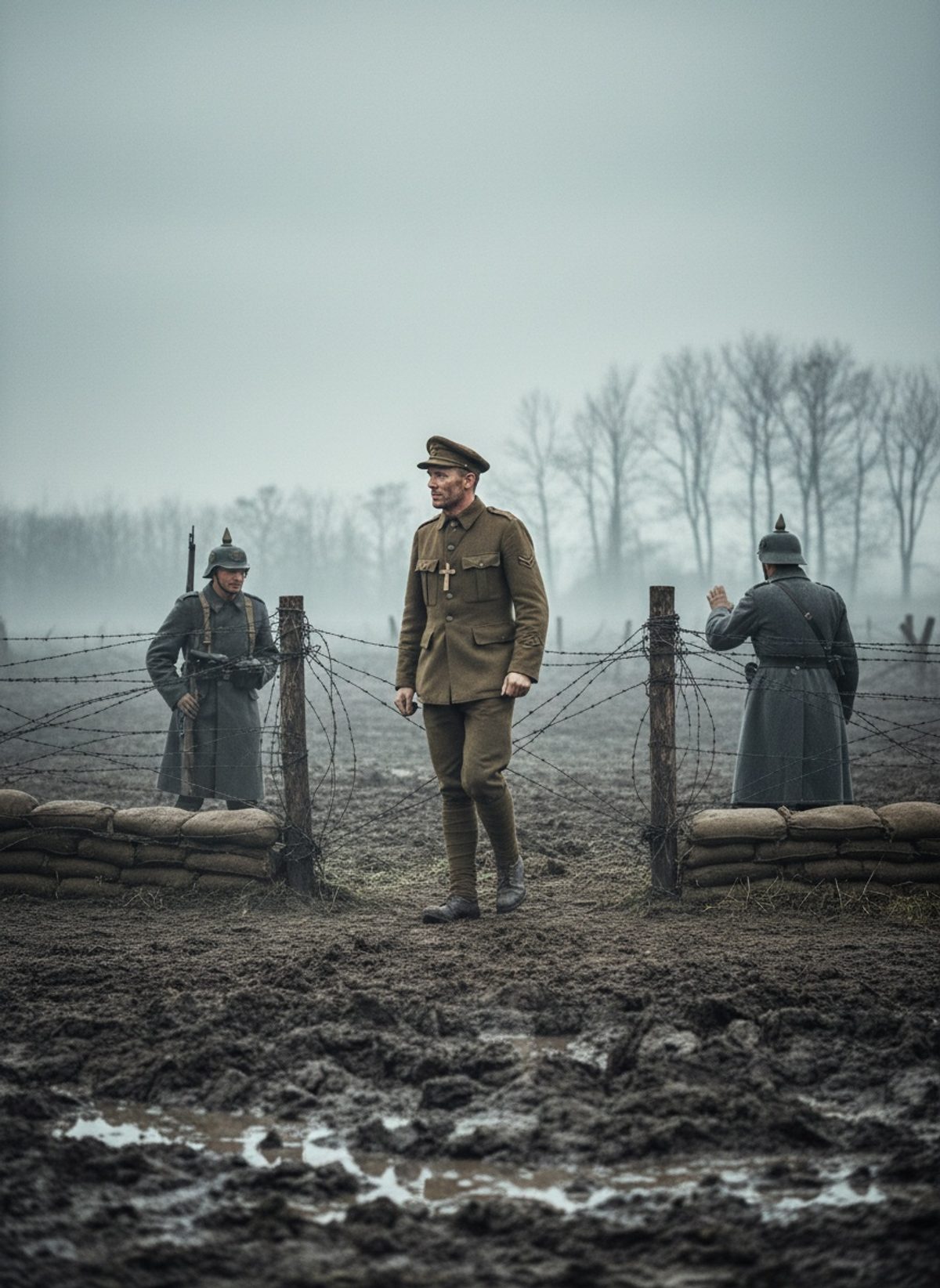
The cold, unforgiving wind cut through his coat as Father William Doyle stepped over what remained of the barbed wire, his breath visible in the chill of the November air. The burnt aroma of gunpowder mingled with the sickly-sweet scent of impending death, and the distant rhythm of artillery fire echoed the beat of a somber dirge. Every step towards the German lines was fraught with danger, yet he moved with an unwavering purpose, every crunch of frost-bitten grass beneath his boots reverberating in the tense silence that surrounded him. For in that bleak winter of 1914, amidst the stagnant frontline trenches, a request had been granted that defied the very essence of war.
The Silent March
No trumpets heralded his journey, nor did any flags wave to signal his passage; there was nothing but the frost underfoot and whispering winds through skeletal trees. Ordinarily, such a venture across enemy lines would guarantee a swift end, but on this occasion, the Germans watched, their rifles poised, yet strangely silent. They were allowing this solitary figure in a chaplain's uniform to pass unharmed, a single man moving with divine grace among the theater of chaos. Father Doyle possessed a rare kind of bravery, the kind that moved and inspired all who bore witness. His mission was simple yet profound — to reach the wounded British soldiers who languished in the no-man's land between life and death.
The contrast of his demeanor with the blood-soaked battlefield was stark. Here was a man driven not by orders or strategies but by compassion. As he neared the German encampment, the scene shifted. Gone were the immediate signs of barbed-wire and desolation, replaced instead by makeshift tents and the guarded stares of weary soldiers, who, until Doyle’s arrival, had known the priest only as a distant threat. As he approached them unarmed, a palpable awe swept through the German ranks; respect, perhaps, for the human spirit that sought to transcend the war’s suffocating brutality.
Even amidst hostility, there lingered the adherence to a shared understanding of mercy. The Germans, allowing him passage, could not completely suppress their humanity. Among Doyle’s intentions dwelled a straightforward plea: that compassion, even momentarily, could outweigh the imperatives of warfare. With each step taken among the German-occupied camp, he embodied this fragile hope.
Read next: The Day a Welsh Miner's Son Held a River for Six Hours
Between Heaven and Earth
Alongside Father Doyle, one could find more than scattered debris and the somber remnants of battle; there lay potential salvation. Death may have overshadowed the trenches of the Great War, yet life miraculously persisted among its ruins. When Doyle reached the enclave of his convalescing compatriots, each face bore the haggard testament of suffering. The men he had come to save were alive — but just barely.
It is remarkable to consider what words might have been exchanged or the silence that did all the talking. Doyle's presence offered more than spiritual succor; it provided a tangible link to home and the hope of survival. He knew he must tread the fine line between providing comfort and sparking false hope. The Germans, meanwhile, watched with a mixture of curiosity and solemnity, heartened perhaps by the shared experience of witnessing such a radical act of compassion.
Doyle's duties transcended the ordinary bounds of chaplaincy under these conditions. With gentle hands, he assisted the dying, administering last rites with reverence and an unwavering faith in the sanctity of life. For those soldiers not beyond saving, his visit brought urgent medical care and the promise of retrieval. He was neither a medic nor a miracle worker, yet his actions blurred the lines between both roles. He came to help those clinging to the thin thread between this world and whatever lay beyond, providing the dignity and grace so often stripped away by war.
A Return, Weighted with Truth
As Father Doyle turned away from the German lines to make his return, he was no longer alone. Behind him trailed not a parade of captives but carriers of fragile hopes. Their bodies bore fresh wounds; their faces, haunted by the horrors of combat, yet they moved onward, shepherded by the resolute care of the figure leading them. Doyle departed quietly, leaving the solemn field of mercy behind, filled with gratitude for those moments of truce carved unwritten in the battle’s harsh narrative.
Remarkably, the Germans respected this sacred convoy's return without firing a shot, illustrating an unspoken solidarity that overshadowed orders and animosities. Doyle's mission had been achieved through nothing but dialogue and courage — qualities all too often suppressed in the rusting machinery of war. Each footstep taken during his retreat must have felt lighter in contrast to the heavy, burdened heart with which he began this journey.
Why does this story matter? It serves as a whispered reminder of humanity’s potential even amidst the dissension of war. Father William Doyle's solitary act lights a torch of understanding — however flickering — that glows through the annals of history: a testament to the invisible bridges of empathy and faith that sometimes span even the widest divides. It is the rarely told stories like these, woven with threads of courage and kindness, that steadfastly challenge the accepted chronicles of warfare and offer hope that beneath uniforms on either side, the heartbeats of compassion inevitably find resonance with one another.