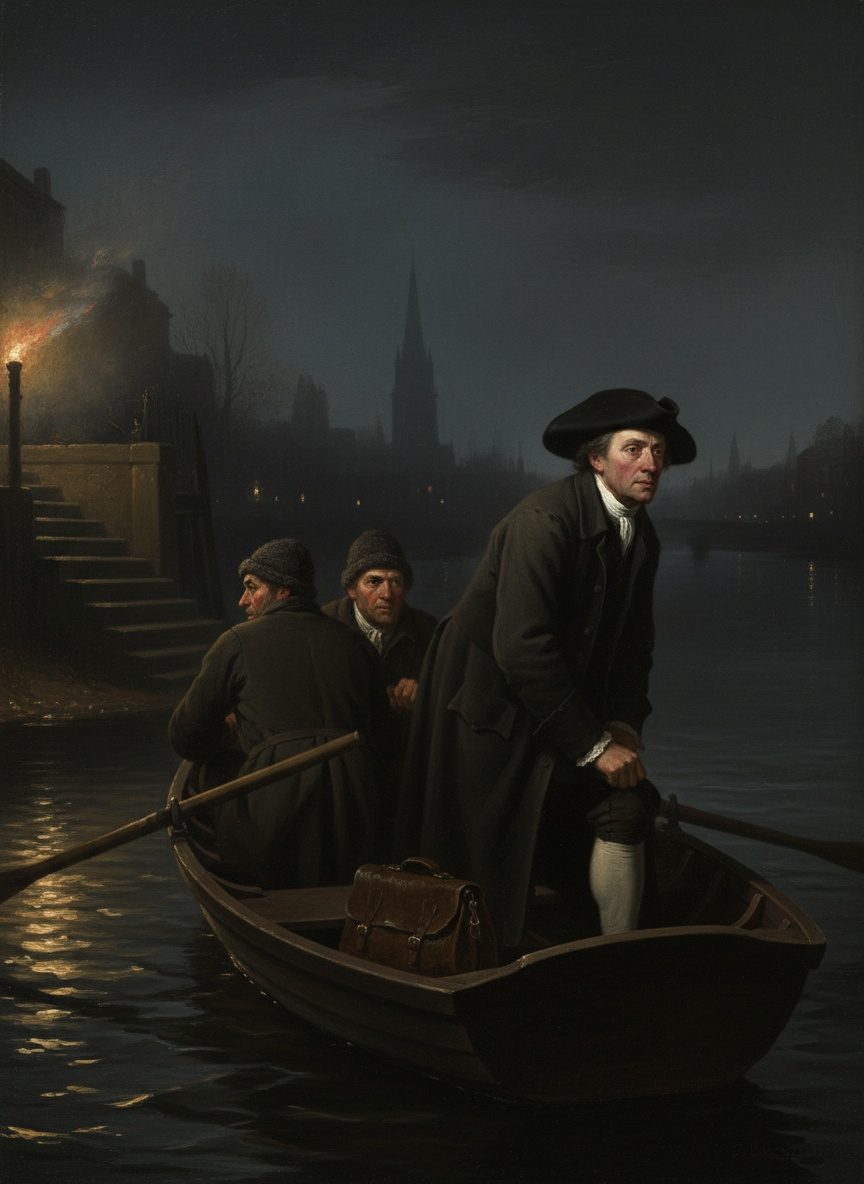
The night was ink-black, save for the feeble shimmer of moonlight glinting off the water of the Thames. James II sat hunched in a small boat, every stroke of the oars pushing him further from the throne he had once believed was his by divine right. The icy December wind bit at his skin as he clutched the cold wood of the vessel, a waning monarch quietly slipping away from a kingdom that had already chosen another—his own son-in-law, William of Orange.
Less than a year prior, few could have imagined this scene—an English king, the son of the formidable Charles I, fleeing through the shadows like a thief in the night. Yet the events of 1688, the so-called Glorious Revolution, were no ordinary transition of power. Unlike the violent convulsions that had marked England’s past from Edward II to Richard III, this was a quiet dismissal, the consequence of a monarch who had lost the trust of his people, his Parliament, and even his own family.
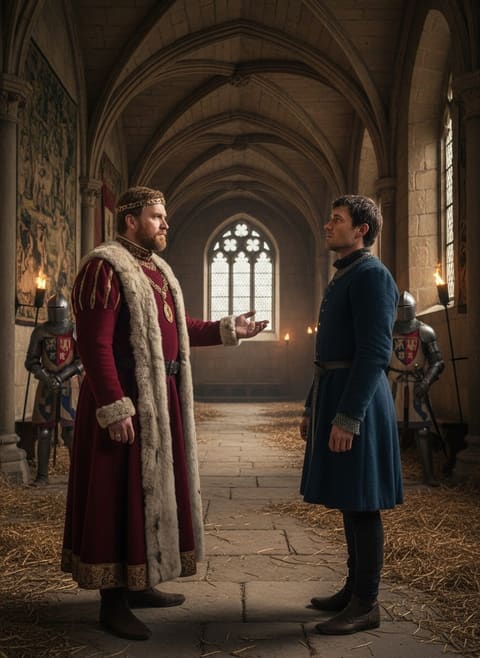
James's reign had been tumultuous almost from the outset. As a Catholic in a dominantly Protestant country, his faith was the linchpin of distrust and social unrest that led many to question his decisions. His attempts at religious tolerance, although seemingly beneficent, were perceived as cunning maneuvers to strengthen Catholic influence at Court and beyond. Elevating Catholics to key positions and dismissing Parliament had only exacerbated tensions.
Yet James was steadfast in his vision—or perhaps blinded by it. His own daughter Mary, married to William of Orange, began to be seen as a preferable sovereign, the Protestant alternative at a time when James was deemed too radical, too different, too disconnected from the heart of his realms. Whispers grew louder until they roared, and by the time William landed with his Dutch fleet, it was all too clear—James's support was vanishing like the ebbing tide beneath his narrow boat.
Read next: The Day a Young Prince Knelt and Refused a Crown
As the oarsmen rowed rhythmically, James reflected on the scenes he left behind: the looming shadow of Whitehall Palace, the crimson-clad soldiers who had begun to eye him with suspicion rather than allegiance, the uncertain visage of his most trusted advisors, paralyzed with doubt. Some had even dared to question him openly. It wasn’t open confrontation; it was erosion from within, an unraveling thread that refused to hold.
On board the ship waiting at Gravesend, the king would hear the news that stunned the world. Unlike other monarchy crises where executioners waited with sharpened axes, no such fate awaited him. England had committed—to watching, to silence, to letting him slip away. The Great Seal of the Realm, a symbol of his royal decree and power, lay somewhere at the bottom of the Thames, discarded in dramatic if futile symbolism. It soon became clear—the absence of the seal could not stop the momentum of dislodged sovereignty.
Upon arrival in France, the land of his maternal lineage, James found refuge under the protection of King Louis XIV, another monarch who had no love lost for the Protestant William. While in exile, James reflected on the irony of it all. A king without a throne, with nothing more than stories of his former rule to whisper into the drafty halls of foreign palaces. France, although quiet, was a disorientingly different home. England, always within sight yet beyond reach, became a spectral torment in his dreams.
Read next: The Day a Queen Rode Alone Into a Mutinous Army
But why did England not reach out, grasp him from his night-bound voyage, and cradle or crush him in debates or blockades? The answer was as complex and convoluted as England itself, a nation that had, perhaps, learned too well from its past. This time, a smoothly executed transition was preferable, even if that meant casting aside the awkward, cumbersome reality of James's fugitive quest.
And so history turned another leaf, pages fluttering as if in the wind of those long-ago nights, to focus on William and Mary. Their dual monarchy would reset England’s constitutional framework, shifting more defined power towards Parliament, a shift born of the quiet rebellion that allowed a king to fade gently into obsolescence. With acts solidifying Protestant succession, the 'Glorious' aspect of the revolution was not one of bloodshed but of tactical resolution, defining the brave new political landscape of Britain for generations to come.
As for the lessons whispered in the hollow silence of James II's departure, they reverberate still within the annals of history. How does a nation decide when to let go of its monarch, not through a battlefield or scaffold but through the unsettling ease of indifference? In James’s case, it was by recognizing that sometimes the greatest power lies not in the act of overthrowing, but in choosing to watch as history determines its own course, occasionally in the still, serene silence of thwarted intentions—like a boat fading into the shadows over rippling Thames waters.