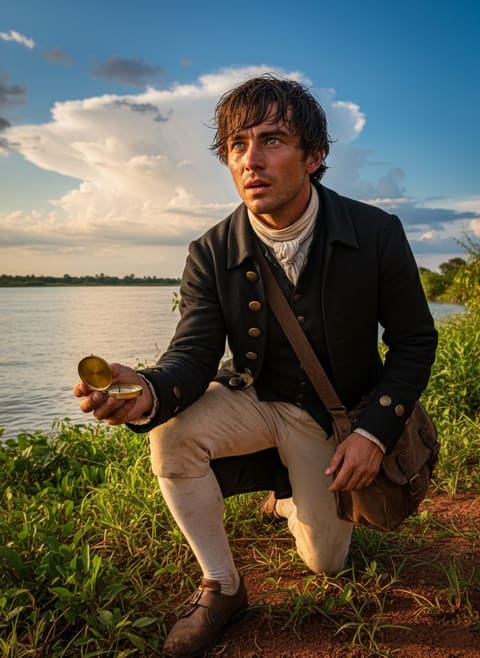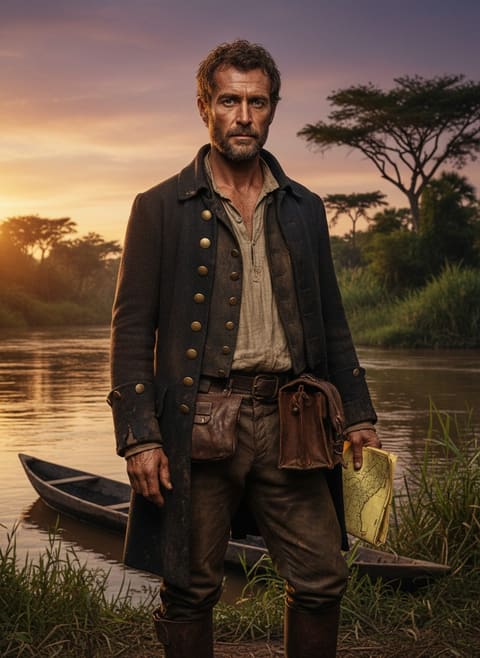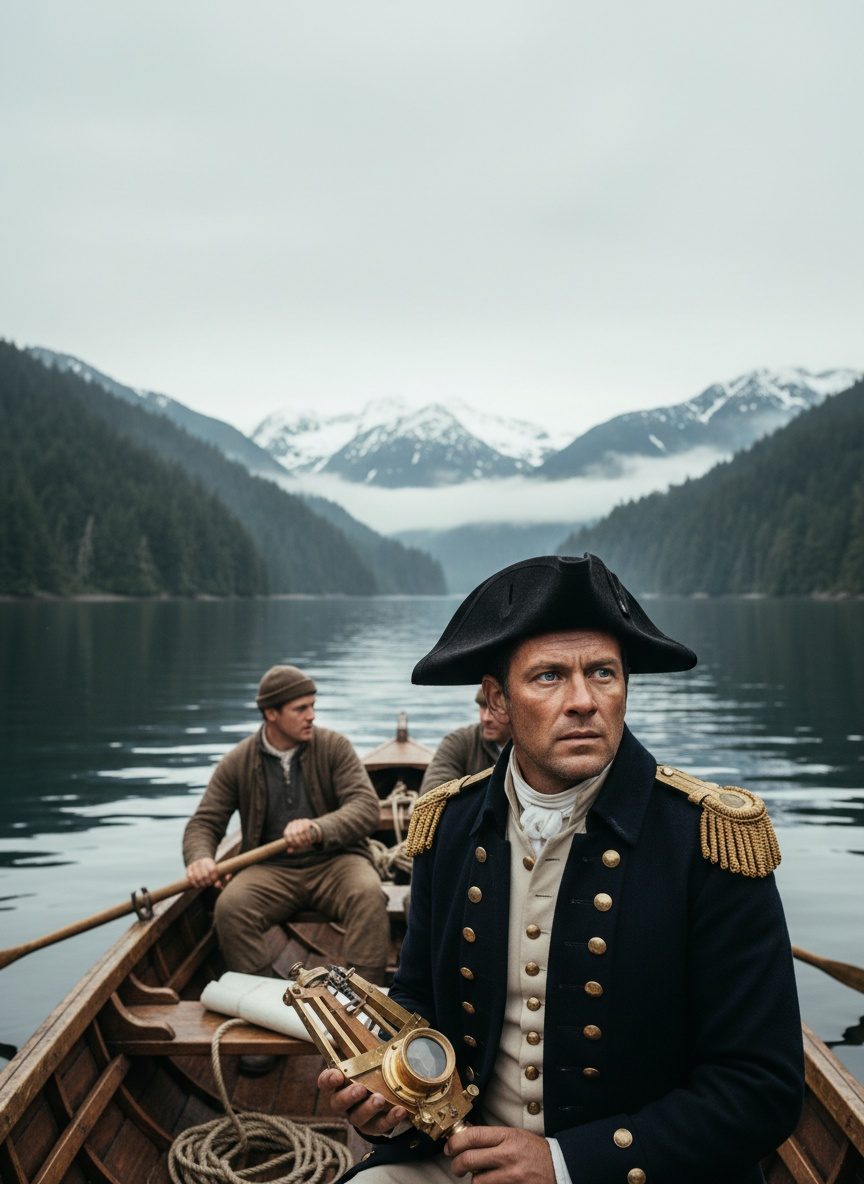
The oars pulled through water thick with fog, the wooden rowboat groaning softly with each deliberate stroke. Captain George Vancouver stood at the helm, squinting into the murky veil that threatened to swallow him whole. The icy Pacific wind bit at his face, carrying with it the scent of salt and the promise of untamed lands. Here, at the edge of the known world, he pushed forward—a lone figure against the vast unknown—charting one treacherous mile at a time.
The Decision That Changed the Voyage
George Vancouver’s journey began not on the wild seas, but in a dimly-lit room of naval command back in Britain. The year was 1793, amidst the Georgian Age, and the era's demand for exploration was unrelenting. Britain, with its ever-expanding empire, needed to understand and secure its standing over the Pacific Northwest, a domain yet fully unveiled to European eyes. The last blank segment on the world's map awaited to be drawn, and Vancouver—hardly daunted by the task—accepted the call. Tasked with boldly charting every painstaking nook and channel along the coast, Vancouver knew his mission was more than conquest; it was about knowledge—as valuable a currency as any other.
The Waters That Defied
As Vancouver's ship, HMS Discovery, and its entourage of small survey boats edged through fortitude-testing waters, the reality of his mission's challenges began surfacing. The Pacific Northwest coastline was rugged with jagged rocks and labyrinthine inlets, shrouded in ever-present mists. Maps of the past offered little more than guesswork; previous expeditions had been turned back, their efforts frustratingly incomplete. Yet Vancouver was resolute. Methodically, he dispatched survey crews in open boats, slicing through fog-veiled passageways. With compasses in hand and perseverance in heart, they steadily crawled over each inch of coastline, mapping and re-mapping, with nature itself refusing to yield to simple navigation.
The Human Element
While Vancouver's methods were those of a meticulous navigator, his journey was marked by the human stories unfolding around him. The myriad experiences of sailors who coexisted with both isolation and camaraderie revealed deeper layers of the expedition’s life. The dangers were many, from the ever-present threat of disease and malnutrition to the sheer isolation felt in such unknown waters. Yet, Vancouver's leadership was paramount in maintaining morale. Aboard the Discovery, perhaps out of sight but never out of mind, sat the journal entries yearning for recognition. These documents chronicled not just geography, but the very souls who faced the vast water wilderness.
Encounters at the Edge
Though isolated by nature, the frontier was not uninhabited. As Vancouver’s expedition threaded along its dangerous path, it came upon the indigenous peoples who had long called these rugged shores home. Encounters were delicate as mutual curiosity intermingled with caution. The peoples of the Pacific Northwest had their own sophisticated methods of navigation and understanding of the land—a profound contrast to the European men who sought to inscribe it onto paper. Alliances formed uneasily, yet respectfully, each culture attempting to decipher the other like pages from an unknown book. Vancouver, ever the observer, recorded these moments; unyielding in his primary mission yet acutely aware of histories beyond the British Empire's narrative.
Read next: The Day a Devon Sailor Mapped the Roof of the World Alone
The Map That Explained the World
After three long seasons of exhausting work, with canvas and ink as witnesses, George Vancouver's vision emerged fully. What began with fog-shrouded horizons turned into lines on parchment, neatly charting the Pacific Northwest's stunning complexity. Although advancements in cartography have since refined his work, Vancouver's map remained authoritative well into the next century, a testament to painstaking human effort against nature's formidable canvas. His charts represented more than geography; they stood as an embodiment of the spirit of exploration and the insatiable quest for knowledge.
Today, when modern systems take the helm in mapping the world, the era of George Vancouver reminds us of the untold awards of diligent exploration and scientific curiosity. His journey forged paths not only through unrelenting fog or unpredictable waters, but through an era’s imagining of an unknown world—the edges of which were finally drawn with daring hands. The stories behind the maps that we so often take for granted remind us that there are always frontiers to explore, whether seas or skies, attesting to the world’s eternal mysteries waiting to be embraced and understood.