Most people have never heard of Robert Blincoe. They should have.
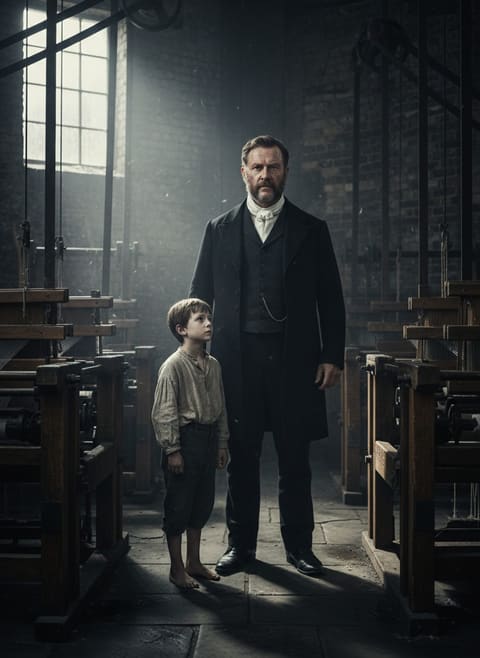
In the annals of the Industrial Revolution, Robert Blincoe's story unfolds like a Dickensian nightmare, yet it ignited a transformation in Britain's conscience. His early years were stolen by the clamor of machines in the cotton mills of Manchester, a city engulfed in the progress of industrial might but shrouded in the shadows of societal neglect. Robert's haunting legacy began at the tender age of seven when he was made a cog in the unrelenting machinery of the textile industry, a fate that would mark him for life.
The grim factories of Manchester in 1833 were cathedrals of industry, edifices of brick and iron resonating with the ceaseless hum of looms. For young Robert, these mills were an unforgiving world where childhood vanished in the ether of smoke and dust. Sold into servitude, Robert faced the brutalities meted out to children in these textile factories. Sixteen-hour days under the flickering gaslights, punctuated by the sharp admonishments of overseers, were his routine. Beaten regularly, starved often, and forced to endure the relentless grind of the mill, each day was a struggle for survival. And yet, survive he did, against odds that seemed insurmountable.
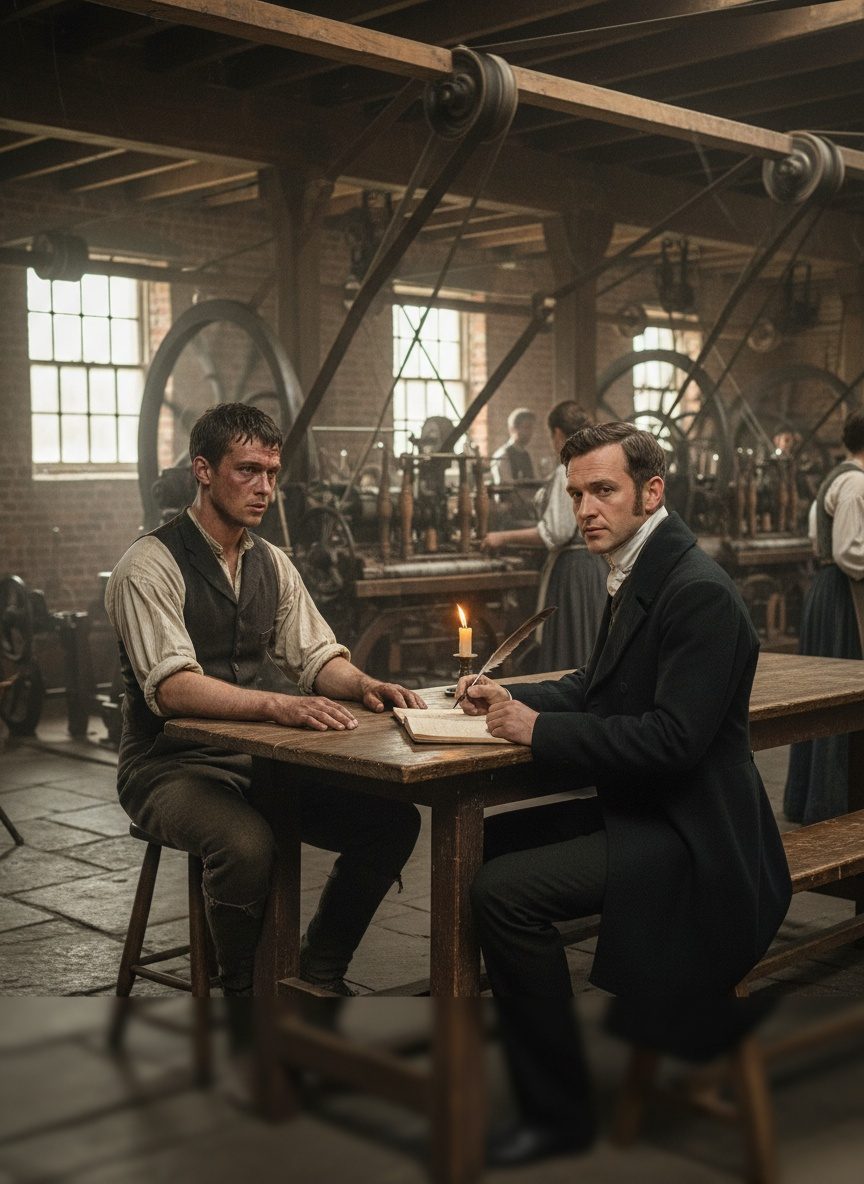
The year 1833 brought with it a small murmur of hope. A government commission was set to investigate the conditions within Britain's burgeoning industrial workplaces. For once, the whispers of the working class, too often ignored, had reached the ears of those in power. When Robert sat before the commissioners, he did not hold back. His body bore the scars of his ordeal, but it was his words that carved deeper into the hearts of the listeners. In graphic detail, he laid before them the harrowing reality of life as a child laborer. The beatings that left him with broken bones, the gnawing hunger that never abated, and the crippling fatigue from which there was no respite. His words were an undeniable indictment of the system, exposing the exploitation and suffering that powered Britain's industrial engine.
Read next: The Day a Weaver's Son Lit Britain's First Public Railway
Robert's testimony did not just ripple through the corridors of power; it roared. For too long, the inhuman conditions endured by child laborers had been conveniently overlooked. His account stirred public sentiment, and soon, the press caught wind of his ordeal, spreading his story far beyond the smog-cloaked streets of Manchester. Newspapers latched onto the plight of factory children, and public opinion began to sway. It was an era where the human cost of progress was often deemed necessary or inevitable, yet Robert's words confronted the nation with the moral cost of its prosperity.
Parliament could no longer turn a blind eye. The wheels of reform, long rusted by indifference, began to creak into motion, propelled by the stark realities unveiled by the commission's findings. The Factory Act of 1833, a significant stride towards labor reform, emerged from this milieu, stipulating limits on child labor and laying down the first framework for the welfare of workers in factories. Though modest by today's standards, it was a radical shift for the era, a testament to the power of Robert's courage in speaking his truth. His bravery had irrevocably changed the landscape of labor laws, not just for him, but for every child subjected to the whims of industrial tyranny.
Read next: The Day a Mill Owner Walked Into Court and Freed His Rivals' Children
However, legislation was just the beginning. The Factory Act may have been the legislative response, but it also signaled a burgeoning awareness and changing attitudes towards the exploitation of children. It shone a light on the broader societal issues of the time and inspired others to continue the fight for justice and equitable treatment of workers. As the Victorian era progressed, voices like Robert's continued to echo in calls for more comprehensive reforms to protect not only children but all who fell under the harsh realities of industrial labor.
Robert Blincoe’s story does more than chronicle an individual's triumph over adversity; it underscores the profound impact of a single voice. In a world driven by the relentless pursuit of progress, his narrative reminds us of the human element often lost in the machinery of industry. The moral courage required to stand up against systemic injustice remains relevant, resonating even in today’s global context where exploitation persists under new guises. His story challenges us to reflect upon the balance between progress and humanity, urging us to consider who bears the burden of industrial advancement.
In this tale of endurance and eventual justice, most people might not have heard of Robert Blincoe, but they should. His narrative is a beacon from history that compels us to listen, to learn, and to ensure that the darkness of his era remains firmly in the past, while the lessons from his bravery illuminate our path forward.