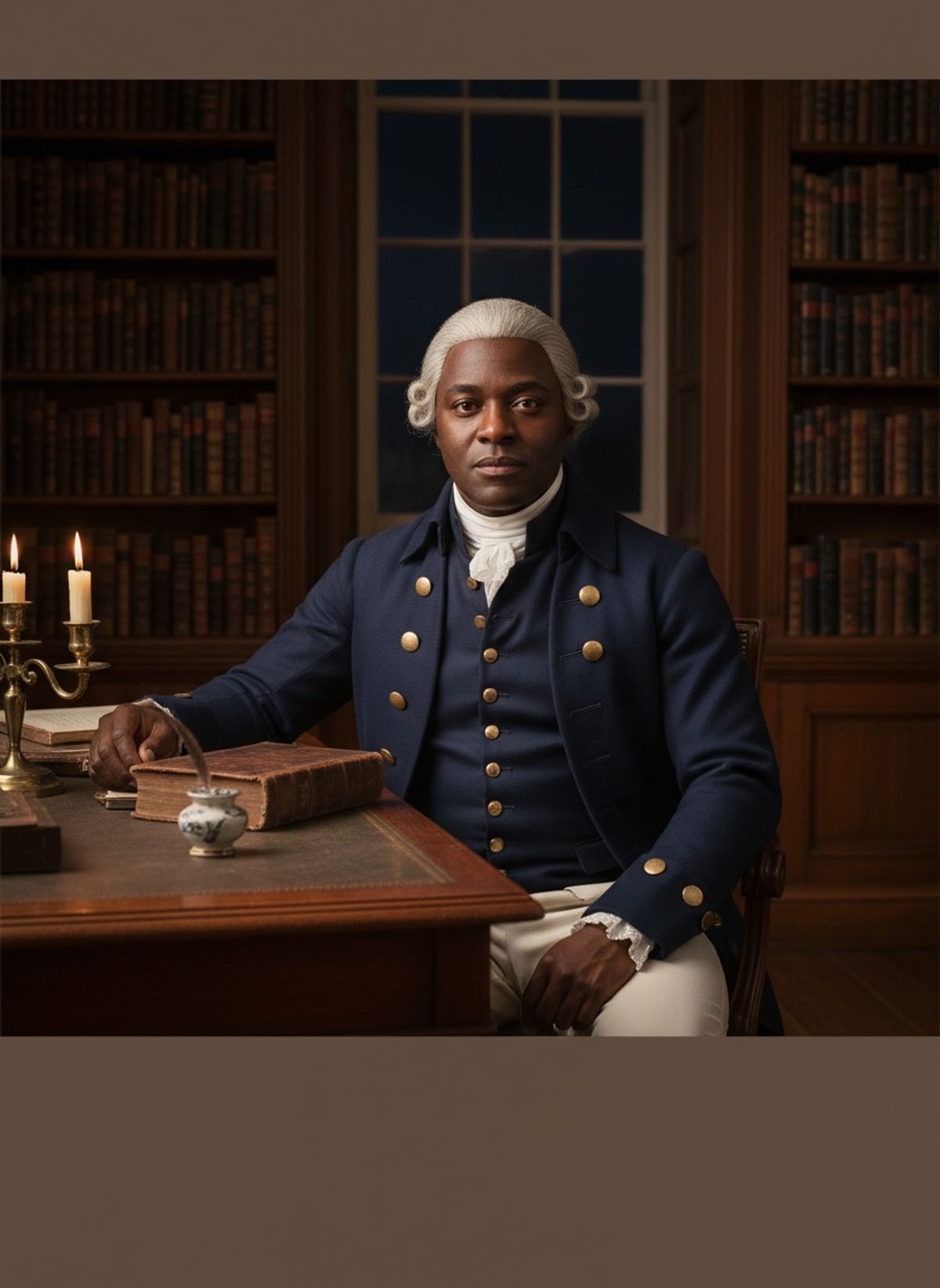
He did not start the journey with royal intentions. He simply sought freedom from an unjust fate that would send him across the sea. James Somerset was a man few would have expected to shape a kingdom's moral compass.
The Chains on Somerset's Ankles
It might surprise modern readers to know that James Somerset's fate tumbled into uncertainty not on the deck of a slave ship rolling over the Atlantic but on the cobbled streets of London itself. The city, swarming with its mishmash of nobility, merchants, and commoners, was also home to a surprising slice of darkness—its acceptance of slavery. Somerset had been brought to England by his American master, Charles Stewart, a practice not uncommon at the time despite creating legal grey areas in a land where slavery was legally insecure yet painfully real.
In 1771, Somerset was seized by Stewart’s men, shackled and taken aboard the ship Ann and Mary, headed for the Caribbean plantations of Jamaica where a brutal life awaited. But Somerset's chains were not just physical; they symbolized a centuries-old acceptance of slavery that stretched across an empire. Yet, something extraordinary lay in wait for Somerset—a chance to turn his struggle into a pivotal moment in British history. This was not a story of mere survival; it was an impending battle for the very soul of British legality and morality.
The Silent Power of the Abolitionists
Behind the scenes, a network of abolitionists was building a case to challenge the status quo that allowed men like Somerset to be legally captured and traded as property. Prominent names including Granville Sharp, a key abolitionist figure who had previously intervened in cases of mistreated slaves, joined forces to fight Somerset's battle in the courts. It was Granville Sharp's principle that no man on English soil could be a slave, a notion that had been nothing more than theoretical up until that point.
Read next: The Day a Surgeon Walked Into a Prison and Freed a Madman
This was more than a legal tussle; it was a social earthquake. The case of James Somerset v. Charles Stewart would draw intense public and judicial scrutiny and spark a heated debate throughout Britain. The most pressing question was unsaid yet echoing in every courtroom: Could the law allow the shackling of human dignity itself, or would justice finally break those chains?
Mansfield’s Courtroom: A Theatre of History
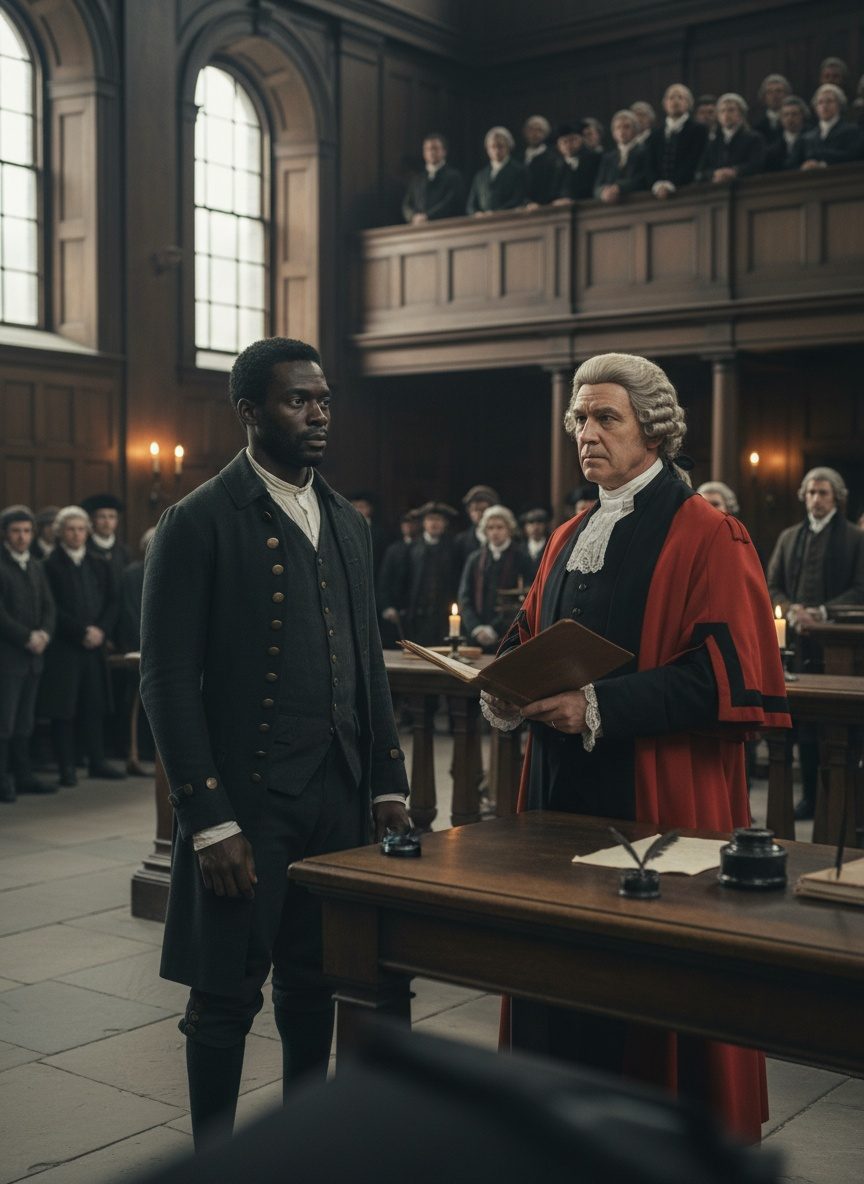
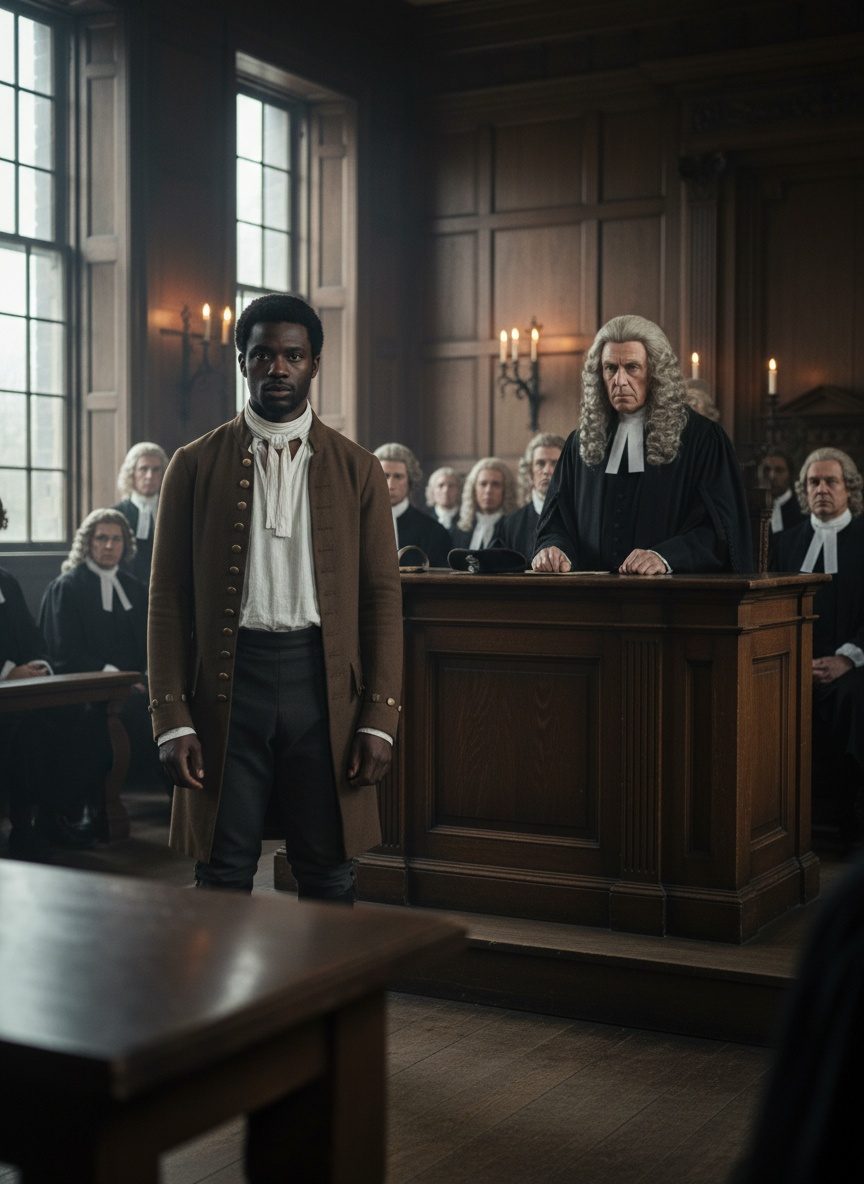
The day the court assembled was one laced with anticipation. Lord Mansfield, the Lord Chief Justice, was a man whose decisions would echo far beyond the confines of the Georgian courtrooms he presided over. The proceedings were no mere legal exercise; they were a spectacle of high emotions and moral reasoning, presided over with the gravity they deserved.
In the silence of the courtroom, the weight of history was suffocating. As Mansfield prepared to deliver his verdict, London's notorious fog seemed a metaphor for the clouded morality of the times. Lord Mansfield delivered a calculated yet profound ruling. With his words, he not only decided the fate of one man but began the unraveling of an entrenched institution. Somerset would walk free—a free man on soil that until then had merely pretended to uphold such ideals.
A Ripple Through the Empire
The implications of Mansfield's ruling reverberated throughout the British Empire and beyond. While the immediate legal impact was narrow—applying specifically to conditions under which Somerset had been apprehended—the moral implication was seismic. The ruling didn’t outright abolish slavery in Britain—that wouldn’t come until much later—but it laid the groundwork. It signaled the beginning of the end for the legal tolerance of slavery on British soil.
In the colonies and among the slave owners, the decision sent shockwaves, instilling a growing fear that this might be a prelude to broader emancipation across the empire. The shadow of James Somerset's case would sow the seeds of abolitionist efforts that sprouted in the years following. It was the first major crack in the edifice of slavery, a legal juggernaut that would inspire future cases like the famous Zong massacre proceedings, fueling the abolitionist movement across Britain.
The Legacy of One Man Refusing Chains
James Somerset’s refusal to remain shackled became a symbol of resistance against an institution that had dehumanized millions. While his own narrative as a freed slave merges into the broader tapestry of history, it leaves an enduring lesson about the power of individual courage amidst oppressive systems. Somerset’s case demonstrates the complex interplay between legal decisions and social change. The journey from the hold of the Ann and Mary to the freedom of British streets marks a moment where a man's quiet insistence on his humanity altered the course of a nation.
The spectacle that unfolded in Lord Mansfield's courtroom reminds us that although history often moves in grand, sweeping motions, its most profound turns sometimes hinge on very personal acts of defiance. James Somerset’s legacy echoes beyond the legal texts and becomes a testament to the spirit’s unyielding quest for liberty, challenging us to continue confronting the legacies of the past in our pursuit of justice today. Is it not the stories we almost forget that sometimes shine the brightest light on our shared humanity?