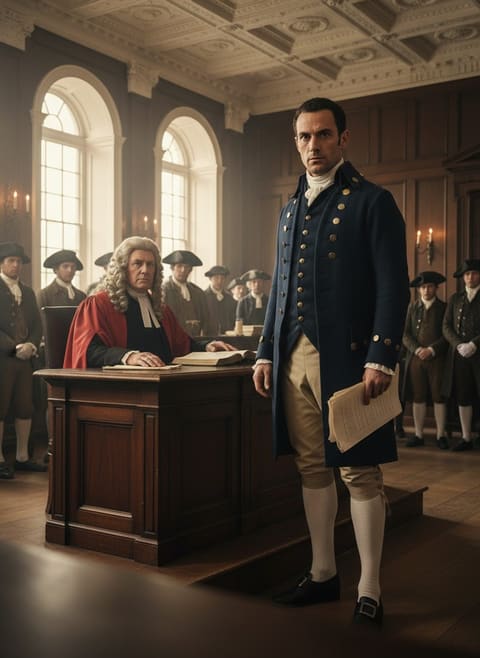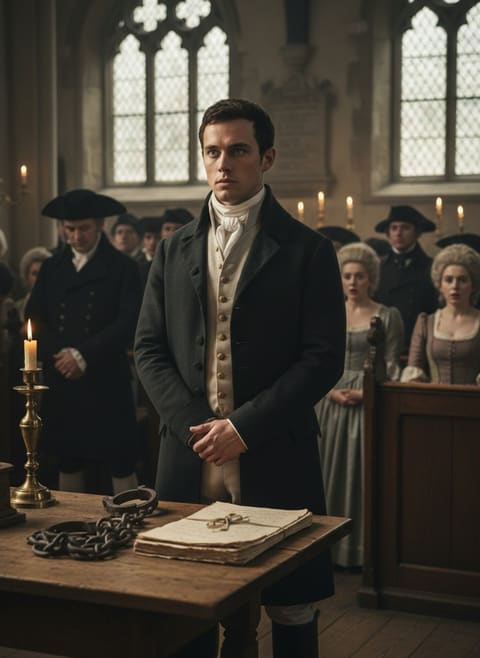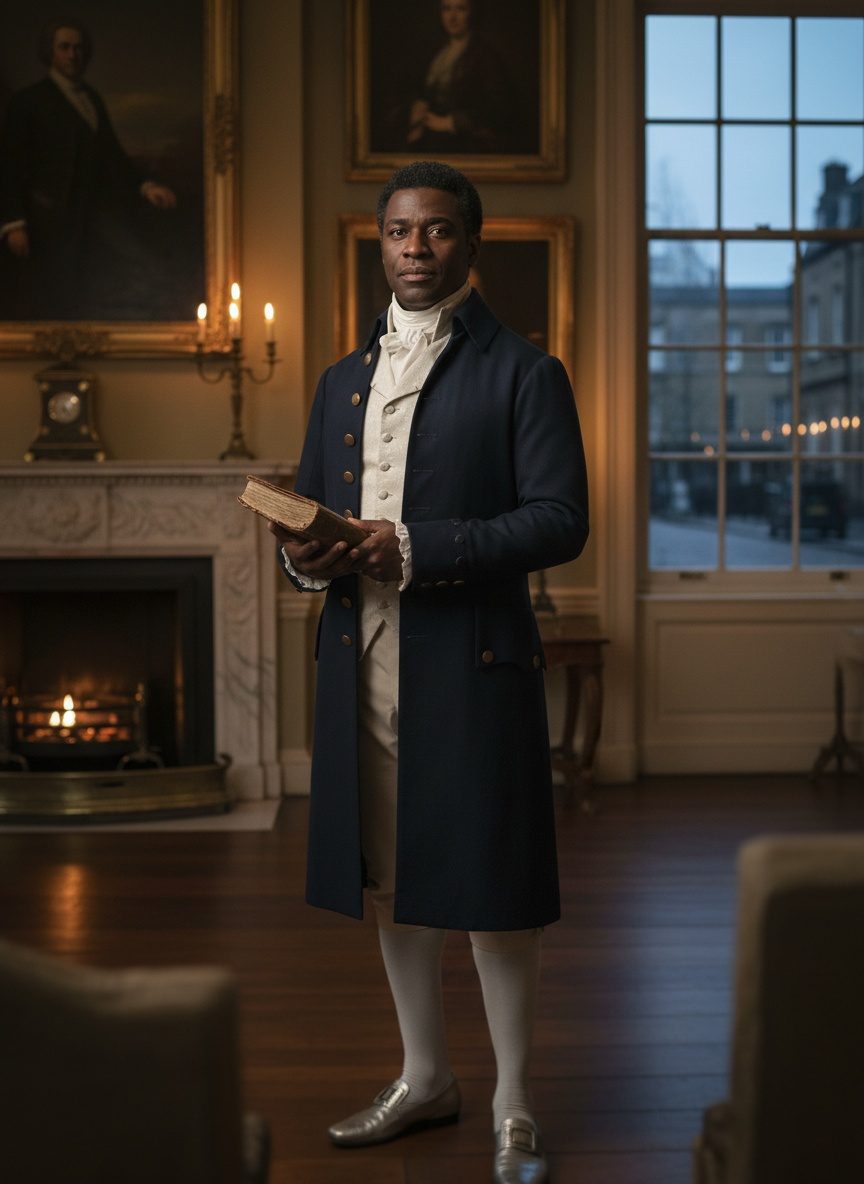
The chatter of the court hushed as Olaudah Equiano stood in the opulent hall, the weight of countless eyes upon him. Gently, he opened his jacket, revealing the precious manuscript tucked safely within. The thick walls of Carlton House, a bastion of power in 1788 London, seemed to close in around him as he stepped forward, his heart thrumming like the relentless beat of a drum. On such a day, the air itself seemed thick with anticipation, the very atmosphere crackling with the electric potential of what might come.
Equiano, a figure whose presence was both disarming and magnetic, held the text of his own life—a life jagged with hardship—as he approached the throne. A tension danced through the room, born of the juxtaposition of this freed slave and the seat of British monarchy. His very act of being here was revolutionary, his quiet confidence belied the thunderous courage it took to reach this pinnacle against such fierce tides of societal norm and historical injustice.
Years before, Equiano would not have dared to imagine himself in a place such as this. Stolen from his African home as a boy, he had suffered the long, dark nightmare of the middle passage—a journey across the vast Atlantic that claimed countless souls in its brutal hold. The memory of cold chains and the stifling stench of the slave ship would haunt him for the rest of his life. Yet here he was, having clawed his way to freedom using wages painstakingly earned at sea, now on the precipice of history.
In the audience chamber, the Queen watched him, curiosity etched in her gaze. The polished mahogany of the room seemed to reflect the myriad hues of courtly attire; embroidered silks and rich velvets, colours as vivid as the tales Equiano was about to share. The sense of expectation in the air seemed to amplify with each reverberating step he took, underpinned by the soft murmur of whispers—a steady hum of disbelief and intrigue.
Read next: The Day a Black Sailor Walked Into Court and Freed Himself
As Equiano began to speak, the burdens of his past lent his words a gravity that even the gilded surroundings could not dim. His voice, clear and measured, painted pictures of his life: a childhood in Africa, the horror of being torn from everything he knew, the endurance of a slave's existence, and the eventual triumph of securing his liberty. Each detail he unfurled captured the room's attention, holding even the most skeptical courtier in rapt silence.
The memoir he handed to the Queen was not only his life; it was a beacon of truth shining into the dim recesses of a bitter reality. In it, he had woven the tapestry of an era that teetered on the brink of its own moral re-evaluation. His experiences, detailed with precision and a writer’s deftness, confronted the brutality and inhumanity of the ongoing slave trade. It was a stark testament drawn from personal scars, a call from the margins to those in the zenith of power.
The Queen accepted the manuscript—a collection of printed pages bound together yet dense with spirit and soul—and nodded to Equiano, signaling a moment of recognition both profound and startling for the English court. Here was a man who challenged their understanding of what it meant to be both African and free. The enormity of his gesture transcended the immediate physical exchange; it propelled conversations that would ripple outward, reaching even those unfamiliar with the plight from which Equiano had emerged.
In the days following, the reverberations of Equiano's boldness spread across the Georgian landscape. Those who read his memoir found themselves confronted with the human face of slavery, a narrative that refused to be ignored. The myth of the purported benevolence of empire began to fracture under the weight of his words, spurring discussions on morality, justice, and humanity. The fabric of Britain, then tightly woven in the grim pattern of colonial exploitation, was subtly but undeniably fraying.
Read next: The Day a London Clerk Walked Into Court for a Dying Slave
The public, too, was drawn into the narrative he had so meticulously crafted. Soon, his book would be printed and disseminated, circulating not only among the educated elite but also weaving its way into the conscious fabric of a society ready for change. Equiano's articulation of his journey electrified the abolitionist movement, lending credence and urgency to an increasingly undeniable call for compassion and justice among men.
The encounter between Olaudah Equiano and the aristocratic might of Britain was more than a mere meeting; it was a turning point—a moment when the silenced found voice, the unseen found a stage, and the truth cut through layers of ignorance. As the ink dried on those tangible pages of Equiano’s life, the impact was felt far beyond the glorious boundaries of the room where royalty had sat. His story continued to spark fires of reform, lighting paths towards abolition and reshaping the consciousness of a nation.
Today, Equiano's legacy endures, serving as a reminder of the profound power inherent in one single voice—a voice that defies odds to speak truth to power. His life stands as a formidable testament to resilience, courage, and the boundless potential of human spirit. The story of the day a freed slave stood before a king and spoke resonates through the ages, urging reflection on justice and the universal rights of all humanity. As long as stories like Equiano's continue to inspire, they will forever offer hope that voices, however unexpected, can indeed change the world.