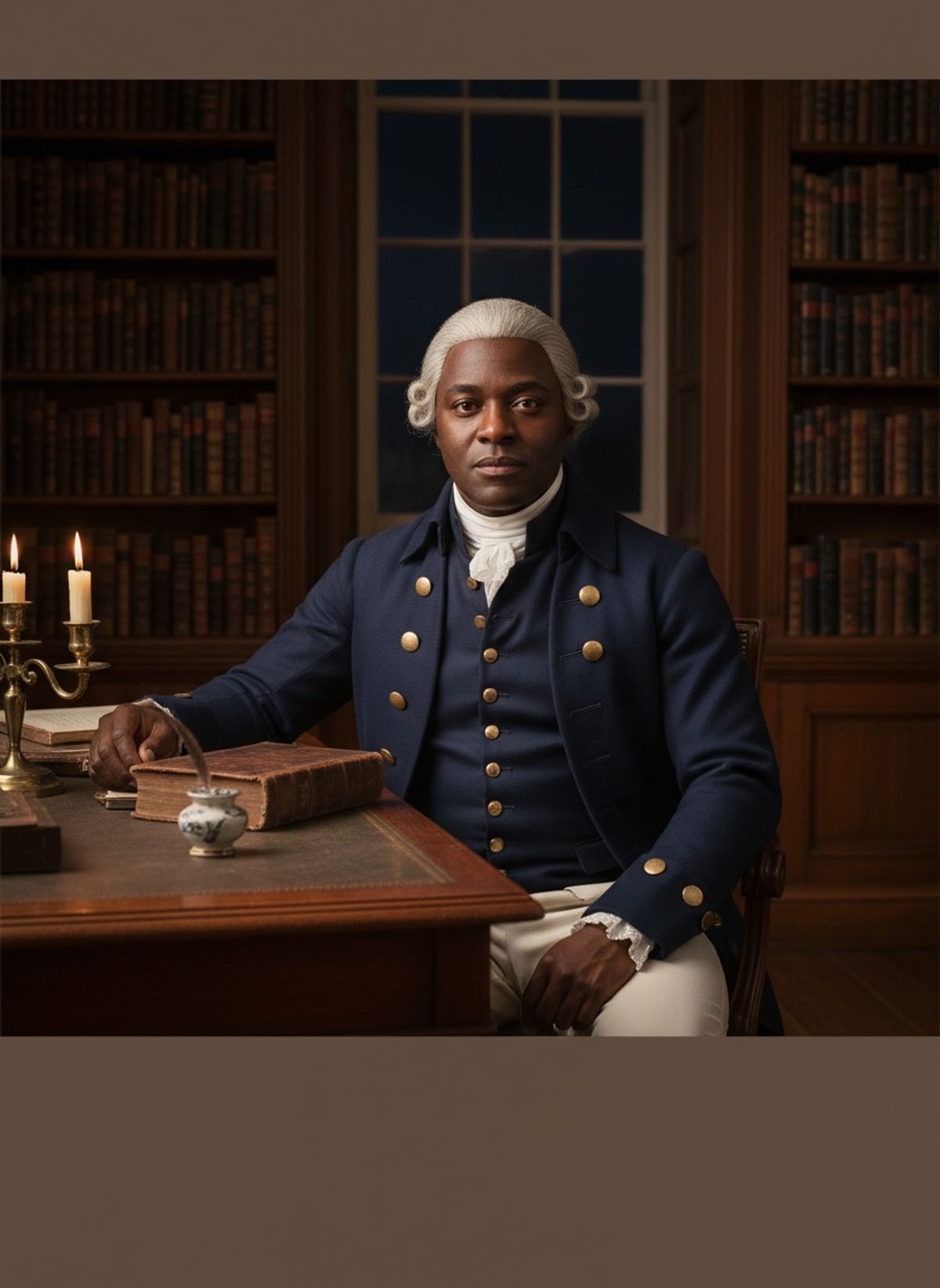
James Somerset was a slave. But he defied the chains meant to bind his future.
The Unexpected Voyage
London, 1772. The city's crowded streets were a cacophony of commerce and culture, a world where the sun never set on the British Empire. Yet amid the hustle and bustle, life could unravel with the snap of manacles enclosing wrists. James Somerset knew this starkly harsh truth. He was a man caught in a world of contrasts — in a land proud of liberty yet often indifferent to the enslaved. As a slave purchased by Charles Stewart, a wealthy merchant with a robust colonial business, Somerset found himself at the epicenter of an unexpected historical turning point.
Stewart, displeased with Somerset's perceived insolence, planned to ship him from London to Jamaica, a colony known for its harsh plantations. Escaping to the seclusion of the Thames ensured that Somerset's return to slavery would go unchallenged; a silent sentence, ratified without court or jury. Somerset had other plans. He refused the humiliation of being treated as cargo, his freedom up for barter. His situation seemed dire until he caught the attention of abolitionists who believed in the moral sin of his enslavement. They were part of a growing but still subtle undercurrent in society, rising against the widely accepted norms of human property.
It was on the cold, muted banks of the Thames that Somerset's fate attracted the extraordinary intervention of Granville Sharp, a distinguished abolitionist renowned for his fierce advocacy. A man of conviction, Sharp's reputation as an arbiter in the plight of slaves was growing, though such causes were perilous in a world largely unchallenged in its beliefs of ownership. Thus, began the case that would shift the axis of legal thought.
Read next: The Day a Surgeon Walked Into a Prison and Freed a Madman
The Heart of the Debate
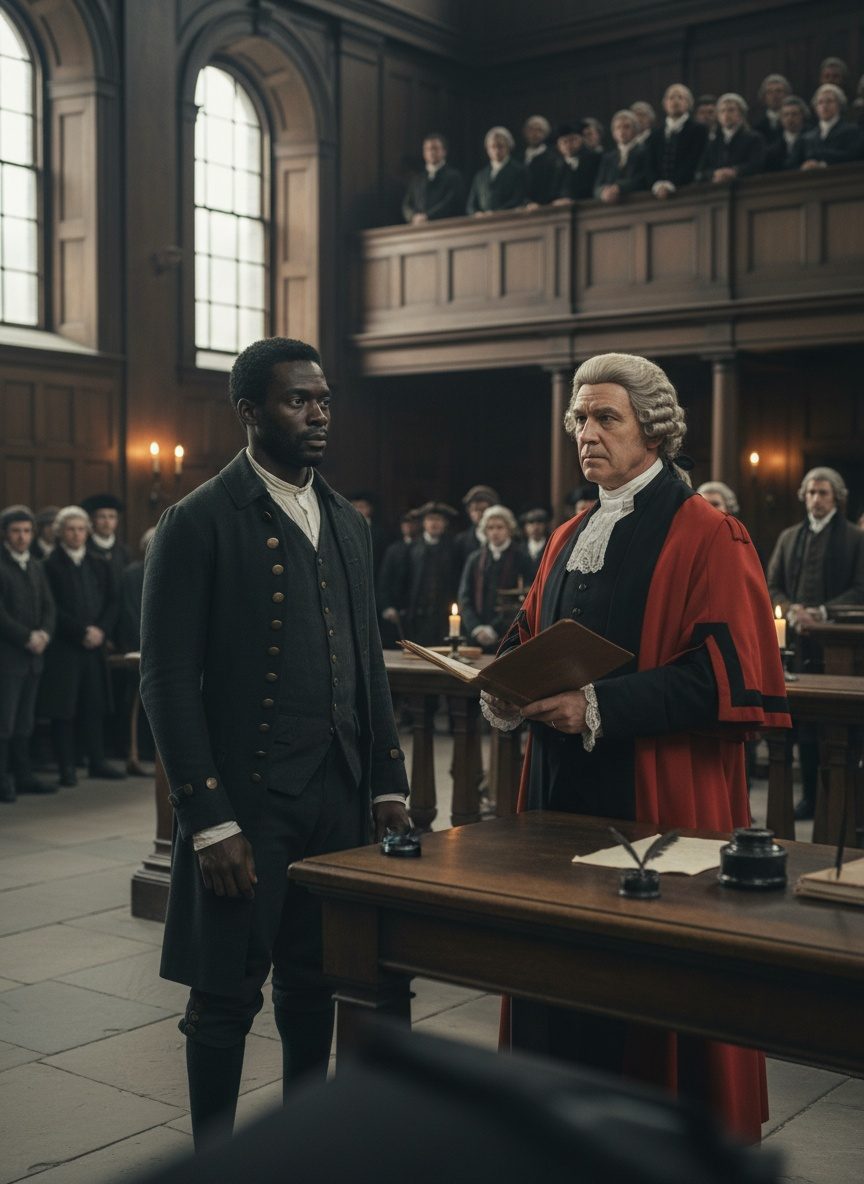
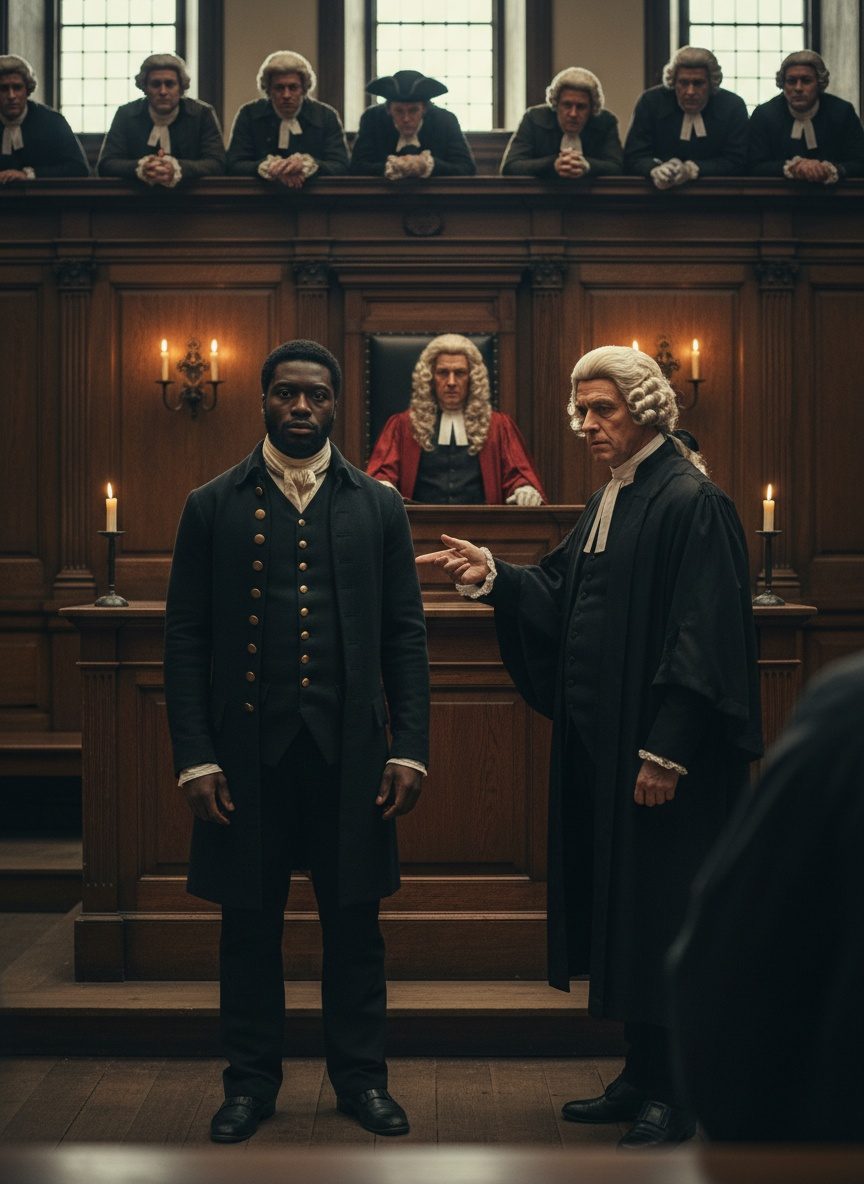
The courtroom drama that unfolded was like a theatrical play, its protagonist Somerset caught between shadows of the past and flickers of hope for the future. Enter Lord Chief Justice William Murray, 1st Earl of Mansfield, an esteemed figure of legal intellect and conservative leanings. His task was to weigh the scales of justice against the entrenched customs of commerce — a task laden with its own peril for Mansfield, who sat at the helm of an economy deeply entwined with the slave trade.
Mansfield understood the gravity of his decision; it could ripple across the empire with unforeseeable consequences. As the days turned to weeks, the case broadened, embracing the ethos of British justice and the image of a nation built on ideals far nobler than the shackles it allowed. The lawyers who fought alongside Somerset wielded not swords but principles, and their arguments unfurled like banners: Was British soil an extension of its free ideals, where no man could ensnare another? Or was it stained indelibly by the trade that fed its coffers?
As the evidence was laid out, the shadows of discontent began to bully those larger than life. For the first time in a hallowed British court, the humanity of a man like Somerset stood tall against papers listing him as property. It was not just about freeing a man; it was about defining the moral compass of a nation notorious for its double standards. Day by day, the question around Somerset’s fate crystallized into a larger discourse about the principles that should govern justice itself.
A Verdict That Echoed
On a fateful day, Chief Justice Mansfield delivered a verdict that did more than echo through the corridors of law; it roared across the seas. Somerset was not to be considered a slave and thus not to be shipped off from England’s shores — a monumental decision without equal in precedent. Mansfield’s ruling sparked intense conversations both in drawing rooms and colonies, a decision that many feared might unweave the economic tapestry of British dominance.
The ruling, however, didn't abolish slavery in Britain, nor did it declare all slaves free, but it did establish a legal precedent that made continued slavery in England far more tenuous. Beyond the terse lines of legalese rested an idea: a place of freedom could indeed exist within the courts of Britain. In choosing principles over property, Mansfield did sway the tide, infusing wind into the fledgling sails of abolitionism.
This decision was not the Pandora’s box that many prophesied, but it did light a beacon of hope. It signified the beginning of a long journey toward a vision where the law recognized humanity over ownership. For Somerset, it was a personal victory; for a world that watched, a whisper of what could be — liberty echoed through the gavel’s fall, suggesting an England wrestling with the burden of its conscience.
At first glance, the story of James Somerset might seem confined to its era, but the questions it raised transcend centuries. His stand set the stage for a broader struggle still resonant today, a lingering question haunting the edges of modern law: What values pervade when humanity challenges historical injustices? The tale of Somerset’s defiance, encased in the annals of Georgian era lore, offers more than just a fleeting glimpse into a courtroom’s whispered verdict. It presents a reminder that every fight for equity starts with a single voice refusing to stand down—a voice that eventually rises to change the course of history.