He was a man without legal identity. Yet, amidst the oppressive gloom of 1772 London, James Somerset would ignite a fire that forever altered the British legal landscape.
The Unseen Bonds
In the bustling streets of Georgian London, life was a paradox of diversity and disparity. Amidst the clatter of horse-drawn carriages and the chatter of merchants and buyers in the markets, there existed a stark reality often hidden from plain sight—the invisible chains of slavery. Among the shadows of this vibrant city was James Somerset, an African man claimed as property, his existence wrapped in legal ambiguity and societal ignorance. Living under the dominion of Charles Stewart, a Scottish merchant, Somerset's fate appeared sealed—a life bound to serve his master's whims.
Sudden liberation came in 1769 when Somerset, brought to England from America by Stewart, found allies amidst London's burgeoning abolitionist movement. Amid whispers of "liberty" and "natural rights," Somerset slipped from Stewart's grasp. Yet, his taste of freedom was threatened when Stewart, indignant at Somerset's audacity to claim his own freedom, plotted his transport to the remote plantations of Jamaica—a world ruled by sugar and suffering.
The Silent Agony of Awaiting Judgment
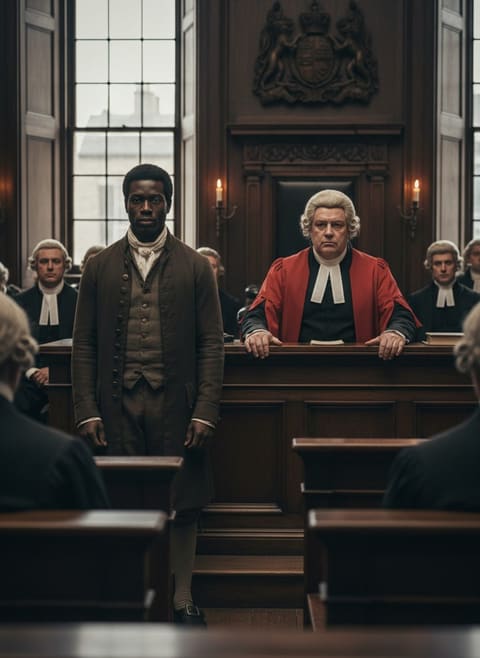
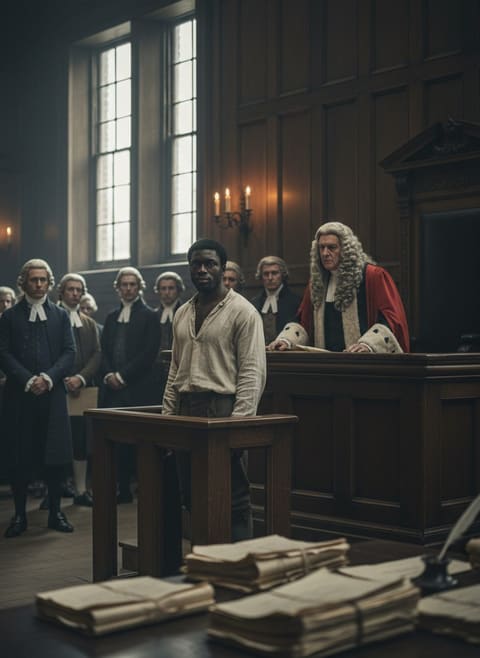
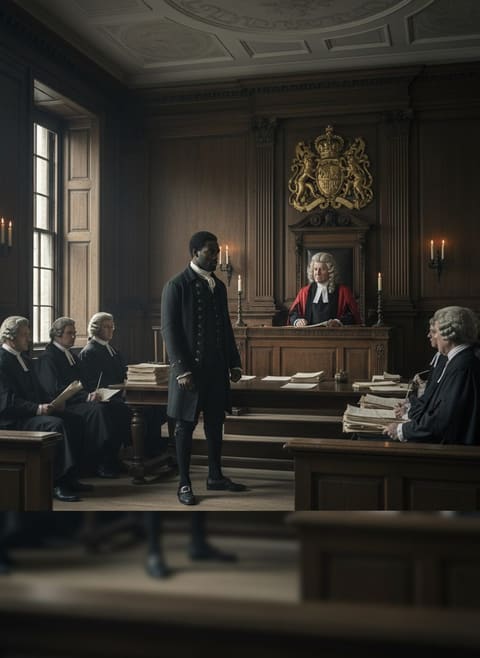
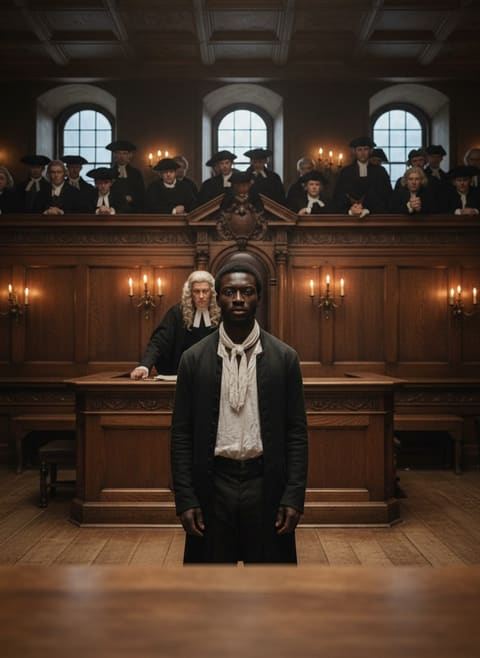
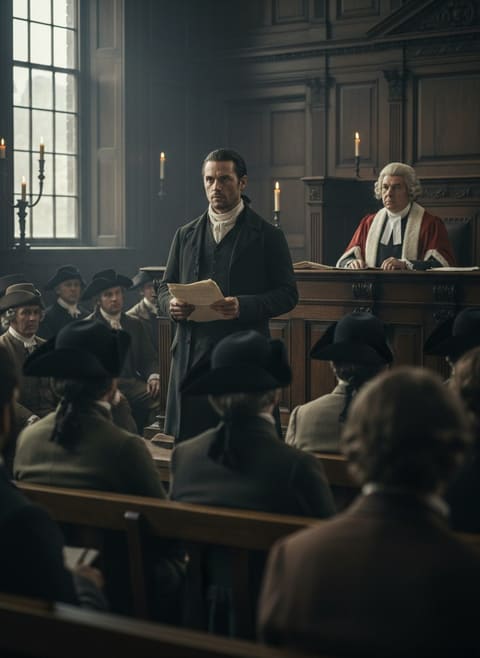
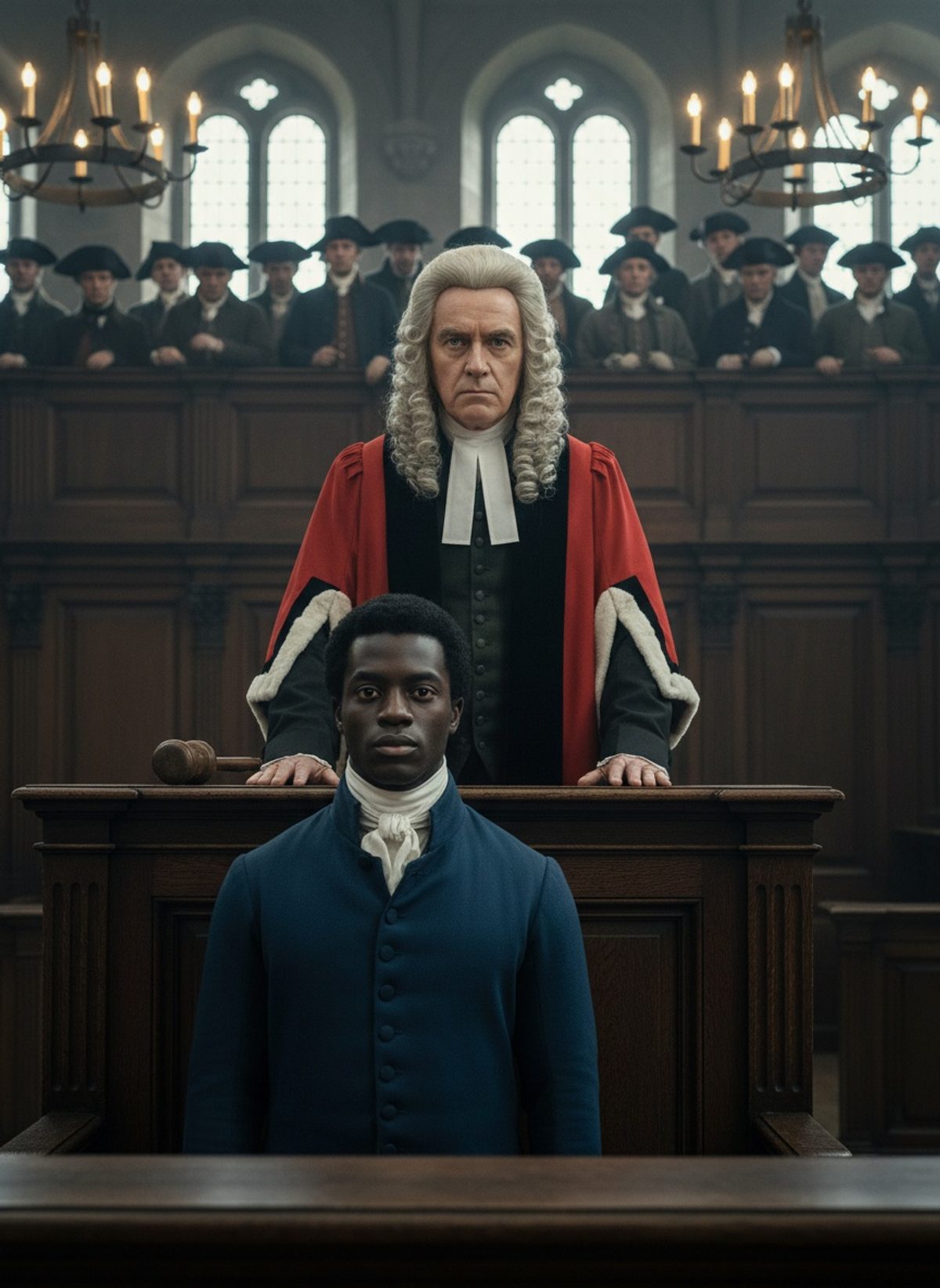
In a stark courtroom, Somerset's life hung in the balance on that fateful day. Lord Mansfield presided, known for his sharp legal mind and an eye that saw potential change on the horizon. The silence in the courtroom was as thick as London fog, punctuated only by the low murmurings of those eager to witness history unfold. The question that loomed was simple yet wrought with profound implications: Could a man, once a slave, claim freedom on the soil of England? Or was he forever bound by the chains of colonial commerce and law?
Read next: The Day a Freed Slave Lectured Britain's Finest Minds
Somerset, standing in the place of the accused, faced not only his own personal plight but a universal moral dilemma. In his favor stood the men and women of the abolitionist networks, including Granville Sharp, who dedicated their lives to the cause of emancipation. Their arguments resonated with the foundational tenets of English law—principles of liberty, justice, and the sanctity of individual freedom. The courtroom was no mere arena for legal debate; it was a battleground on which the soul of a nation was tested.
A Stroke of a Pen, A Shift in the Tides
Lord Mansfield's verdict would echo through time, shaping the narrative of human rights and colonial power. With a calm authority, he delivered his judgment on June 22, 1772. The binding chains once destined for Somerset were now replaced with the declared dignity of freedom. "The state of slavery," he noted, was "so odious, that nothing can be suffered to support it, but positive law." In essence, England could not bear the stench of slavery within its borders.
This decision did not outright abolish slavery in Britain or its colonies, but it set into motion a tide of legal interpretations and public opinion impossible to ignore. The courtroom erupted in celebration, a roaring acknowledgment of a pivotal moment where morality clad in legal robes took a stand. Somerset, a man with neither sword nor rank, had unintentionally ushered in a new era.
The Ripples Felt Across Shores
Although the Somerset case echoed most loudly within the courts of England, its ripples reached far beyond. Throughout the empire, the judgment sowed seeds of doubt amongst slaveholders and offered a beacon of hope to countless individuals shackled by the name of colonial enterprise. For abolitionists, the decision was a powerful tool with which to advance their cause. It demonstrated that the immovable monolith of slavery could indeed be challenged and, ultimately, dismantled piece by piece.
Read next: The Winter That Broke Napoleon's Army of Portugal
In the years following Mansfield's decision, debates around the moral justification of slavery intensified. As abolitionist voices grew louder, more relentless, the legal and societal call for change gathered unstoppable momentum. The pavement Somerset walked as a free man marked the first step on a long road to liberation—a journey that would culminate in the Slavery Abolition Act of 1833.
The Unseen Threads of Liberty
Somerset's case, often shrouded by the grand narratives of history, remains a powerful testament to the interplay between individual courage and systemic change. It underscores the monumental impact one case can have on the broader sweep of history. By illuminating the path towards justice, this story of quiet resilience and determined advocacy shows that history's greatest revolutions often begin with the hushed defiance of a single voice seeking freedom.
The legacy of Somerset is one stitched into the very fabric of human rights history—a silent revolution that amplified the call for universal justice, echoing across oceans and generations. It reminds us that our collective pursuit of equity and freedom is both an ongoing battle and a series of milestones, each like 1772, where hope and justice prevailed.