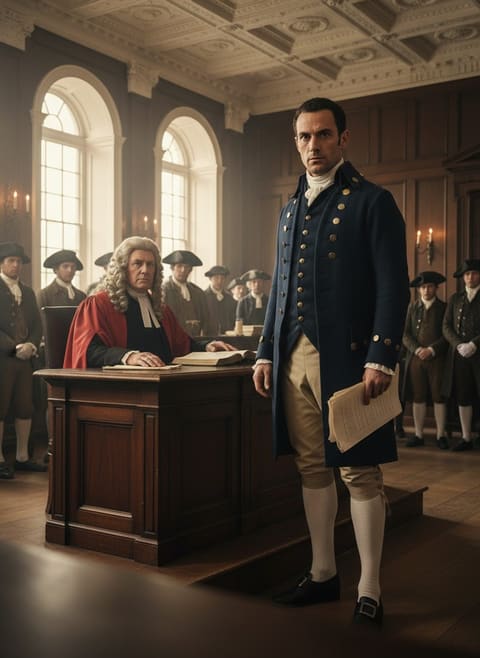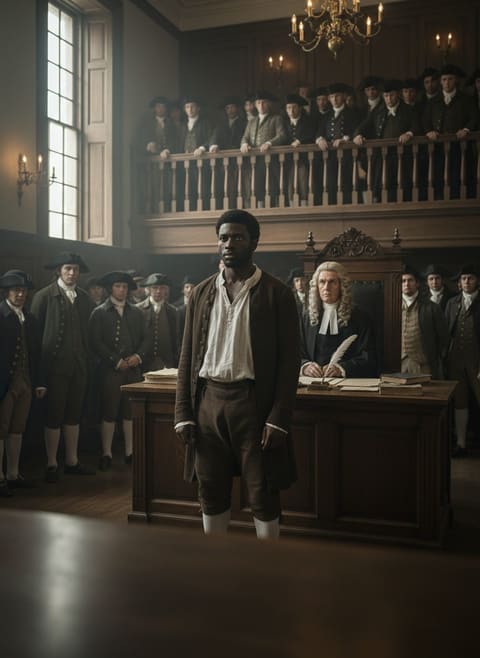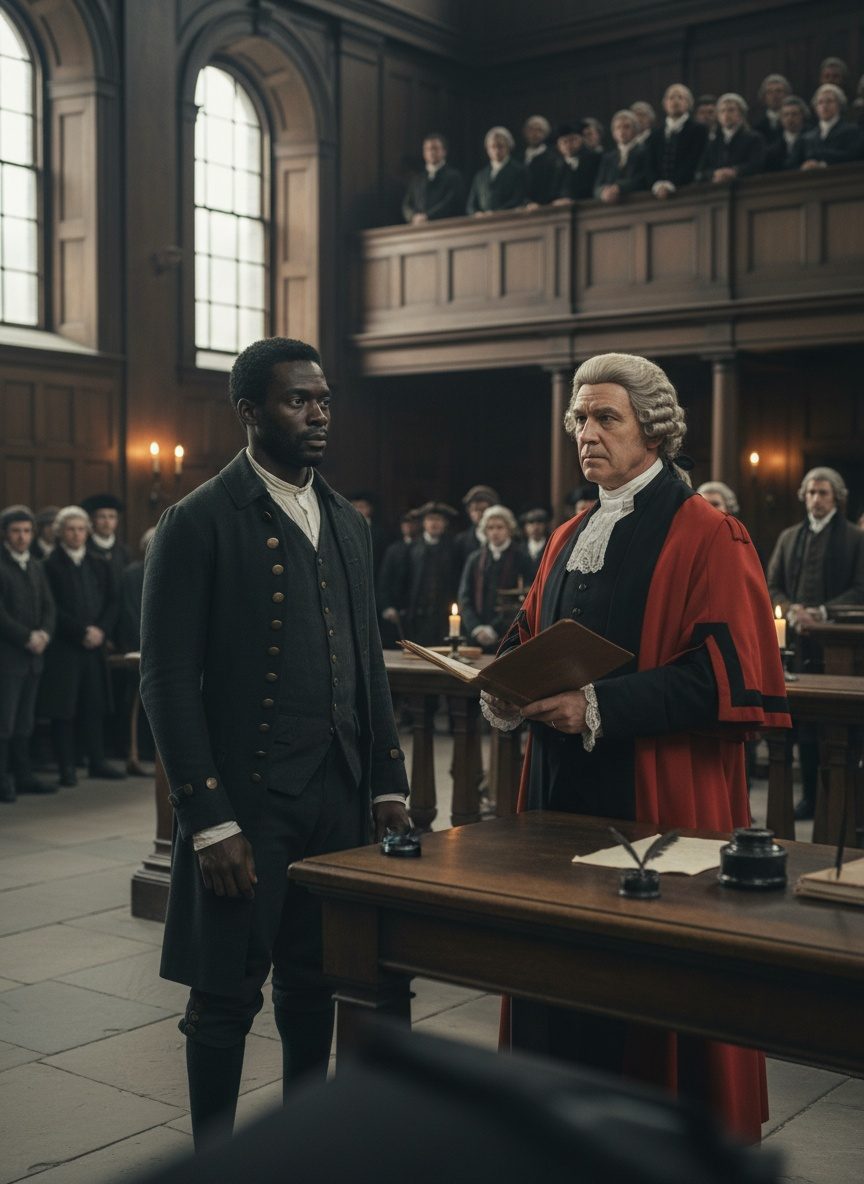
He wore a suit when he strolled into the courtroom. To many onlookers, James Somerset seemed an unlikely hero of liberty—an ordinary man with an extraordinary fate. The year was 1772, and London was the unwitting stage for a drama that would ripple across history, revealing the tensions between personal freedom and property rights that simmered beneath the façade of the Georgian era's refinement and progress.
Born into bondage, Somerset's life began far from the cobbled streets of London, in the churning plantations of the British colonies. Enslaved by Charles Stewart, an influential customs officer, Somerset's world was one shaped by coercion and hardship. Despite the polished veneer of Stewart's life in England, the brutality of the transatlantic slave trade remained his hidden reality. As Stewart's servant, Somerset was brought to England in 1769, a land where many wrongly assumed freedom followed the lush green pastures.
The stark reality was quite different. Though England had abolished the slave trade within its borders, the nation was deeply entwined in the economics of slavery, which fueled its imperial ambitions. Many believed that once on English soil, enslaved individuals might be free from their chains. However, no clear law confirmed this notion. When Somerset escaped from Stewart's control in 1771, he could not have predicted how his personal quest for freedom would evolve into a national reckoning.
Apprehended and imprisoned on a ship bound back to the colonies, Somerset's plight attracted the attention of Granville Sharp, a fervent abolitionist who had long sought to challenge the legal status of slavery in England. Sharp, well-versed in the law but motivated by intense moral conviction, gathered a team of lawyers to argue before the Court of King's Bench. His efforts turned what some saw as a private grievance into a public cause. The crux of the case lay in an untested notion: Could a master forcibly remove a former servant from British soil?
Read next: The Day a Black Sailor Walked Into Court and Freed Himself
Stewart, outraged by what he perceived as an affront to his rights, demanded Somerset's immediate return. Yet, Lord Mansfield, the presiding judge, was no ordinary arbiter of justice. Known for his cool demeanor and sharp intellect, Mansfield understood the ramifications of the case. His reputation rested on both upholding the law and navigating the precarious political tensions of the time. Decision after decision had cemented his status as a judicial titan, but this case draped new weight upon his shoulders.
Months dragged on as arguments resounded in the courtroom. The legal maze proved intricate; economic arguments clashed with moral reasoning, and all the while, the eyes of enslaved individuals and abolitionists fixed upon Mansfield, hoping for a glimpse of justice. His chambers became a hermitage where he sought refuge from the din of advocates and the weight of public expectation. Many believed he would sidestep a definitive ruling, opting instead for a narrow decision based solely on Somerset's circumstances.
But Mansfield surprised them all. When he finally delivered his riveting decision on a summer's day, his words echoed solemnly, reshaping the landscape of British jurisprudence. "The state of slavery is of such a nature that it is incapable of being introduced on any reasons, moral or political," Mansfield declared, insisting that no master could compel his slave to leave English soil against his will. With that, Somerset walked free, not due to broad legislative change, but because of the judge's recognition of a particular moral truth. Twelve words sealed the verdict, yet their implications unraveled widely, gradually weakening the societal chains tightly wound around Britain's imperial conscience.
The courtroom's atmosphere transformed immediately. An era's assumptions had been upended by the clarity of judicial reasoning. Some observers were stunned, while others—especially those with stakes in the plantation economy—grumbled in dismay. Yet for the abolitionists, it was a moment of triumph, the first crack in the edifice of legalized slavery within Britain. Somerset, though a man of few recorded words, stood emblematic of a burgeoning movement against human bondage.
Read next: The Day a London Clerk Walked Into Court for a Dying Slave
As word of the decision spread, it began to inspire countless enslaved individuals to envision a future beyond their unjust restraints. Across the Atlantic, whispers of Somerset's liberation kindled hope among those who toiled under the yoke of chattel laws distinctly at odds with their inherent human rights. While the judgment didn't abolish slavery outright, it whispered promises of a broader freedom yet to be exacted through persistent advocacy and continued legal challenges.
Lord Mansfield's ruling catalyzed change that neither he nor Somerset could fully comprehend in their own time. By questioning the very legality of slavery on English soil, it laid groundwork the abolitionists would build upon for generations. The ruling would be cited in the struggles for freedom persisting across decades, sowing seeds of dissatisfaction in enslaved communities and arming abolitionists with legal precedent. As Somerset exited the courtroom, he unwittingly paved a path for others to follow, igniting imaginations with the incendiary idea that the right to one's own life and liberty was inviolable. Though Somerset's personal history fades into the shadows of records, his walk to freedom carved a vital chapter in Britain's untold story of resistance and justice.
Understanding this narrative shifts our perspective not only on the perceived justice of the Georgian era but also on the dynamic interplay between individual actions and sweeping societal shifts. Somerset’s quiet revolution underlines the power of human agency in the long march toward dignity and equality, reminding us that the past's legal battles still reverberate through our present ideals. It is a potent reminder that liberty, once claimed, leaves a legacy forever questing for completion.