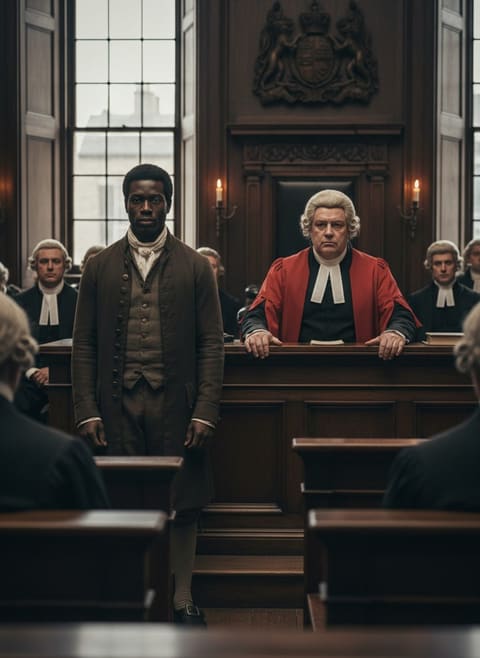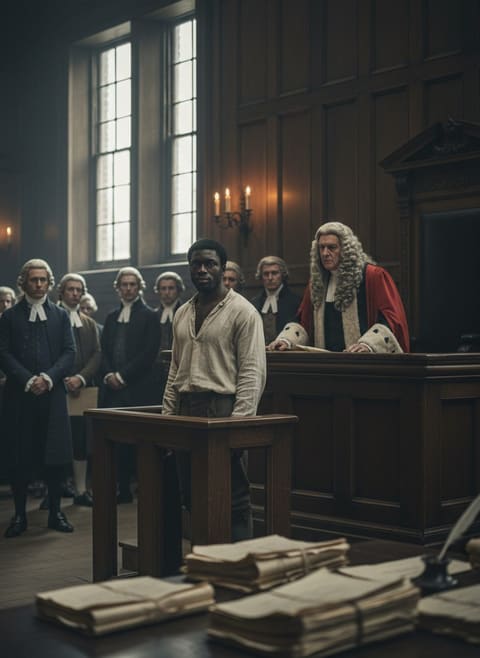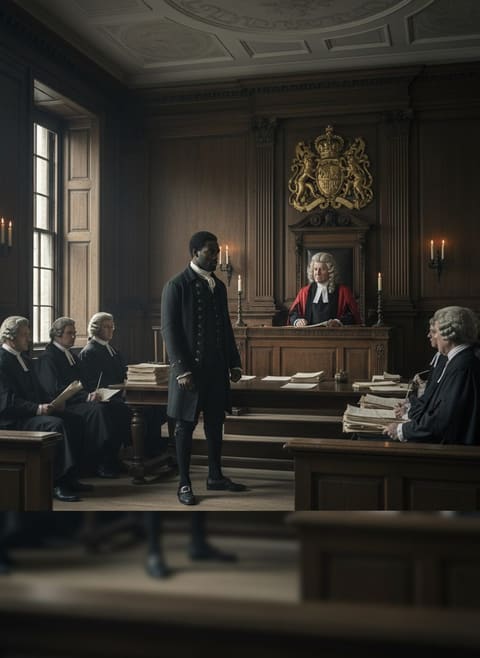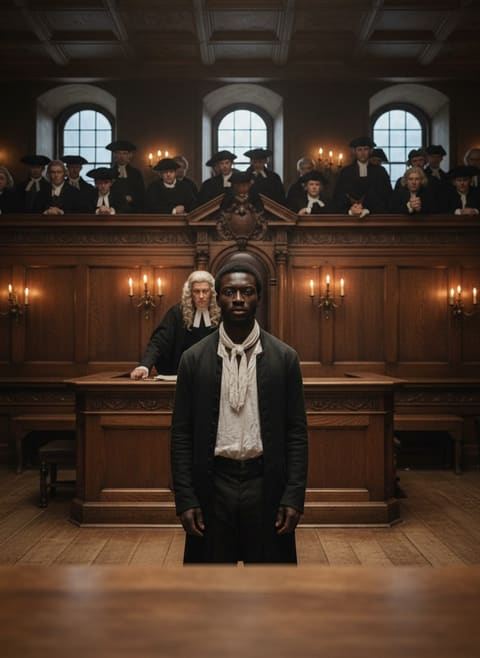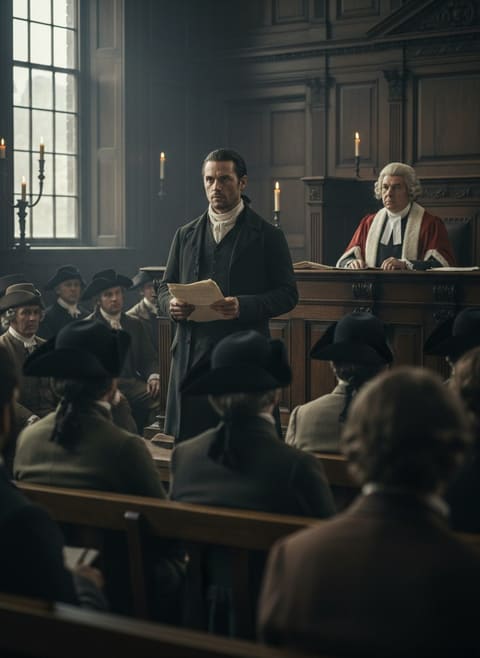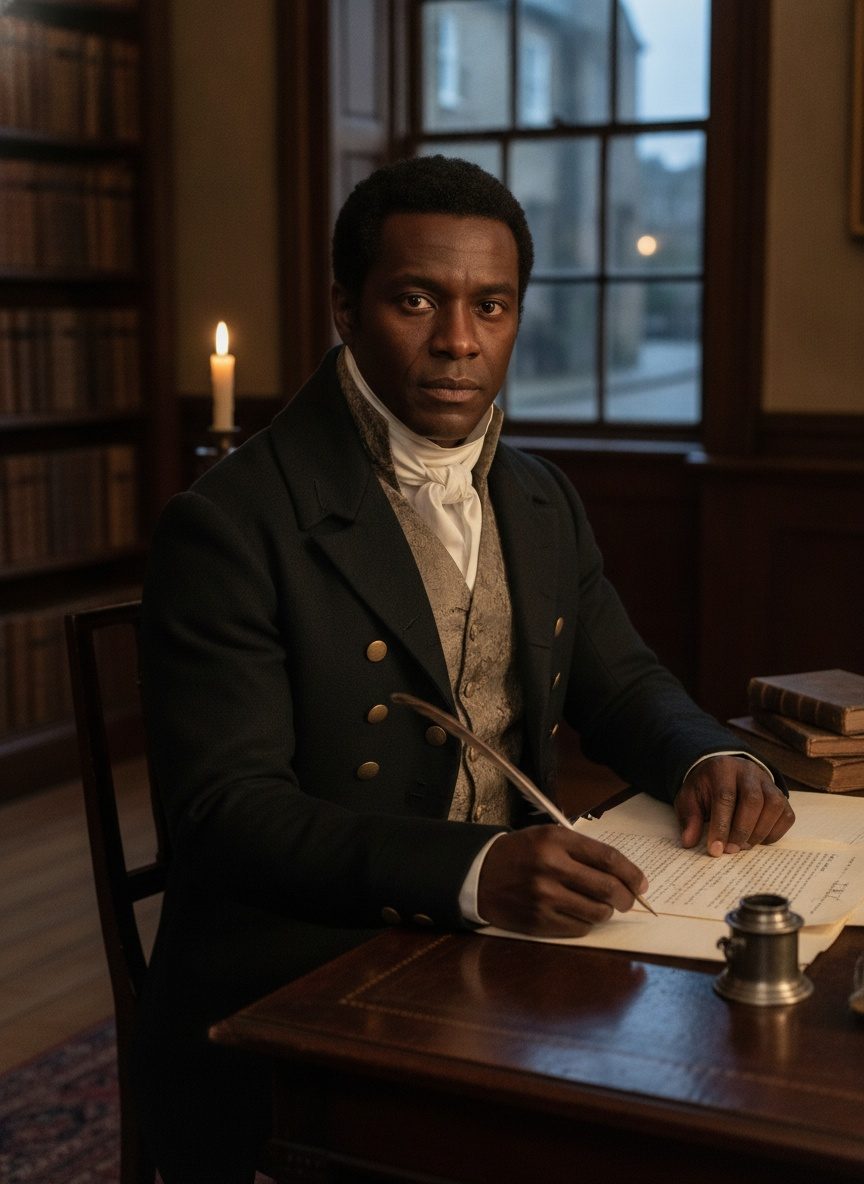
The cobblestone streets of Georgian London lay blanketed in the cold embrace of morning fog. A damp chill settled over the city, making windowpanes weep as the gas lamps flickered, casting ghostly shadows over the faces of those who hurried by. It was here, amidst the murmur of early vendors setting up their stalls and the distant clatter of horse-drawn carriages, that an unlikely story was taking shape—a narrative that would reverberate through the very heart of the British Empire. In 1789, amid the hustle and bustle, Olaudah Equiano, a once-enslaved African, placed the final flourish on a work destined to shatter complacency and stir the conscience of a nation.
The Silent Voices of the Atlantic
Picture the scene: the sun dancing across the rippled waters of the Atlantic Ocean, its playful gleam hiding the horrors borne across its vastness. In the depths of insidious ships, lives were shackled tighter than the chains that restrained them, their cries swallowed by the relentless waves. These were the silent voices of the slave trade—men, women, and children torn from their homeland, their histories erased by brutality and despair. This was the world from which Equiano emerged, a world he would transform from within as he cloaked his body in the trappings of freedom but never forgot the bonds that had so defined his past.
Born in what is today Nigeria, Equiano was a child when he was seized from his Igbo community and thrust into the merciless claws of transatlantic slavery. His journey was one of survival against staggering odds, from the harrowing quarters of a slave ship to the vast plantations of the Caribbean. Yet, amidst the oppressive heat and unforgiving toil, Equiano's spirit did not break. Instead, it galvanized. A wind change came with his eventual purchase of freedom—a chapter in his life that breathed life into one of the era's most profound narratives.
Equiano's story was not merely one of endurance; it was an odyssey of human dignity and faith in the power of language and intellect. Settling in London, a bustling hub of Enlightenment thinking and economic ambition, he found a city ripe for the shaking. His narrative, crafted in candid prose and vivid imagery, detailed the terrors he endured and the liberation he achieved, challenging the very fabric of British society's relaxed complicity in the slave trade.
Read next: The Day a Freed Slave Lectured Britain's Finest Minds
Writing His Own Freedom
Within the shadows of London’s literary salons and coffeehouses where ideas sparked like flint, Equiano penned his remarkable memoir, "The Interesting Narrative of the Life of Olaudah Equiano, or Gustavus Vassa, the African." Each sentence bore the weight of personal history fused with universal human truth. His words not only chronicled a life of bondage but also laid bare a systematic barbarism lingering just under the veneer of civilization—a civilization that celebrated liberty while profiting from captivity.
Equiano's narrative caught fire in the hearts and minds of the British populace for its unflinching honesty and unprecedented perspective. For the first time, a freed slave addressed directly an audience often insulated by privilege and ignorance. His was a voice that slipped past the guards of societal indifference, stirring debates in the parlors and pushing the burgeoning abolitionist movement into the public eye. Counted among his supporters were influential abolitionists and thinkers who saw his story as confirmation of the urgent need for reform.
What made Equiano’s narrative remarkable in its own right was his meticulous detailing of the economic and moral decrepitude underpinning slavery. He dissected the intricate twines of enslavement with insight that left his readership both horrified and enthralled. By challenging stereotypes, he implored readers to see slaves not as commodities but as individuals stripped of choice and future—a notion that resonated with those who believed in the burgeoning philosophies of human rights and liberty.
The Ripples Felt Across the Waters
The impact of Equiano's work stretched well beyond the tattered pages of his book. Each print held within it a call for accountability, urging a nation to reckon with its legacy—a legacy built, in part, on the backbreaking work of enslaved human beings. The narrative impressed upon its readers that freedom was not merely a concept to be debated in lords’ chambers but an inalienable right that all men must possess. Equiano's memoir climbed the ladder of British society, distributed from scholars and philosophers to social reformers and beyond.
Read next: The Winter That Broke Napoleon's Army of Portugal
As his narrative became widely read, its influence intensified. Equiano not only reframed the discourse on slavery but also energized the abolitionist movement, providing its advocates with first-person truth weaponized as literature. His life became the paragon of a freedom unyielded, a manifesto that educated and inspired generations thereafter.
In recreating his story with such evocative articulation, Equiano proved his conviction that a single voice could challenge the might of institutions and ideologies entrenched in darkness. He wielded his pen with sagacity and tender resolve, revealing that the heart of change would always beat strongest when guided by an unrelenting pursuit of justice.
Today, the echoes of Equiano’s narrative serve as an enduring reminder of the power inherent in bearing witness. His words rekindle the conversation around liberty and equity, ever prompting us to ask who writes history and whose stories are yet to be told. In a world where narratives shape our understanding of humanity, Equiano’s odyssey remains a testament to the enduring strength of the human spirit and the profound impact of stories left out of textbooks.