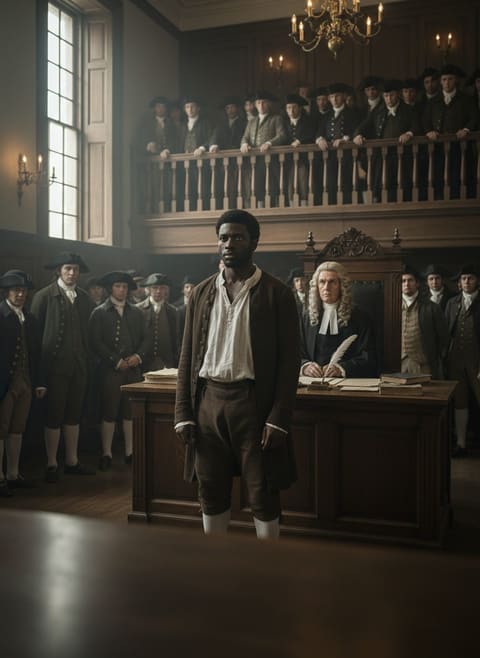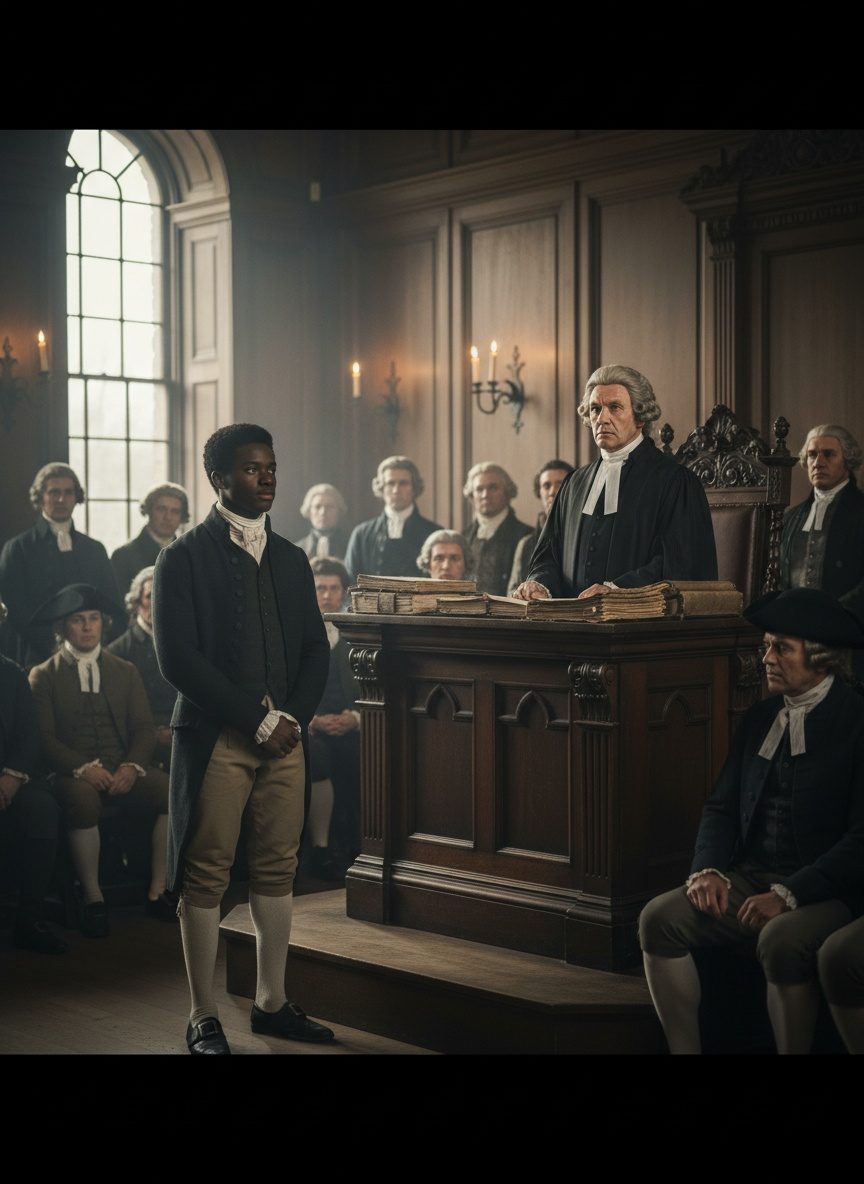
The wind swept through the cobbled streets of Edinburgh, a chilling reminder of the city's northern roots. Under a leaden sky that promised rain, the sound of horse-drawn carriages clattering over the stones filled the air, mingling with the solemn tolling of the high kirk’s bells. It was 1778, and the air carried a weight more profound than the impending storm—the weight of history in the making. In a realm where the past often tangled with the present, a single man entered the esteemed halls of Scottish justice, his fate intertwined not just with his own survival but with the very conscience of the nation.
The Humble Yet Defiant Claim of Joseph Knight
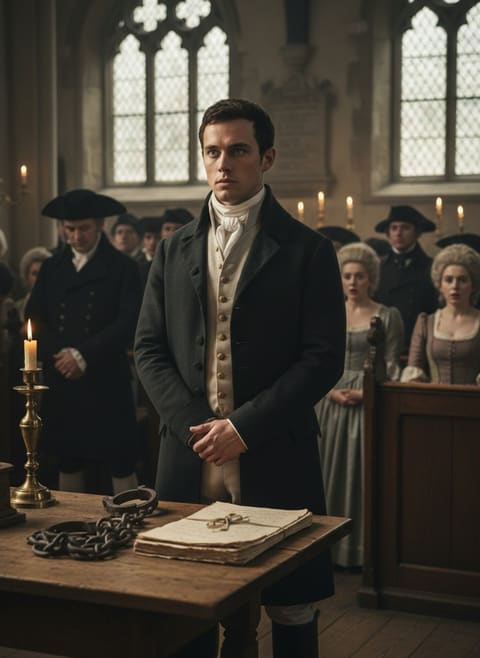
Joseph Knight, an African man brought to the Scottish soil by a Jamaican plantation owner, was not merely a subject of legal inquiry; he embodied a human resistance to the shackles of ownership that others believed unbreakable. Having served in the household of John Wedderburn, Knight was, by law of the Caribbean, a piece of property—a living testament to the economic tapestry of British imperialism. But it was Knight’s aspirations of freedom and his belief in Scotland’s more humane embrace that set him on a path to challenge notions far older than he.
Knight's assertion was simple yet radical: on Scottish soil, where no legislation explicitly sanctioned the enslavement of another, he was by his presence alone, a free man. It was a claim bold enough to ripple through the courts, thrusting unearthed morals into the spotlight. What brought Knight to Edinburgh was not only a plea for personal liberty but an indictment of a legal system complicit in the quiet perpetuation of his chains.
Lord Kames: The Enlightenment Voice on the Bench
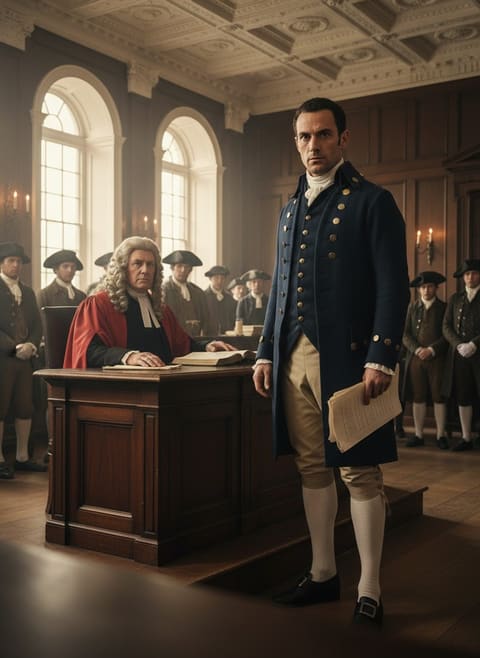
The courtroom was a theatre of oak and whispers, a solemn space where the Georgian enlightenment ideals grappled with traditional conservatisms. Presiding over this crucial case was the venerable Lord Kames, a jurist known for his progressive leanings and philosophical rigor. As a figure steeped in the intellectual currents of the era, Kames carried a weight of expectation—a beacon for fairness in increasingly murky legal waters.
Read next: The Day a Black Sailor Walked Into Court and Freed Himself
Lord Kames could trace the contours of the court’s history in the air; he didn’t merely apply the law, he elucidated its spirit. Thus, the trial began in earnest, the arguments as sharp as the Scottish wind outside. Wedderburn's counsel argued for the maintenance of property rights, evoking economic dependencies and colonial contexts. Yet, across from them, stood the barely audible but undeniably potent assertion that any man operating in the moral universe of Scotland must be free.
Kames’ decision that autumn day would be monumental—a ruling that recognized no legal foundation for slavery within Scotland, effectively severing an ancient tether and pushing the boundaries of what justice could mean in an age steeped in inequity.
A Turning Point Graven in the Scottish Stone
The ruling, once delivered, went beyond Knight—casting its light across the fabric of British society. This newfound breath of equality was as unsettling as it was liberating. Scotland, with her jagged landscapes and fierce independence, had declared in one voice that slavery, in her realm, had no rightful place. The verdict found its place in local discourse, igniting spirited debates in taverns and drawing rooms alike.
It was not hyperbole to say that this decision crept into the very heart of the British Empire, challenging the moral permissibility of its reliance on human commodification. Knight, who entered the court as a fugitive under an imposed identity, stepped out as more than a free man—he emerged as a symbol, a living testament to the possibility of change.
Read next: The Day a London Clerk Walked Into Court for a Dying Slave
The Ripple Effect Across the Empire’s Shores
In time, the significance of Kames’ ruling would lap against corners of the world where the iron grip of British imperialism dealt harsh inequities. Knight's case in Scotland planted seeds that later reawakened in other lands and contexts, foreshadowing a growing unease with the institution of slavery. Though it took decades for the insights borne from that Edinburgh courtroom to unfurl into widespread change, it unmistakably set a precedent—a spark for the abolitionist movement gaining steam both locally and abroad.
The case became a whisper across courts and colonies, raising voices previously silenced. Those who fought for freedom, dignity, and human rights could point to a clear victory etched from the lineage of legal tradition. From an unlikely birthplace in Edinburgh, the echoes of Kames’ judgment rang loudly in broader campaigns for freedom, reminding that islands of progress could indeed influence oceans of possibility.
The Justice That Shapes Us Still
The storm over Edinburgh passed, but the storm of ideas had only just begun. Even today, the story of Joseph Knight and the enlightened decision of Lord Kames resonates with a modern audience, reminding us that the scaffolding of justice is constructed not only on statutes but on humanity’s timeless quest for equality and dignity. As our understanding evolves, these fragments of history serve both as inspiration and a stark reminder that change, though often rooted in struggle, begins in the courageous actions of those daring enough to ask, "What is just?" amid a sea of injustices.
No longer confined to textbooks or distant court archives, Joseph Knight's story underscores the power of one voice in challenging an empire’s status quo. It stands, even centuries on, as both a reminder and a guiding light, that in the darkest of times, the question of what is right need never be considered lost.