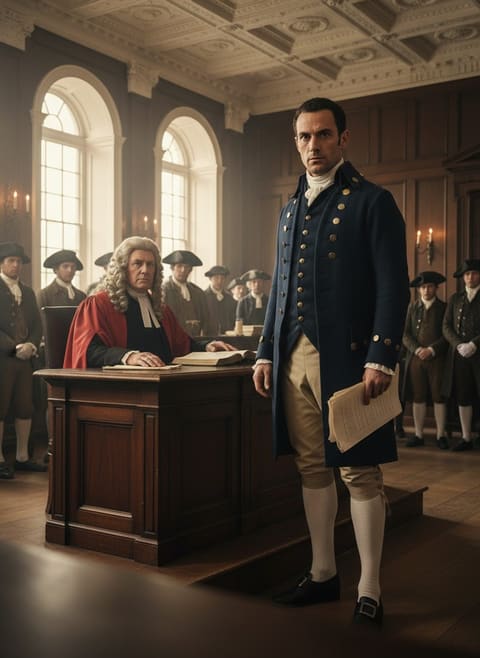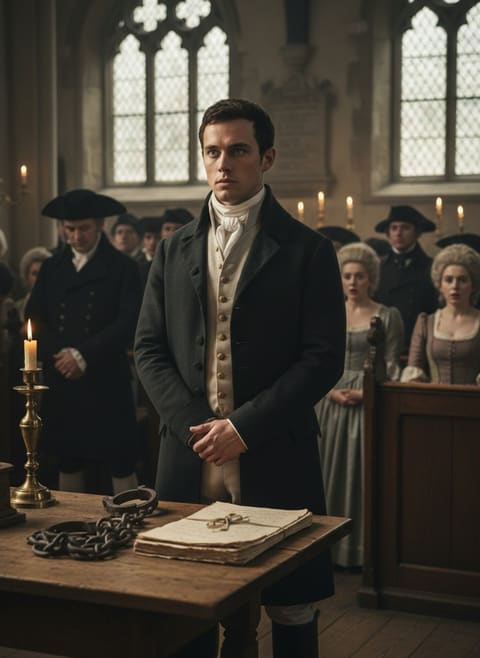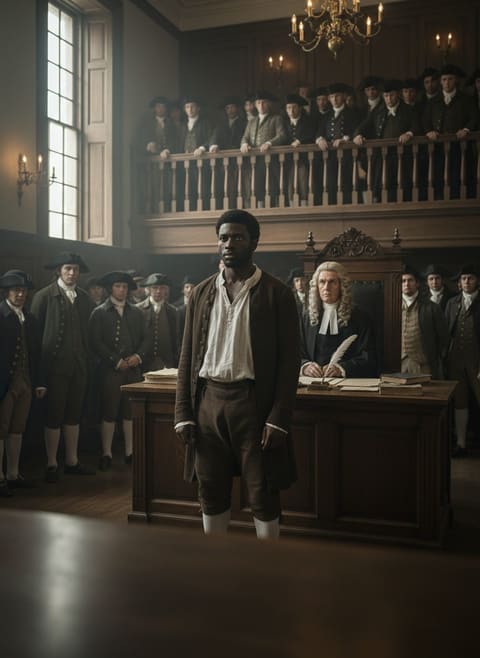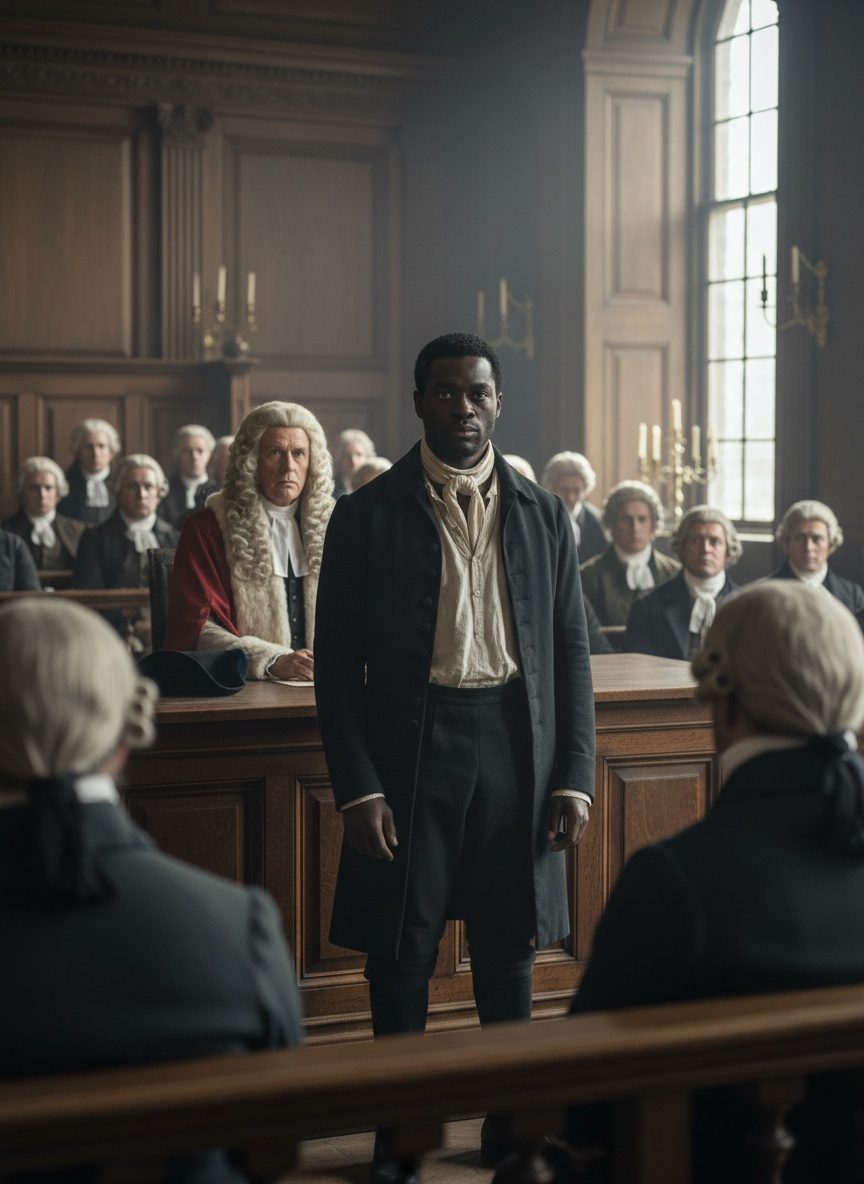
The wooden gavel cracked against the sound block, signaling the beginning of a hearing that would ripple across time. In the age of towering wigs and gilded silk, the hushed walls of England’s Court of King's Bench promised a climax of thunderous consequence. The air was tense, every eye riveted on the heavyweight drama unfolding between grave panels of oak. Standing at the heart of this tempest was James Somerset, a man whose presence defied the social norms of a world bound by chains, visible and unseen. His story of shackles and hope was laid bare before one of the most lauded legal minds of his generation—Lord Chief Justice Mansfield.
The Battle in the Courtroom
With its cavernous ceilings and echoing footsteps, the court was alive with murmurings of anticipation. James Somerset, the man upon whose fate the hearing hinged, stood firm, though his life was anything but stable. Just months prior, he had escaped from the grasp of Charles Stewart, the man who claimed ownership of his very being. This clash of wills was more than a personal dispute; it was a confrontation between the old world and an emerging new order whispering the possibility of liberty.
Somerset's confidence was bolstered by the legion of abolitionists and sympathetic lawyers who had seen potential in his plight and rallied to provide his legal defense. As Stewart's barristers recounted Somerset's alleged wrongdoings, voices rose in the gallery—echoes of outrage mingled with deep-rooted debates on morality and humanity. It was a tableau of gripping intensity, and all eyes were, ultimately, on Lord Mansfield. Every word he uttered would either solidify the chains of bondage on British soil or silently shatter them.
The Weight of Tradition
London's society was hardly unfamiliar with the institution of slavery. Across the sprawling British Empire, it was a cornerstone, fueling opulence from the sweet trade of sugar to the grim realities of labor. On English soil, however, the practice of owning slaves remained a shadowy realm of legal ambiguity. No concrete statutes defined slavery within England, allowing the practice to exist in a legal twilight, primarily enforced by tradition rather than the letter of the law.
Read next: The Day a Black Sailor Walked Into Court and Freed Himself
This perplexing state of affairs owed much to England's tangled history. Slavery, while politically unsupported on home ground, thrived amid colonial expansions. Lord Mansfield, renowned for his legal acumen and fairness, wrestled with these complexities. For him, Somerset's case was not just a matter of personal freedom but a question of England's soul—an introspection of whether the home of the most enlightened laws would permit the scourge of possession and disentitlement.
The Judgement of Justice
As the arguments concluded, the courthouse braced for Lord Mansfield's long-awaited ruling. Ageless seconds stretched as the nation, balanced on the edge of its history, awaited his verdict. With a voice clear and deliberate, he delivered words that would be etched into eternity. Lord Mansfield decreed that slavery was so odious that nothing could support its existence but "positive law," which England lacked. Thus, any man on English soil could not be forcibly removed and enslaved.
The courtroom exploded into a mix of jubilation and consternation. With this landmark ruling, Lord Mansfield had made a profound declaration: No man upon English soil was to be treated as another's possession. The decision was both a judgment and a moral statement, starkly opposed to the dehumanizing trade that persisted across the waters. It was a defiant embrace of human dignity, resonating beyond the confines of court reports into the heartbeat of a burgeoning movement against slavery.
A New Dawn at Dusk
The repercussions of the Somerset Case echoed through the cobblestoned streets of London and far beyond. The ruling did not end slavery in the British Empire; it wasn't until decades later, through relentless advocacy and painful sacrifice, that abolition would be realized. However, Lord Mansfield's decision symbolized the tangible entry of abolitionist ideals into the legal framework of Britain. It inspired further scrutiny and activism, fanning the flames of change with its precedent.
Read next: The Day a London Clerk Walked Into Court for a Dying Slave
For Somerset, the judgment was a return to freedom, a liberation not only for himself but a spark of hope for many like him. Although his individual story fades into the obscurities of history, his name became a whispered hope among enslaved people worldwide, illustrating the power of faith, courage, and the belief that the weight of justice can tip toward liberty.
The Echoes of Freedom
Though Somerset's case is occasionally underemphasized in textbooks, its legacy curls through the rafters of history. It is a testament that even entrenched systems can be challenged and that justice prevails when it is armed with courage. The crack of the gavel in 1772 signified more than just a legal ruling; it was a dawn lighting the shadows, an assertion that the spirit of freedom could find a voice even in tumultuous times.
Indeed, such historic rulings remain relevant as reminders of the ongoing imperative to question, to challenge, and to seek justice. In that singular moment, a precedent was set that rippled through history, illustrating that every choice can be a step towards liberation or captivity—not just in law, but in the deeply intertwined moral fabric of society itself.