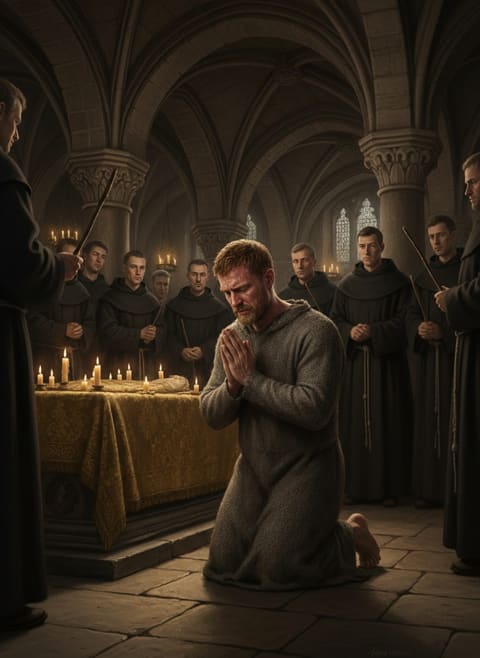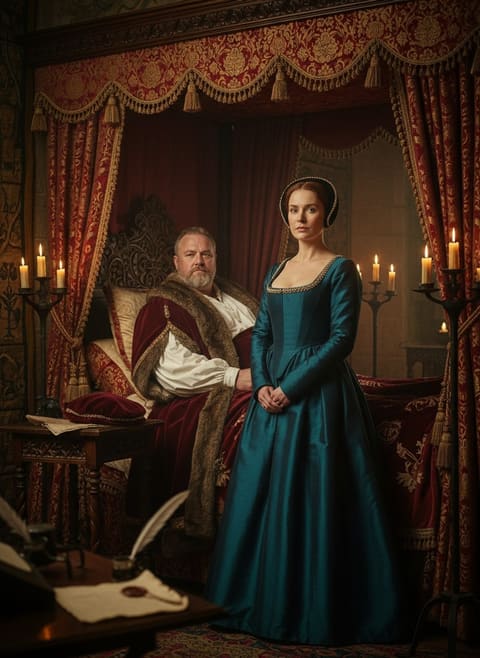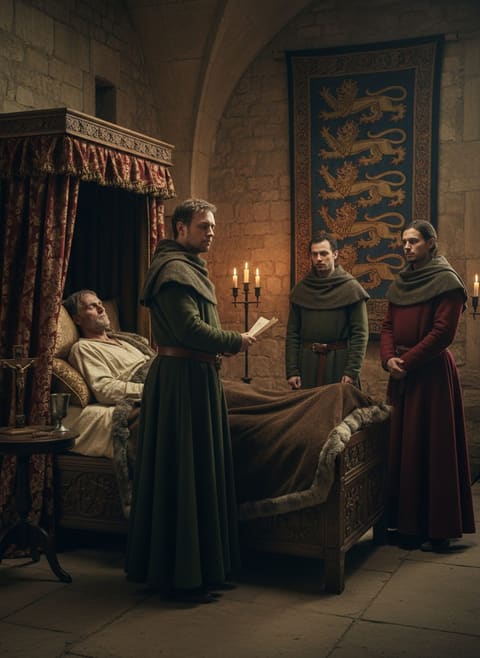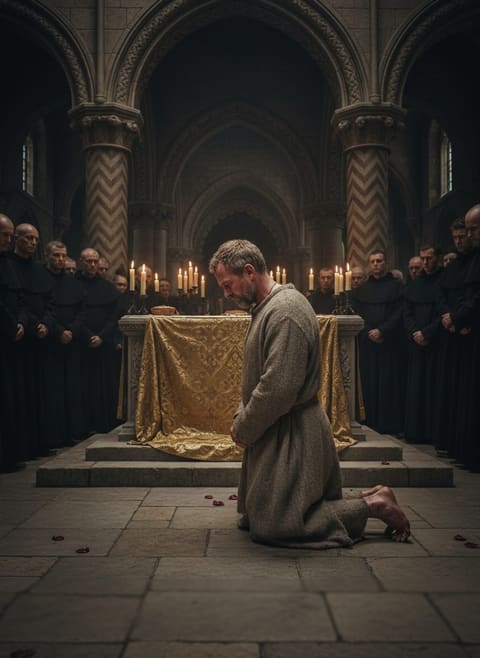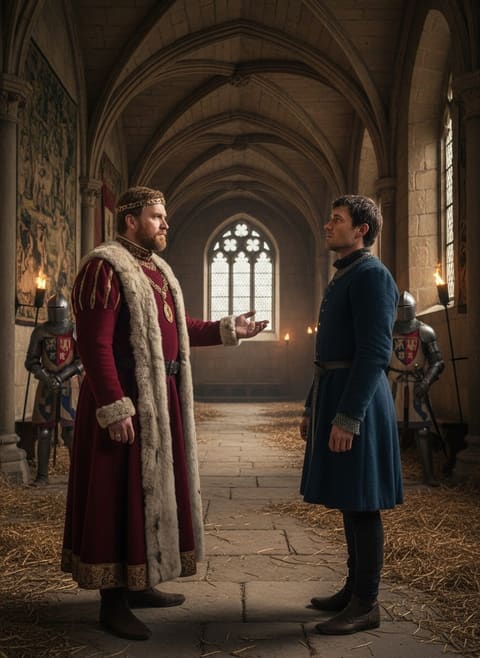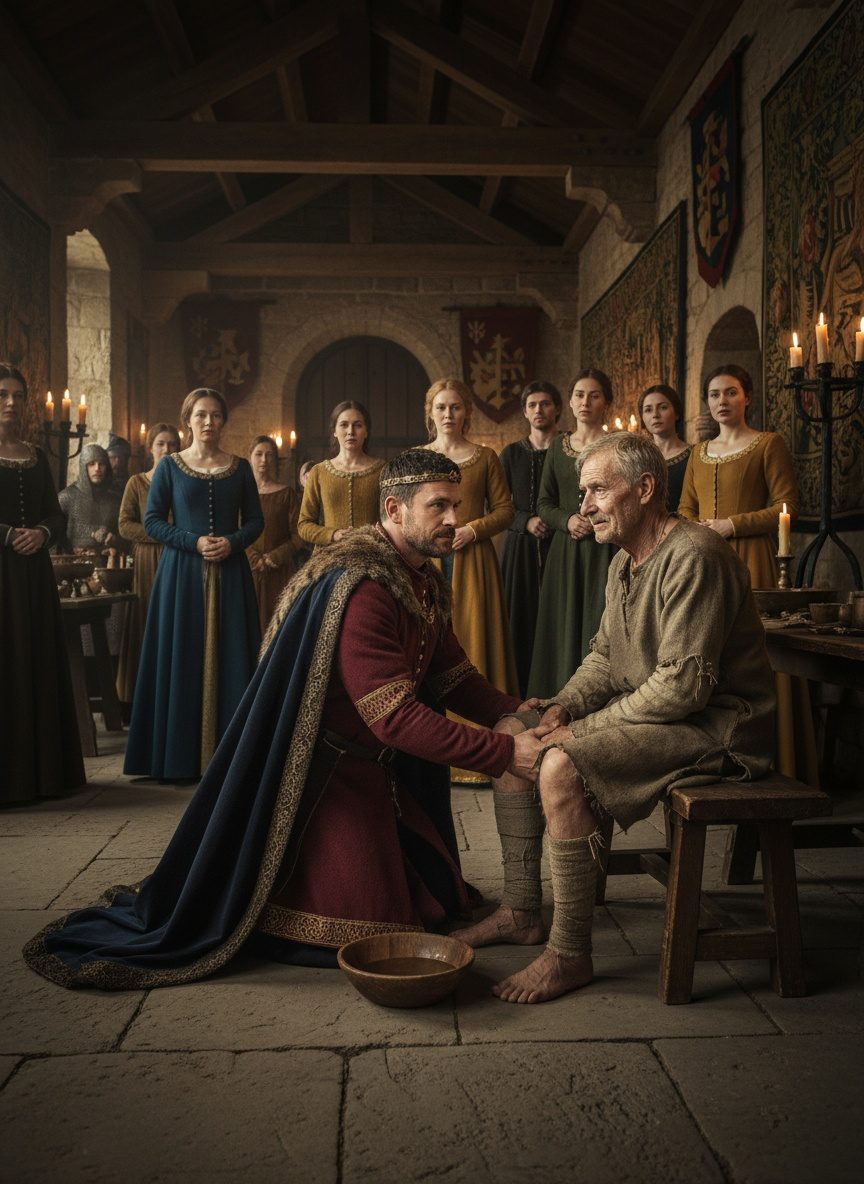
An unexpected silence settled over the grand hall of Winchester. The scent of roasted meats and spiced wine filled the air, but the gathered nobles stood motionless, their eyes fixed on an astonishing sight: King John, ruler of England and notorious for his ruthless reign, knelt on the cold, stone floor. His royal garments brushed against the ground as his hands reached out, trembling, towards the bare and dirt-caked foot of a beggar.
Beneath the Crown, the Hand of Humility
King John, a man whose name struck fear across the realm, was not known for mercy. His brutal enforcement of taxes and readiness to wage war were whispered of in anxious tones within the stone walls of castles and taverns alike. Yet, here he was, choosing humility on a day laden with Christian symbolism. It was Maundy Thursday, 1213, a day steeped in the tradition of service and humility, reflecting Christ's foot washing of the Apostles. Few anticipated that this solemn rite would unfold in such dramatic fashion within the king's own feast hall.
As John's fingers carefully washed away the grime from the beggar's heel, it was a gesture both shocking and profound. Why did this tyrant choose a public show of humility? Every splash of water was a contradiction to his legacy. Those present could scarcely believe their eyes, nor could they ignore the deep resonance of this act. The future of the kingdom loomed uncertain, yet in this moment, the king himself seemed changed, if only for a breath of time.
The Shroud of Cruelty
Known for harsh rule that gouged the coffers of both land and people, King John’s reign was often punctuated by controversy. Monarchical disputes, rebellious barons, and deteriorating relations with the Church painted John's regency in varied hues of dissatisfaction. Taxation weighed heavily on his subjects, with legends of his cruelty echoing through generation upon generation. Surrounded by distrust, John's reputation teetered on a precipice of disdain that this single action temporarily eased.
Read next: The Day a Young Prince Knelt and Refused a Crown
What drove this powerful monarch to step from royal obedience to engage in such a visceral act of servitude? Perhaps it was desperation; perhaps it was genuine repentance. Legends say the court's chroniclers were struck by his uncharacteristic awareness, noting the gravity with which he undertook the service. It was an inversion of the expected order, an upheaval of the social hierarchy with the king’s fingers touching poverty firsthand.
A Feast Becomes an Offering
The feast hall itself stood as an emblem of opulence. Gilded chandeliers bathed noble guests in gentle light, while their wealth was reflected in goblets of polished silver. Yet, juxtaposed against this grandeur was a table presenting more than sustenance to the fortunate thirteen beggars invited for the holy observance. With each serving plate carried and chalice filled, the king performed each task as though in quiet penance. Bread broken and made abundant in this grand hall was as much a sermon as it was sustenance.
The offerings of food and wine, generous to a tradition, were unfamiliar from a character known more for taking than giving. Rumors abound—was it a public relations move, a religious awakening, or simply part of his broader reconciliatory gesture towards an increasingly distant Church? Each moment passed under the watchful eyes of astonished barons and foreign emissaries, who whispered quietly of the unrecognizable magnanimity enfolding.
The Silver Gift
Endings are often remembered for their finery. Here, it took the form of shimmering silver coins that glinted in the firelight as they rested in outstretched hands accustomed to little more than want. Coins pressed with the royal insignia, they seemed as out of place in the beggar’s careworn palms as the king's compassion seemed to citizens of England. John’s supposed generosity was a veritable relic—something rare to be remembered, and spoken of in the annals of time.
Read next: The Day a Queen Rode Alone Into a Mutinous Army
These thirteen pieces of silver—an ironic reference not unnoticed to the closest observers—represented an atonement of sorts, an acknowledgment of what faith expected and history demanded. For all the brutalities that had marked the paths of his reign, this gesture etched itself deeply. It spoke of vulnerability, perhaps even a cry for forgiveness in a quarter where none was thought possible. Faith and royalty meshed in these symbols of repentance, if only symbolically binding for a brief span.
A Fleeting Change in History's Tide
Loyal patrons of history know that it is shaped not only by wars won and treaties signed but by abrupt, unpredictable moments of human revelation. Thus, on Maundy Thursday in 1213, King John of England offered an act of humility that lingered in juxtaposition to his reign. The image of a king kneeling to wash the feet of the destitute remains an indelible illustration of humanity’s complexities, revealing layers beneath the crown and casting light on the shadows that wander our historical precedents.
This moment mattered not because it was an expected narrative of redemption, but because it spoke to the unpredictable nature of human character, where even the tyrant felt the pageant of empathy. For those present, history gave way to a raw, undistilled moment—however fleeting—and proved that even within figures written in harsh strokes, the unexpected could unfold. It's a testament (though devoid of repetition) to the intriguing, mutable essence of human history.