He was a king who danced on the precipice of power and disaster. With a temper as fiery as his mane of red hair, Henry II was as known for his intellect as he was for his outbursts. Yet in July 1174, what unfolded on the cobblestone streets of Canterbury was not the result of unbridled fury, but a display of unprecedented humility — the day a king stood barefoot in the snow for a dead man.
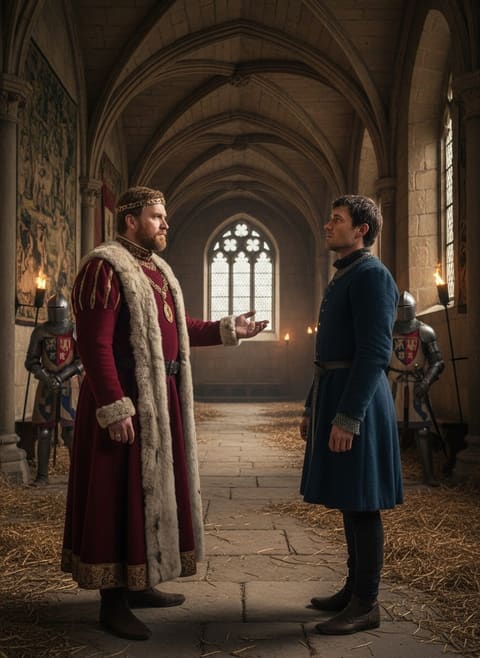
To appreciate the gravity of King Henry II’s penance, one must first understand the man who invited divine wrath into his life: Thomas Becket. Once a close friend and chancellor to Henry, Becket was appointed as Archbishop of Canterbury with the expectation he would bridge the gap between the church and the crown — a reasonable assumption since Becket had proved a stalwart ally to the king. But the transformation of Becket from loyal lieutenant to vexing cleric was swift and unexpected. Upon donning the robes of the archbishop, a power Henry had bestowed upon him, Becket's devotion shifted dramatically from the king to the church, igniting one of history's most storied conflicts.
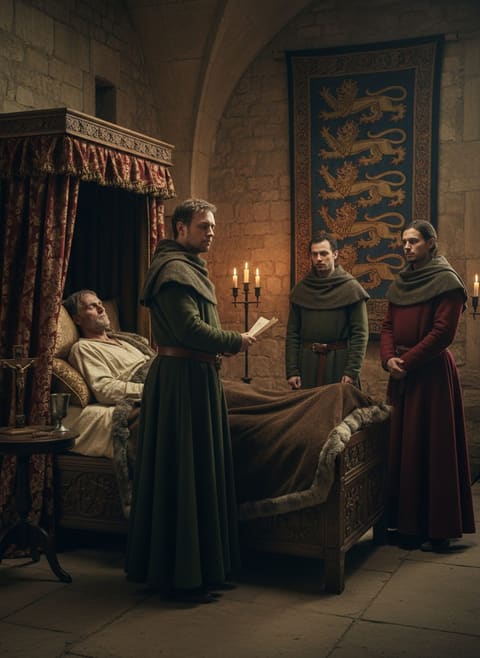
The clash between regal authority and ecclesiastical power came to a head one fateful night in December 1170, when the king’s embittered frustration boiled over. “Will no one rid me of this turbulent priest?” he is purported to have shouted, a phrase that would soon echo through eternity in infamy. These words, carried as commands by four knights, led to the brutal slaying of Becket on the cold stone of Canterbury Cathedral. An act meant to eliminate defiance almost toppled an empire, thrusting the king to his knees in desperation and demanding an expiation that only Canterbury could provide.
In the realm of Henry II, divine approbation was tantamount to political legitimacy. The murder of Becket had sparked outrage not just in England but throughout Christendom, casting a shadow of desecration upon Henry’s reign. The whispers of excommunication and rebellion grew louder, threatening to dismantle the very foundation of his rule. This eventual pilgrimage to Canterbury was not mere penitence but a carefully orchestrated political maneuver aimed at restoring royal and spiritual equilibrium.
Read next: The Day a Young Prince Knelt and Refused a Crown
As the wooden hooves of his horse clattered to a stop at the outskirts of the cathedral city, an unusual spectacle unfolded. Mighty Henry, flanked by the tension of whispers and onlookers, removed his regal footwear and began his solemn march. Barefoot, he trudged over the sharp, unforgiving cobblestones, a sight that would immortalize the Cambridge streams with tales of royal humility. Onlookers, accustomed more to coronations than contrition, witnessed a moment when the crown lowered its head to the weight of conscience.
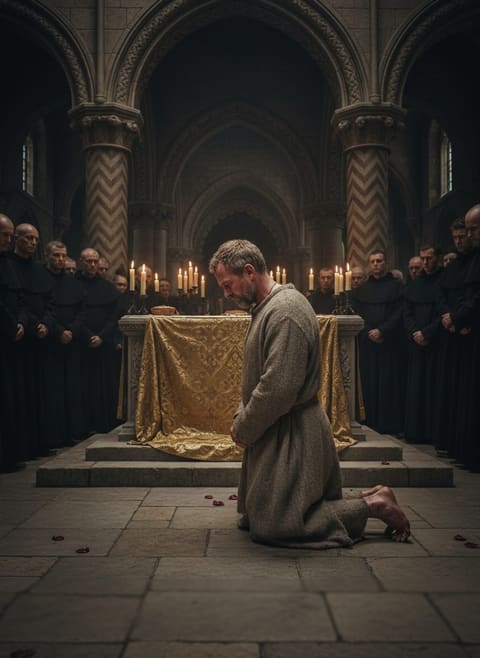
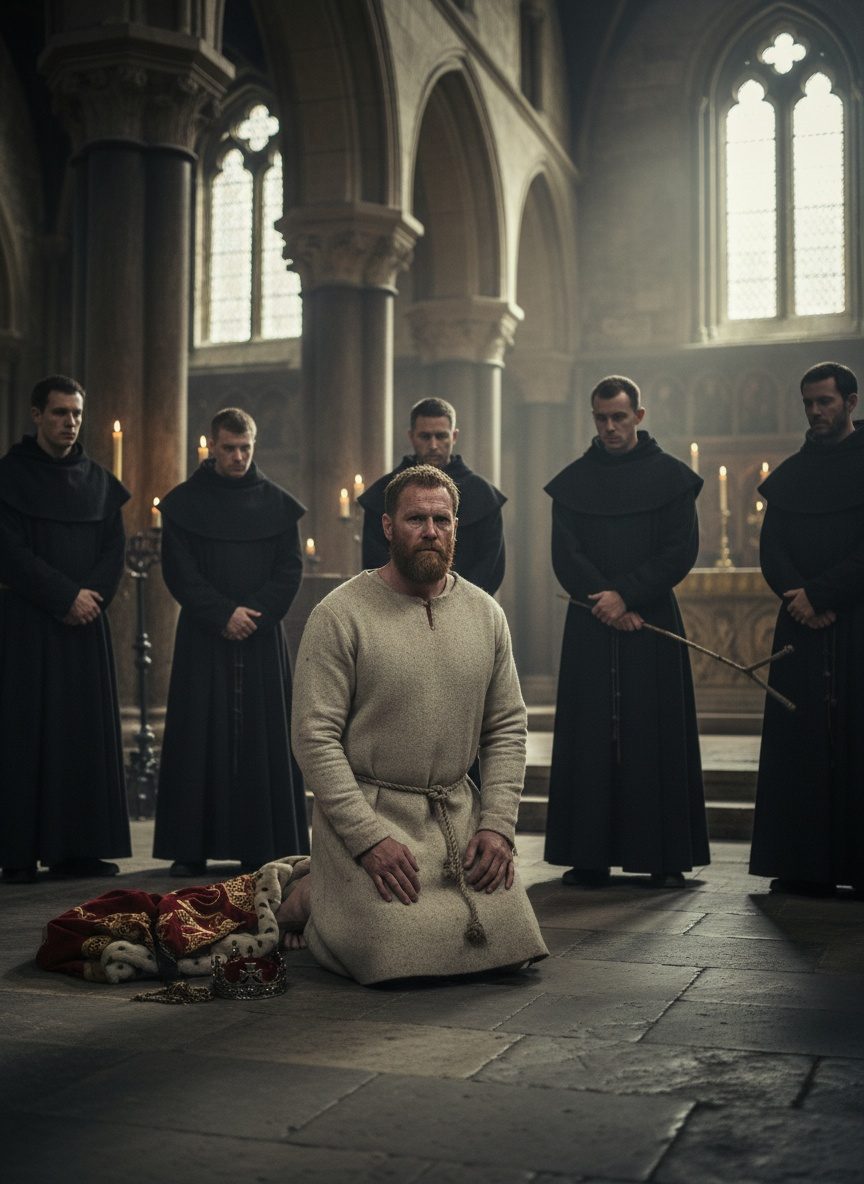
The journey through Canterbury was a pilgrimage not just of the body but of the soul, every step imbued with the somber gravity of what lay ahead. Within the hallowed walls of the cathedral, where once blood had stained the holy ground, the king presented himself — not as a sovereign, but as a supplicant. He approached the tomb of the martyr Becket, the site of his former friend’s martyrdom, and with unfathomable resolve, knelt.
Read next: The Day a Queen Rode Alone Into a Mutinous Army
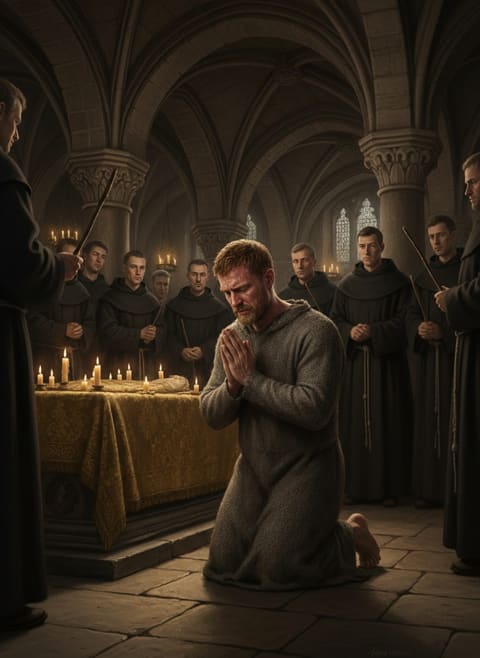
The air hummed with anticipation and reverence as the monks, robed in contemplation, assumed their grim task. Flagellation had long stood as an ancient form of penance, but never before had it been meted out on a king. Wood rods met flesh, not with pity but with the rhythm of redemption. Each stroke marked more than physical pain; it was a stroke against the king's pride and the tangible toll of reconciliation with a God he had wronged. The whispers of Canterbury echoed with the lashes, a symphony of royal redemption.
The poignancy of Henry’s penance was not lost on the clergy and witnesses who gathered that July day. Here stood a king who dared to crawl under the burden of both guilt and duty, a tapestry of complex motivations yet undeniably human in its threadwork. This act of contrition sufficiently placated the church, demonstrating Henry’s willingness to align once more with spiritual integrity, and allowed him to reclaim a fractured dominion.
What followed in the wake of Henry’s confession was a gradual reclamation of his reign, bolstered by renewed support from those whose faith he had momentarily lost. The aura around Thomas Becket transformed irreversibly, swiftly shifting to that of a venerated martyr in the tapestry of saints. Miracles were reported at his shrine, only solidifying Canterbury as a focal point of pilgrimage for centuries to come. And as for Henry, his reign continued, though perpetually shadowed by the specter of the archbishop he had once called friend.
In historical reverence, this moment stands not just as an account of a penitent king but as a powerful parable of leadership's occasional requirement for deep humility. Henry's journey, barefoot and unbowed by despair, illustrates the phenomenal lengths to which power must sometimes extend to acknowledge its own downfall and rise once more in moral and political rectitude. The echoes from Canterbury remind us that the strength of a leader is not solely in command but in the capacity for great humility amidst trials of sovereignty. It was not only a day of atonement but a strategic masterpiece of royal redemption — a story of kingly comportment that still reverberates through the annals of untold British history.