Under the somber cloak of a gray May sky, the city of London seemed to hold its breath. The air was thick with a sense of solemnity that matched the tempestuous clouds rolling across the horizon. The usually bustling streets were muted; the sound of horse-drawn carriages echoed softly across the cobblestones, and the distant tolling of St. James’ bells seemed to mourn the passage of an era. It was May 6, 1910, a day that had come not with celebration, but with a silent shift in the annals of British history. The life of King Edward VII had ended, and with it, the ceremonial transition of power had begun—but joylessly so.
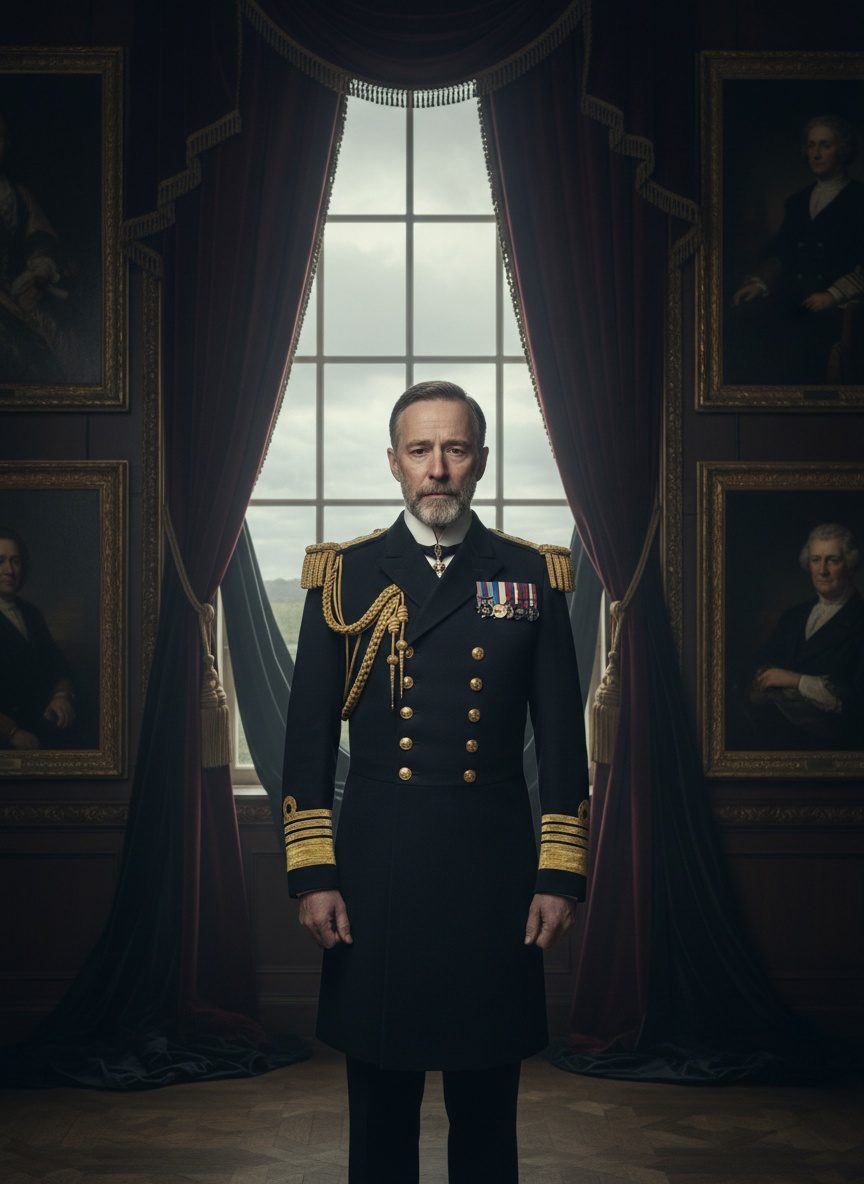
As the reigning monarch lay lifeless, his crown passed swiftly to his son, George. In the opulence of Buckingham Palace's hallowed halls, the weight of duty settled onto a man who had never aspired to wear the crown. George V had been a naval officer, committed and steadfast in his path. A life at sea had shaped him—a life he had imagined would see him into old age. The destiny that awaited him seemed to be anchored in the shadows of history's course, not of his own making but dictated by the fickle hands of fate.
George had grown up as the second son, never foreseeing the throne as his eventual seat. His elder brother, Albert Victor, had been groomed from infancy under the weighty mantle of the future king. Yet, the castle of expectations crumbled suddenly in 1892 when typhoid fever claimed Albert's life, altering the very fabric of monarchy itself. The heir apparent was gone, and into his vacant place, George was thrust, his path redirected irrevocably.
In the soft flicker of candlelight, with shadows dancing on the study walls, one might imagine George penning letters to his brother, perhaps seeking guidance from a sibling lost too soon. To his mother, Queen Alexandra, and father, King Edward VII, he had always been the second—content with a life far from the ever-watchful eye of a nation. It was a conspiracy of circumstance that brought him here, to this moment under the unyielding gaze of history.
Read next: The Day a Young Prince Knelt and Refused a Crown
The somber coronation of an unenthusiastic king was far from the jubilation that had embraced Edward's accession nearly a decade before. Then, the air had been electric with celebration; now, it was tinged with grief and a sense of reluctant new beginnings. The people saw through a veneer of continuity. In their eyes, George stood as a man dwarfed by his father’s larger-than-life presence, a specter looming in the national consciousness.
Yet, history has a curious way of unfurling. Beneath the reserved exterior, George V was a figure of quiet but enduring strength. He stepped into the role of the sovereign during a time when the world teetered on the edge of modernity's cusp. Innovation and industry were transforming society, and the winds of change were beginning to gather, gusts that would eventually propel Europe into one of its darkest periods. Navigating the ship of state required skills learned not from royal tutors, but in facing the unpredictability of open seas.
Within the corridors of power, George’s naval discipline carved order from chaos. His reign would be marked not by grand military conquests or territorial expansions, but by the quiet fortitude and unyielding resolve he brought to bear on a rapidly changing world. Though his path was strewn with both turbulent tides and imperceptible undercurrents, George steered steadily onward, rebuilding the monarch’s role as a stalwart embodiment of continuity amidst change.
Read next: The Day a Queen Rode Alone Into a Mutinous Army
His reluctance was apparent, but George's understanding of duty surpassed many of those who were more eagerly inclined to power. The people gradually found his steadfastness comforting, and his unswerving devotion to duty became evident during the First World War. Through letters and speeches, he appealed directly to his subjects, showing a king intimately connected with the heart of his nation, not isolated on a gilded throne but engaged and empathetic.
Memories of that gray May in 1910 were softened by years and service. Who could have known, on that somber day bereft of celebration, that the reluctant mariner enthroned would anchor the monarchy so firmly? The echoes of that day whisper through history, a reminder of how unforeseen twists of fate can redefine the trajectory of nations. George's ascendency, born from the loss of a brother, and his reign, marked by steadfast devotion, left a legacy of resilience that resonates through the annals of British history.
History often teaches us that the brightest legacies emerge not from those who seek power eagerly, but from those who shoulder its burden with humility and grace. George V’s path was never imagined by him; it was shaped by a higher tide beyond his control. The tale of the day a king was crowned in silence is a reminder of the unpredictable nature of history—a narrative woven not only by those who seek destiny, but also by those upon whom destiny is pressed.