July 4, 1347. The oppressive summer heat clung heavily to the air outside the besieged walls of Calais.
The Shadow of a Siege
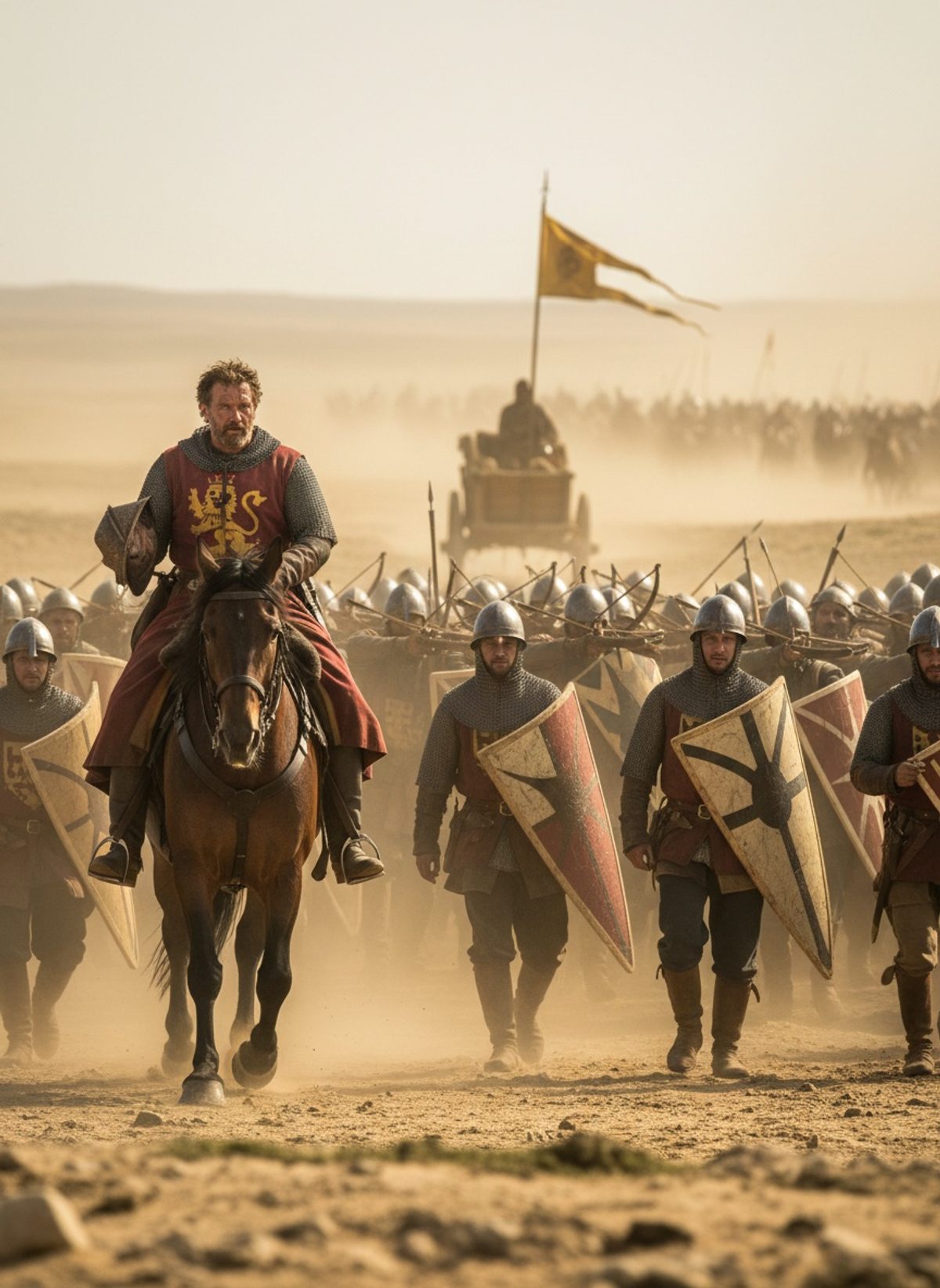
For nearly a year, Calais had withstood the unyielding pressure of King Edward III's siege, a testament to the endurance and desperation of its besieged inhabitants. Positioned strategically on the coastline opposite England, Calais was a vital port for both commerce and warfare. The people of Calais had looked to their walls for protection, but their isolation from allies and supply lines rendered those walls a prison rather than a safe haven. Within, food dwindled to near nonexistence. Rumors of hungry families, subsisting on whatever vermin they could find, floated through the townsmen as shadows flitted at the edge of firelight each night. The once-bustling streets of Calais were empty, save for the desperation that filled the void.
The outcome seemed destined from the beginning. After English triumphs at Crecy, Edward had turned his gaze to this strategic jewel. As weeks turned to months, the once-defiant defenders faced the stark reality of their straits. Supplies ran out, and disease began its inexorable spread. The proud city stood on the brink, its spirit as battered as its hungry citizens. When the iron fist of siege finally wore down the resolve of Calais' defenders and the gates cracked open, the fate of its people lay in the hands of a king whose wrath was known to be as fierce as his ambition.
The Gravity of Six
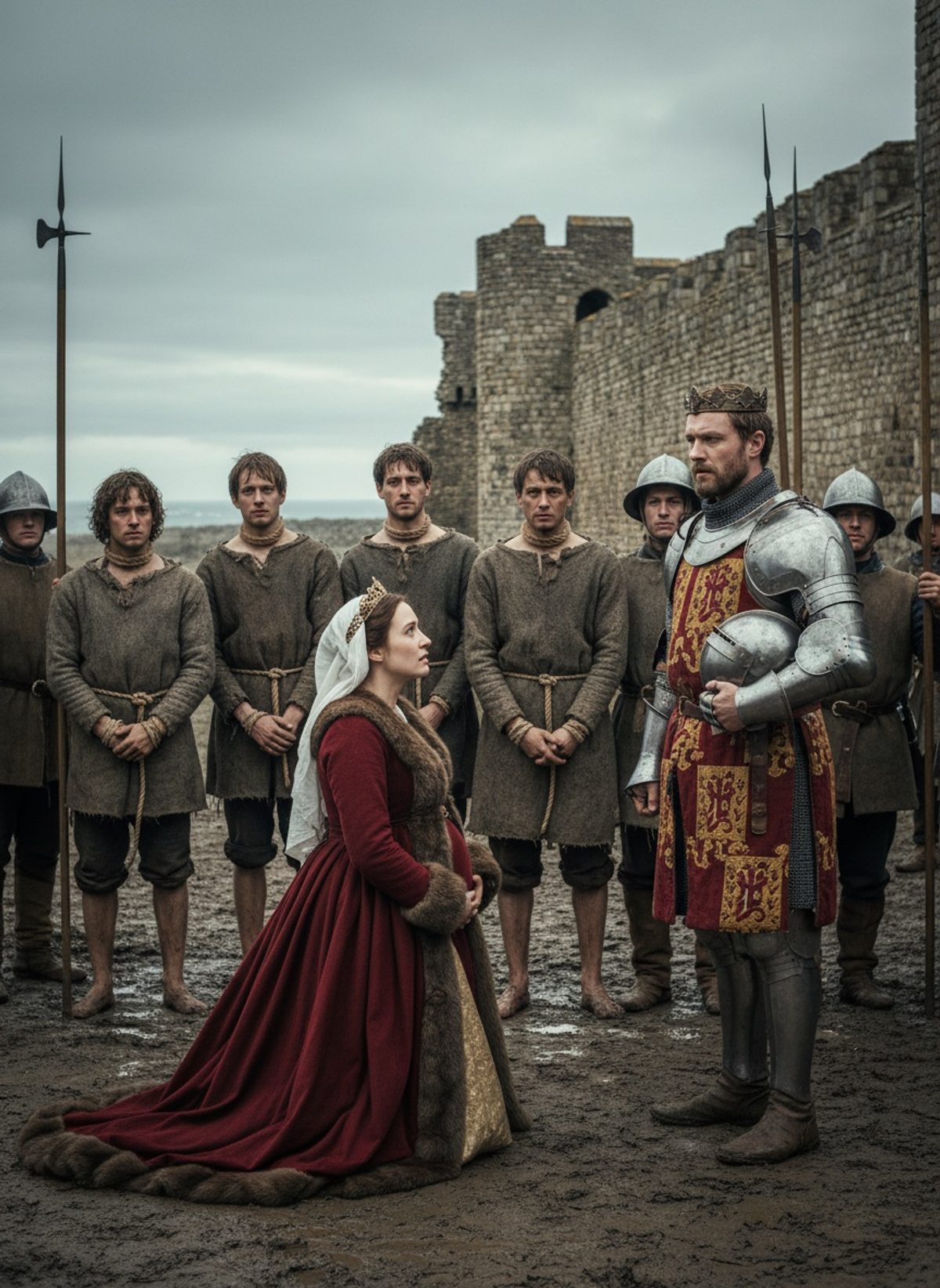
Edward, seeking a show of absolute dominance, demanded a tribute that would embed his victory in the very soul of Calais: the lives of six of its leading citizens. Led by their mayor, these six men were to march out in sackcloth, barefoot and noosed, signifying their city’s capitulation and begging for mercy. Their sacrifice would serve a dual purpose—appeasing Edward’s thirst for retribution while demonstrating the futility of defiance to the world.
Read next: The Day a Queen Knelt in the Mud and Stopped a Siege
Their procession from the city's walls was a somber testament to leadership in sacrifice. These were men who had endeavored to protect and sustain their people through a bleak winter of war and starvation. Now, they bore not the emblems of victory, but the somber trappings of defeat. Their faces, engraved with the anguish of those left behind, emerged from the shadows of the port city to settle under the gaze of Edward's judgment, a tableau of expected doom.
Compassion in the Unlikeliest Place
Amidst this grim tableau, a figure emerged who would alter the course of this bleak destiny—a queen whose gentle strength was her greatest form of influence. Philipa of Hainault stood by her husband's side, a beacon of calm and empathy amidst the thunderous chants for blood and retribution. Pregnant and moved by the plight of the men before her, she strode forward, a determined softness in her step.
Kneeling in the muck and mire before her king, Queen Philipa pleaded not with words of strategy but from the depths of human compassion. Her condition and emotional vulnerability were laid bare for all to see. This was an appeal from a queen who understood the physical and emotional toll that conflict levied on both the victor and the vanquished. She spoke to the part of Edward that might still recall the virtues of mercy and humanity. Her tears mingled with the dust of the earth as she implored Edward to look at these men not as enemies vanquished, but as husbands, fathers, and citizens who had already given everything but their lives.
The Silent Strength of Grace
The spectacle was as moving as it was unexpected. The battlefield ethos of Edward III, formidable as it was, found itself countered not by a sword but by the gentle insistence of empathy. The tension simmered in the air, voices subdued as all eyes turned to Edward. For a moment that stretched into eternity, the king weighed his legacy—victory at the cost of mercy. History held its breath.
Edward, perhaps influenced by a woman's grace in the face of overwhelming might, at last relented. Whether moved by his queen's plea or calculating the potential for future alliances, he granted mercy to the six men of Calais. These figures, once markers of intended sacrifice, now stood as unexpected symbols of human compassion. The city's leaders were spared, and instead of blood, the earth drank in only the salt of tears.
A Queen's Mark on History
What unfolded that day outside Calais imbued the chronicles of medieval Britain with a story that would endure through generations. Many tales of conquest and kingship have since faded from popular memory, yet this small act of mercy, born from the heart of a queen, continues to echo across the centuries. As rulers often do, King Edward III’s actions were tactical, but his legacy became colored by the warmth of his queen's intervention.
In reflecting on these events, one is drawn to ponder the profound impacts wrought by moments of compassion amidst the harshness of war. Edward’s siege had achieved its goal, capturing Calais without bloodshed, but it was the queen's intervention that softened the hardness of conquerors and echoed with a balm of unexpected humanity. The tale of Calais, of six lives held in the balance, is one of the many legends that remind us, with gentle insistence, that history is not solely the domain of battle and conquest. It is also the province of mercy, compassion, and the enduring belief in the potential for humanity's greater good.