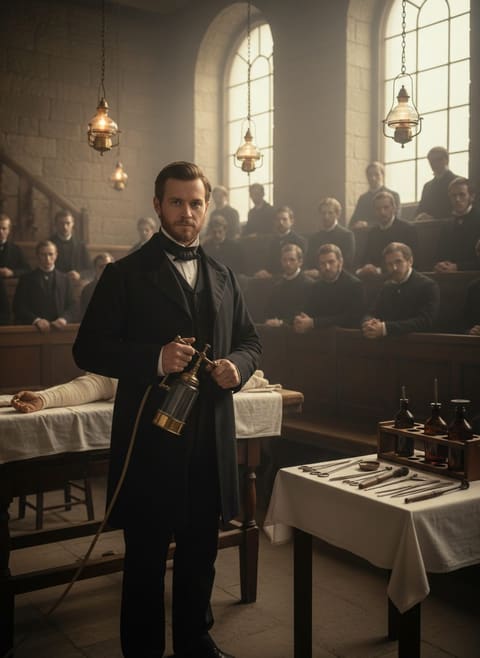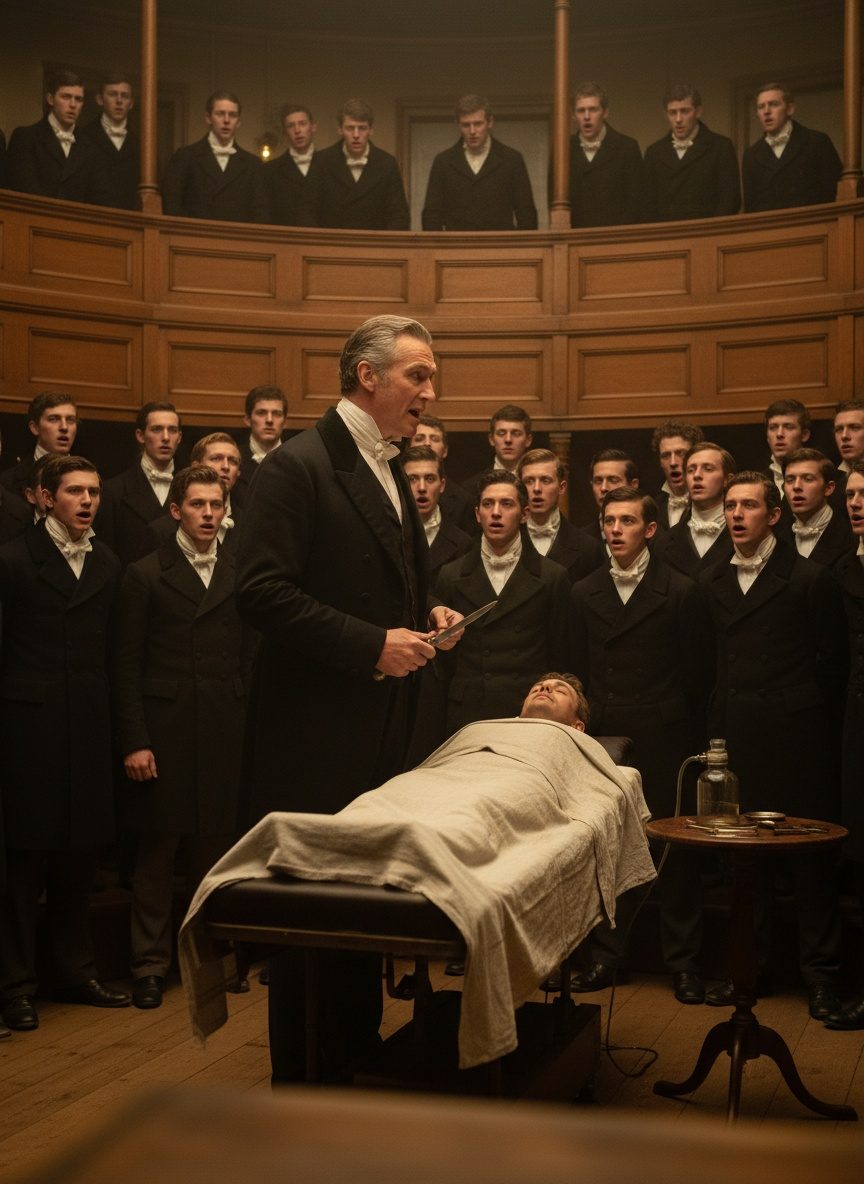
The scalpel glinted sharply under the gaslight as Robert Liston held it aloft, the collective breath in the theatre heavy with anticipation. The gallery of onlookers was uncharacteristically subdued, a stark contrast to the cacophony that normally echoed within these walls. No frantic cries pierced the air, no anguished pleas reverberated; only an eerie silence that seemed to envelop the room, as if London itself held its breath. It was the morning of December 1846, and a new age was dawning in medicine.
For centuries, surgery equated agony—a theatre not of performance but of suffering. This natural symmetry of medicine and misery had endured unchallenged, until now. Liston's eyes flicked like quicksilver, assessing the prone figure before him, tense yet tranquil on the operating table. His hands moved adeptly, decades of experience rendering them almost an extension of his will. The patient’s placid demeanor undercut the grim expectancy of an audience prepared for wrenching distress. This day, an American trick dubbed the "Yankee dodge" promised a radical change. Robert Liston, a Scottish surgeon revered for his swiftness, was about to inaugurate a revolution in practice.
Liston, known for his larger-than-life presence and unparalleled speed, had, until this point, epitomized the art of the rapid cut. His record, a leg amputation in under 30 seconds, was the stuff of legends, carried in whispers and anecdotes among the ranks of medical practitioners. Speed had always been crucial. It was the single, desperate mercy offered to those under the surgeon's knife. As each second ticked by in agony, the art lay only in how swiftly it could be ended. Yet, on this brisk morning, a clear December day in London's University College Hospital, Liston would transcend his own myth.
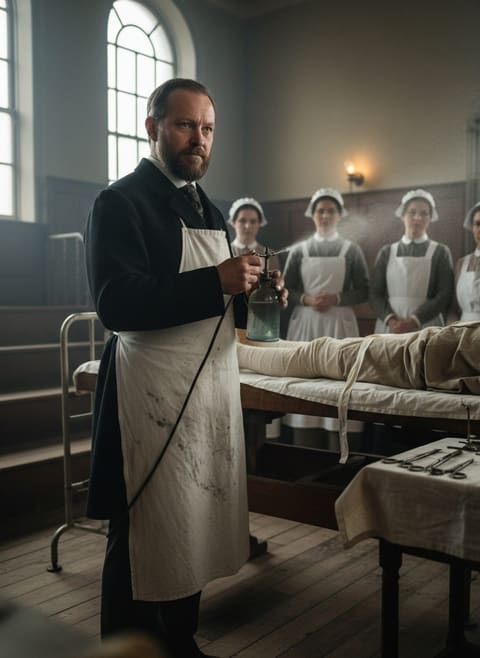
The tool of his transformation lay not in steel, but in vapor—the ether that had crossed the Atlantic carrying the promise of painlessness. Initially met with skepticism and not a small dose of derision, anaesthesia was considered by many of Liston's contemporaries as fanciful, dangerous even. 'Mesmerism' some scoffed, casting it aside as another trickster's spell. Yet, the patient before Liston lay still, enveloped by the unfamiliar scent of ether, breathing slow and steady as if in the embrace of a deep slumber. When Liston made his first incision, the absence of a scream marked the presence of promise.
Read next: The Day a Surgeon's Son Chose Death Over Silence
Robert Liston had always been a master of the dramatic—staging surgeries like theatre performances, complete with the expectation of awe and spectacle. Only now, his audience watched aghast at the simplicity and tranquillity of what unfolded, a scene so antithetical to the brutality they once knew. In that moment, silence spoke volumes. It filled the room, replacing fear with wonder, setting the scene for medical students who observed from above to become pioneers in a new world. A world where speed still mattered but was outweighed by something much greater—humane care.
The success of this operation did not merely pose a challenge to the conventions of surgical procedures; it ushered in the dawn of a new ethic. Pain, once thought to be an inseparable counterpart to healing, was now challenged by this curious Yankee contribution. Liston's succinct endorsement, "This Yankee dodge beats mesmerism hollow," was more than a victory cry—it was a declaration of war on centuries of cruelty that had accompanied the necessity of surgery.
The advent of anaesthesia heralded transformations far beyond the walls of theatre. It shifted paradigms, reshaping what it meant to be a surgeon, a patient, a healer. It revived the faith of a populace rendered skeptical by survival rates and rituals of suffering. Schools of surgery began to proliferate, pushing the boundaries of what was conceivable with newfound vigor, driven by the promise that the shroud of pain could indeed be lifted.
People from all over Europe began to sit up and take notice. Surgeons traveled from afar to witness this miracle firsthand. The intellectual cross-pollination between sciences took root in these newly anesthetized spaces, leading to breakthroughs formerly unimaginable due to the constraints of pain.
Read next: The Day a Chimney Sweep's Son Shamed a Whole Parliament
Yet it wasn’t without its detractors. The early applications of anaesthesia were fraught with experimental errors, double-edged complications that accompanied its many successes. Nevertheless, with each passing operation, it became clear—the world of surgery was irrevocably altered. The terror-stricken cries that had echoed through hospital halls were replaced by the calm breeze of change, a transformation led with steely resolve by practitioners willing to embrace potential over tradition.
Robert Liston's moment in history was more than a singular surgical triumph; it was a harbinger of modernity. By embracing this radical new practice, initiated in the heart of London, he helped chart a course towards a more compassionate approach to healing, setting the foundation for the inexorable march towards modern medicine.
As we reflect on that quiet, breathless morning in December 1846, we find an enduring lesson. Transformation often begins as a whisper, a small ripple that gained strength and surged like a tidal wave, breaking the barriers of the past. In abandoning the cries that had once accompanied every cut, the legacy left by Liston and his peers became a living testament to bold innovation and the relentless pursuit of a kinder tomorrow. It stands as a poignant reminder that sometimes, the most profound revolutions begin not with the clash of arms, but in the simple, silent act of turning pain into peace.