Robert Blincoe is a name few people recognize today. Yet, his story reshaped the lives of countless children across Britain.
A Boy in the Mills
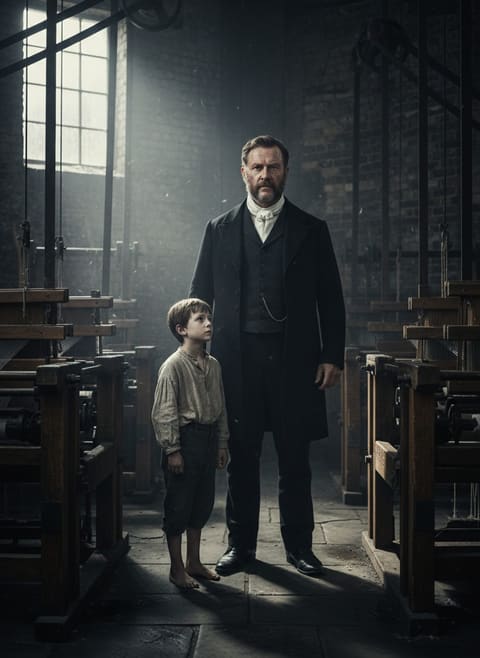
In the industrial heartland of Manchester, in the bustling year of 1832, the clang of textile machinery was the relentless heartbeat of progress. Amidst the mechanical inferno, there toiled a silent force: children. Among them, Robert Blincoe, who had been thrust into this world of grim resilience at a tender age. Orphaned and alone, Blincoe was sold to a cotton master, traded as a commodity rather than nurtured as a child.
Imagine, if you can, the world seen through his eyes. At the age of seven, he was small and vulnerable, yet expected to labor with the fervor and endurance of an adult. The cotton mills, sprawling leviathans of industry, were made monstrous by their necessity to quench an unending appetite for profit. Inside the dim and dusty confines, air thick with lint and the acrid smell of sweat, children like Blincoe worked tirelessly. The noise was deafening; the constant clatter of looms and the whir of spindles drowned out any thoughts of escape.
Blincoe was no stranger to cruelty. Beaten for the slightest mistake, starved until frailty became his natural state, he was worked half to death. But beyond the visible scars lay stories of endurance and resilience that would later confront a nation with its conscience. His youthful years were his trial, a corridor of suffering where dreams were unwelcome, and survival was the only testament to hope.
Read next: The Day a Weaver's Son Lit Britain's First Public Railway
This was not an isolated hell. For many children during the Industrial Revolution, the mill was a place where innocence was ground into dust as quickly as raw cotton turned into thread.
The Power of a Voice
Trailing the smoky skies of Manchester was another kind of haze—a social awareness beginning to breach the walls of ignorance. This was an era when the whispers of change started ricocheting through society, albeit muffled by the industrial juggernaut. Enter the journalist, an unlikely ally with a pen poised valiantly against the machinery of oppression.
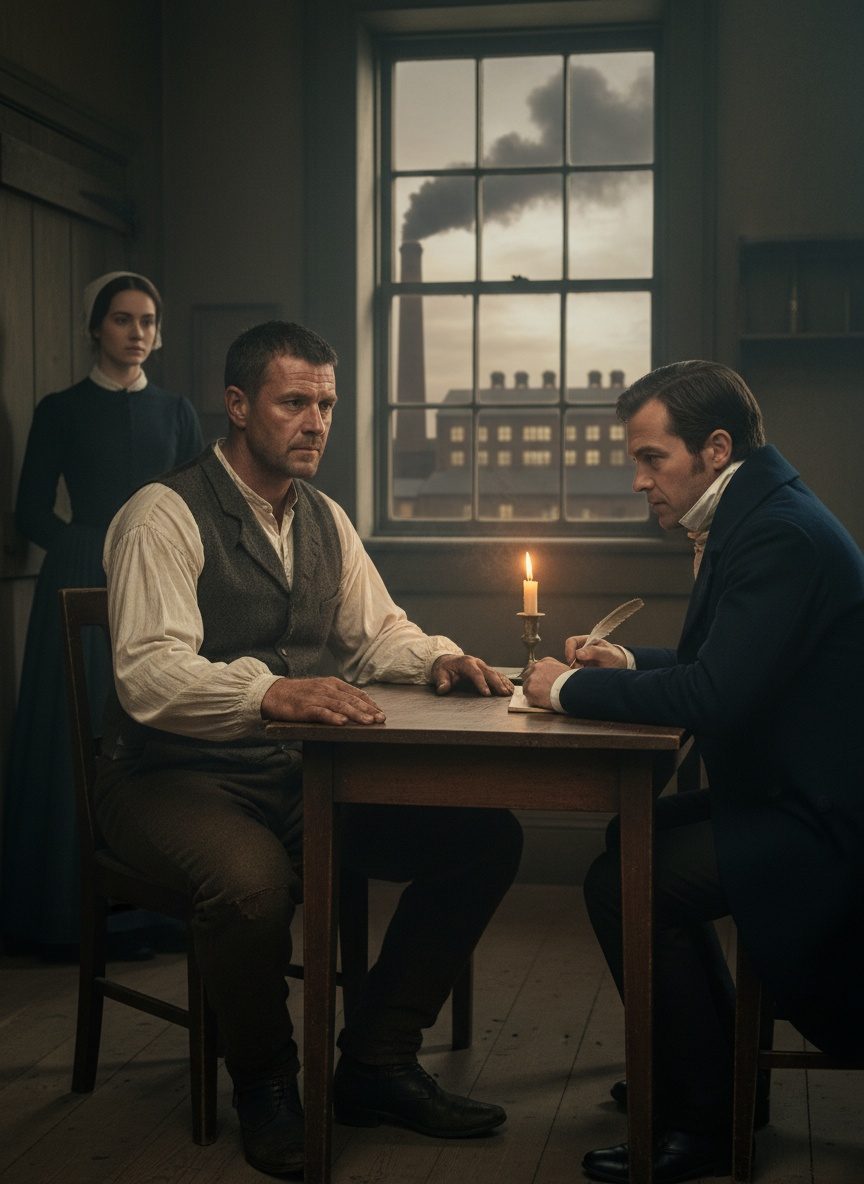
Before Robert Blincoe could be forgotten, his voice found amplification. He told his harrowing story to a journalist, etching an indelible account of his experiences. This narrative, raw and unvarnished, confronted Britain with a stark reality it could no longer ignore. The tale of a mill boy broke free from the shackles of silence and deftly carried the weight of a much larger truth.
Parliament, the bastion of British governance, found Robert Blincoe's story landing heavily upon its conscious. His testimony was powerful, not as some abstract notion of strife, but a palpable truth with scars to prove every word. Politicians who had perhaps grown too accustomed to the comforts bought by industrial triumph were forced to stand uncomfortably in the shadow of inhumanity.
Children like Blincoe had transformed from spectral figures into beings of flesh and blood, with cries loud enough to pierce through the thick of indifference. And so, the evidence was delivered not just to ears but to hearts across the nation.
The Factory Act of 1833
The industrial empire had a cornerstone removed, forcing those who had grown fat on the backs of the small to reckon with decency. Before Robert's revelations, Britain’s factories were lawless lands where childhood was forsaken. But in 1833, a year after his story took root in the public consciousness, the Factory Act was passed—a veritable landmark in legislative fortress building.
Read next: The Day a Mill Owner Walked Into Court and Freed His Rivals' Children
This Act was a tapestry woven with threads of compassion, limiting the cruel overextension of little limbs and minds. It decreed that children younger than nine could no longer be employed in factories, and those up to 13 could only work eight hours a day. This piece of legislation, albeit imperfect, marked a pivotal move towards a humane future, as it served to protect children from the perils of industrial exploit.
The change was more than just legal; it was a shift in societal values. The narrative of economic might that necessarily entailed the suffering of many now had a counterbalance—one of conscience and care. A single voice, a single tale from within the mills, helped in the reimagining of childhood not as servitude, but as a sacred time of growth and protection.
The mills did not fall silent after the act, but they began to hum to a different tune—one more in harmony with the softer rhythms of humanity. The figure of Robert Blincoe would grow faint over the years, swallowed by the anonymity of time, yet every child liberated from the chains of labor owed a piece of their new freedom to the courage of this unassuming hero.
Today, as we reflect on the echoes of the Industrial Revolution, Robert Blincoe's story emerges as a prism through which we view our capacity for change. It is a potent reminder that every voice, no matter how small, has the power to challenge the towering injustices of its time, igniting reforms that resonate through history and beyond. In every child's laughter today, perhaps there lies a whisper of gratitude to the mill boy who faced the judge of societal values and emerged victorious for countless others to come.