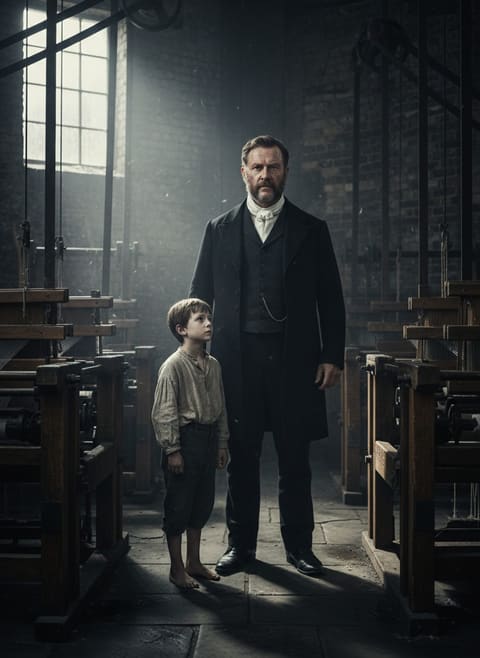
Robert Owen was a mill owner. But not the kind his peers expected.
The Gloom of Progress
In 1815, Britain's Industrial Revolution was roaring, powered by coal, cotton, and labor pulled from families living on the edge. Dark, smoke-choked skies loomed over the industrial towns, painting a grim backdrop to the hopes and dreams intertwined with the relentless thrum of machinery. Most mill owners saw their workers as mere cogs in a sprawling socio-industrial experiment, squeezing them for every ounce of productivity in exchange for meager wages.
Amidst this relentless drive for efficiency, children as young as five years old toiled alongside their parents within these mills. The harsh clang of machinery drowned out childhood laughter, and dim candlelight was all that illuminated their long, exhaustive hours. The typical working day stretched to fourteen hours, leaving little room for rest or education. The human stories behind these numbers often vanished into the background noise of industrial progress.
Enter Robert Owen, a visionary in an era that desperately needed one. Unlike his contemporaries, Owen didn’t see his workforce as disposable. As a mill owner at New Lanark in Scotland, he began implementing radical changes that shocked those around him. Children had their working hours cut and were instead provided with education — a gesture many of his colleagues found impractical and wasteful.
Read next: The Day a Weaver's Son Lit Britain's First Public Railway
A Vision Born from Humanity
Robert Owen’s vision was rooted in a steadfast belief in the potential for human improvement. He saw the staggering injustices of the era and dared to imagine a different future: one where workers were respected, educated, and given a fair chance at life. By introducing schools, reducing working hours, and banning child labor, Owen not only improved working conditions but also increased productivity — a paradox in the eyes of contemporary mill owners.
Owen’s mills buzzed with innovation beyond the machinery. Schools rose next to the factories, reading out a new script for industrial capitalism where human well-being wasn’t at odds with profit. Children learned to read, write, and reason, sparking the dull, soot-stained lives with knowledge and potential. Workers could sleep soundly, knowing that the next day's labor wouldn’t eat away all their waking hours. In New Lanark, Owen forged a community built on care and mutual respect.
His ideas were mocked by many, dismissed as the dreams of a deluded optimist detached from the harsh economic realities of the time. However, Owen, undeterred by the ridicule, knew that the true price of rapid industrialization was too high if it meant sacrificing generations to the beast of commerce.
Parliamentary Advocate
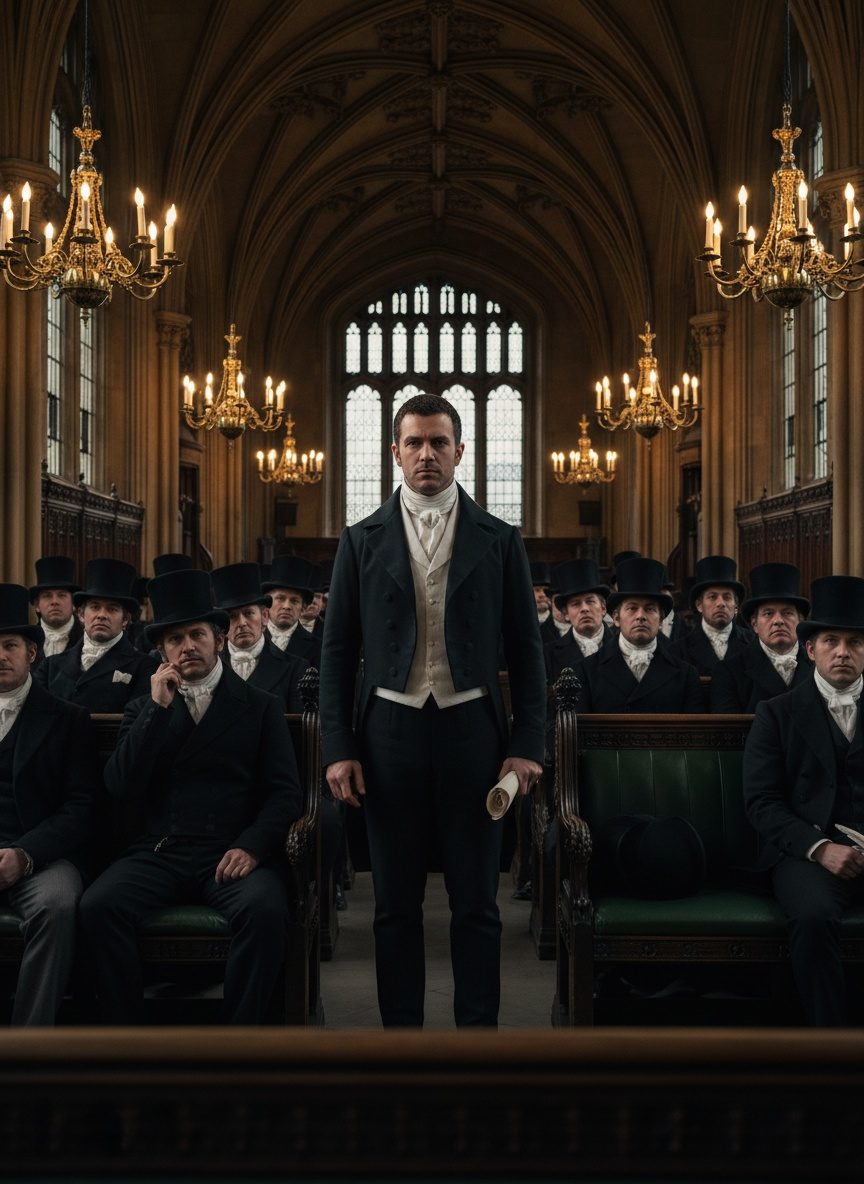
Fueled by his convictions, Robert Owen stood before Parliament in 1815, ready to argue for a future he already knew could exist. He demanded changes not only in New Lanark but across Britain. His message challenged the status quo, suggesting that the nation could function — and indeed thrive — under humane conditions. Owen painted pictures of his schools, his workers’ restful nights, and his mills that were both productive and humane.
The august assembly halls of Westminster, steeped in tradition and rigid hierarchy, echoed with the murmur of incredulity. To many, Owen was a curiosity; an enigma clothed in the garb of a successful mill owner yet speaking like a radical reformer. Parliament’s response was a chorus of laughter — dismissive, even derisive.
Read next: The Day a Mill Owner Walked Into Court and Freed His Rivals' Children
Yet Owen's resolve was unyielding. He presented his evidence with clarity and conviction, believing in the power of truth to penetrate even the most stubborn minds. The laughter did not deter him; rather, it forged his determination further. He continued to appeal to the better nature of his listeners, imploring them to look beyond profit and grasp the possibility of a society where industrialism did not consume the human spirit.
The Legacy of Dawn
Though his immediate reception in Parliament was tepid, Robert Owen planted seeds that would grow far beyond his own time. The ideas he championed began to take root in social reform movements, inspiring future generations to keep pushing for a more equitable society. New Lanark became a beacon, a living testament to what could be achieved through compassion and innovation. It showed that reforms in education and labor were not just idealistic ventures but practical necessities for a just society.
Owen’s confrontation with Parliament underlined a pivotal moment during the Industrial Revolution. His initiatives foreshadowed modern labor rights and educational reforms, revealing an early glimpse of the humane policies we often take for granted today. The derision he faced highlighted the barricades that progress must overcome, yet his persistence reminded us of the tireless force of conviction.
In today’s world, his legacy challenges us to consider the human element in every equation. As machines once again promise unprecedented change in our modern era, Owen’s life encourages us to chart a future that leaves no one in the dark. By remembering his stand, we are reminded that history’s true victories are those where humanity’s light shines brightest against the shadows of progress.