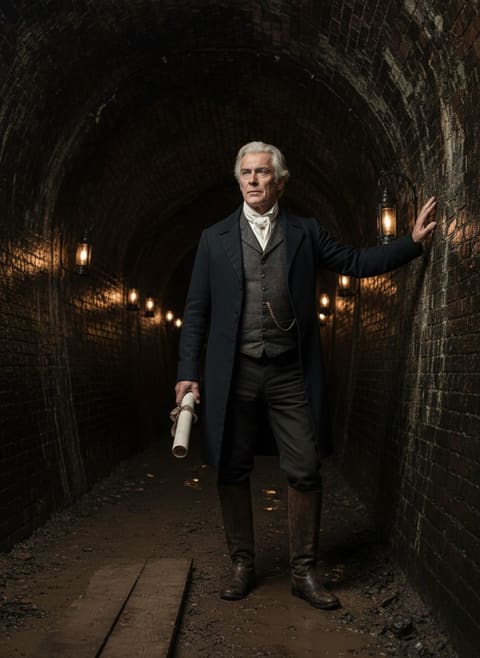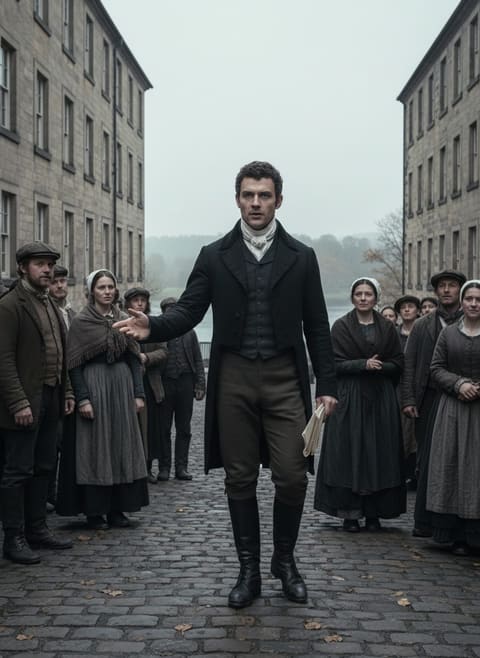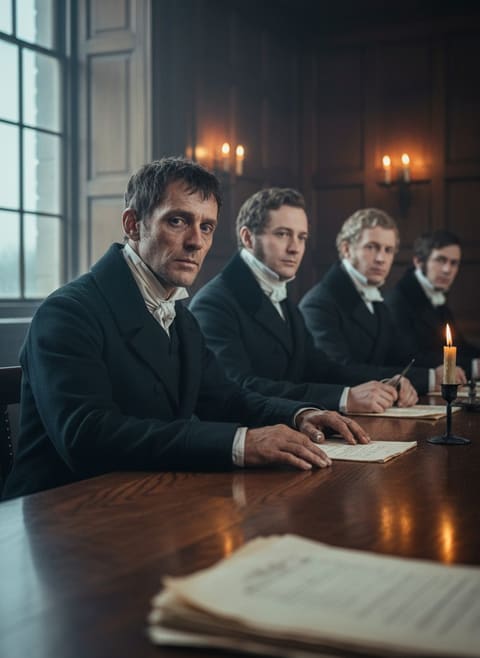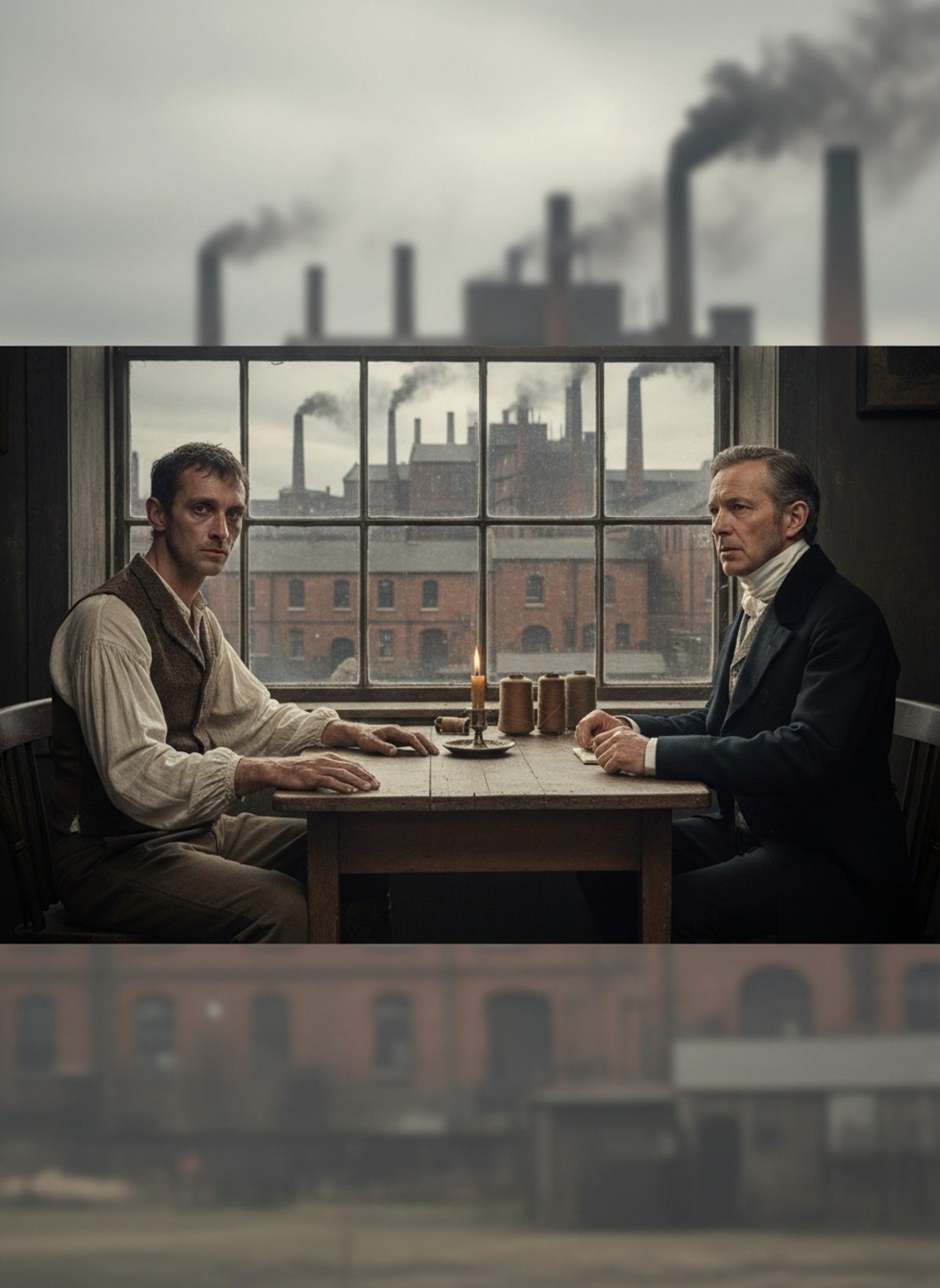
The light of the early morning painted the Lancashire sky with hues of orange and pink, a brief innocence before the smog and grit took over the day. The air was crisp, yet heavy with the looming crush of machinery from the textile mills. Amidst the clatter and hiss, a single voice cut through. It was the voice of a man who had once been a child lost to these very sounds—Robert Blincoe, unflinching and resolute. As he recounted the shadows that had once swallowed him whole, his words reached far beyond the factory walls and echoed all the way to the corridors of power in London. This was no mere testimony—it was a call to action, one not easily ignored.
Robert Blincoe's story was one of a brutal initiation into the relentless grind of child labor. In 1833, as the Industrial Revolution roared, factories were the dark lungs of progress, sucking in the lives and dreams of the young. Under the sulfurous clouds, the landscape was a mosaic of brick and smoke. It was here in Lancashire, a hub of innovation and despair, that Robert emerged with tales so vivid in their terror and truth. The awareness he ignited began to feed the fledgling fires of social reform, making Parliament's indifference impossible to sustain.
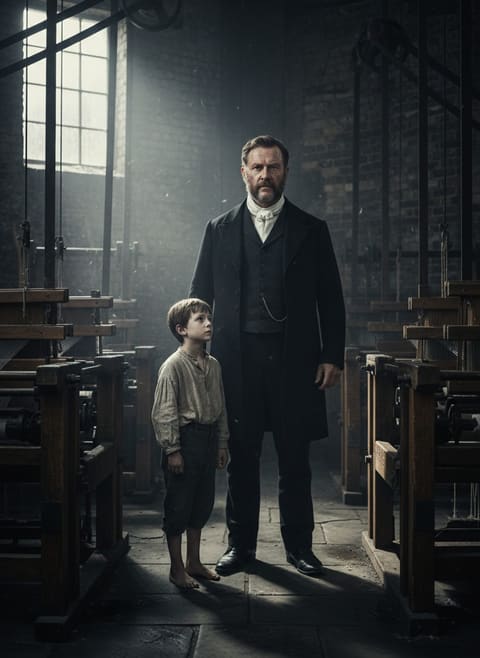
The mills had an insatiable hunger—a need for tiny hands to thread looms and nimble bodies to crawl under moving machinery. Born into poverty, Robert's childhood ended as he was thrust into the whirring maw of the factory. By ten, he was numbered among the many young who had become the lifeblood of industry. In the dim spaces between the great metal beasts, Robert and his fellow child workers were often unseen, their pain out of sight and out of mind for those who benefitted most from their toil.
Blincoe's voice, however, would not remain in the shadows. The world he described was one where crude hands dispensed discipline with casual cruelty, and the air felt as heavy as the silence that followed a child's scream. Details spilled from him like a confession long overdue. Long hours, fractured by the shrill of factory bells, were punctuated by meager meals that did little to fill mouths that needed more than whispered comfort.
Read next: The Day a Weaver's Son Lit Britain's First Public Railway
His stories were relentless—an unblinking account of factory life that peeled back the veneer of Victorian progress to reveal something rotten underneath. Pupils dilated in concentration, the work was more than just a job; it was survival. The monotony blended days into indistinct blur, yet every lash, every word spoken in fear, etched indelible marks on young souls. Time in the mills bent reality until childhood itself became a lost relic. This truth struck Parliament like the tolling of a dire bell. The abuse was not new, but the public awareness was.
Passionate newspaper articles, propelled by Robert's daring exposure, began to churn public opinion. His accounts, unvarnished and raw, were impossible to dismiss, not even by those who insisted on clutching their laissez-faire principles. The Cornwall Chronicle captured Blincoe’s words and spread them like wildfire—a child broken yet unbowed, baring the scars of systemic exploitation not in bitterness, but in desperate hope for change.
In this climate of mounting outrage and reluctant realization, Parliament could no longer afford to look away. The Factory Act of 1833 emerged, not easily, but as a necessary salve to the growing clamor. It was a hesitant step—far from a comprehensive solution—but a precedent nonetheless. Regulations began to trickle into law, forbidding excessive hours for child workers, promising inspections, and trying in a modest way to bring light to places long abandoned to the dark.
But why Robert? Why was his cry heard across the factories, echoing into the hearts of strangers miles away? Perhaps because his testimony was unadorned, offering neither embellishment nor evasion. Or maybe it lay in the undeniable courage of a man who dared to stand as an advocate for those left voiceless behind mill walls. Robert's resolve, as the echoes of his words bounced from street corners to the halls of Parliament, testified to the power vested in a single voice lifted in truth.
Read next: The Day a Mill Owner Walked Into Court and Freed His Rivals' Children
In the years that followed, Robert Blincoe faded back into the swell of history, but the world he helped lift into light was forever changed. He became both a symbol of endurance and a catalyst for the slow, yet profound shifts in the fabric of society. The mill owner who stood between his children and the dark gradually assumed more human forms; policies started reflecting compassion, not just convenience. Young faces eventually left the factories not as expendable parts, but as potential futures worth nurturing.
The Industrial Revolution was a time of unparalleled progress but also of deep human cost, a duality not easily reconciled. The stories of those like Robert Blincoe serve as poignant reminders of the battles fought not with weapons, but with words and unyielding will. In telling his truth, he not only shaped his own destiny but carved a path for others. Hundreds of candles extinguished too soon relit through the bravery of his witness, and a nation found itself compelled to question definitions of success that came at the expense of its most vulnerable.
To remember Robert is not just to recall a story of survival against mechanized oppression. It is to recognize the enduring resilience of the human spirit, a truth that finds its voice amid the whir and clatter, creating ripples far beyond its immediate sphere. In this way, the child who walked into the mills of Lancashire left footprints that even time could not erase, stairways for future generations to step upon as they continue the climb for justice. The day Robert Blincoe stood between his children and the dark, he illuminated the path forward, marking a moment unchained from silence, one where hope finally began to catch the light.