The October morning in Brussels unfurled with a haunting stillness, the kind that wrapped every street corner in a shroud of ominous anticipation. The sky, a muted canopy of grey, pressed low over the Belgian capital, an unwelcome mirror to the city's wartime gloom. With each echoing footstep across cobbled pathways, the chill in the air seemed to seep through even the sturdiest woolen layers. As the city stirred awake under the heavy watch of German occupation, one woman resolutely readied herself to claim her place in a quietly defiant chapter of history.
Unyielding Courage at the Crossroads
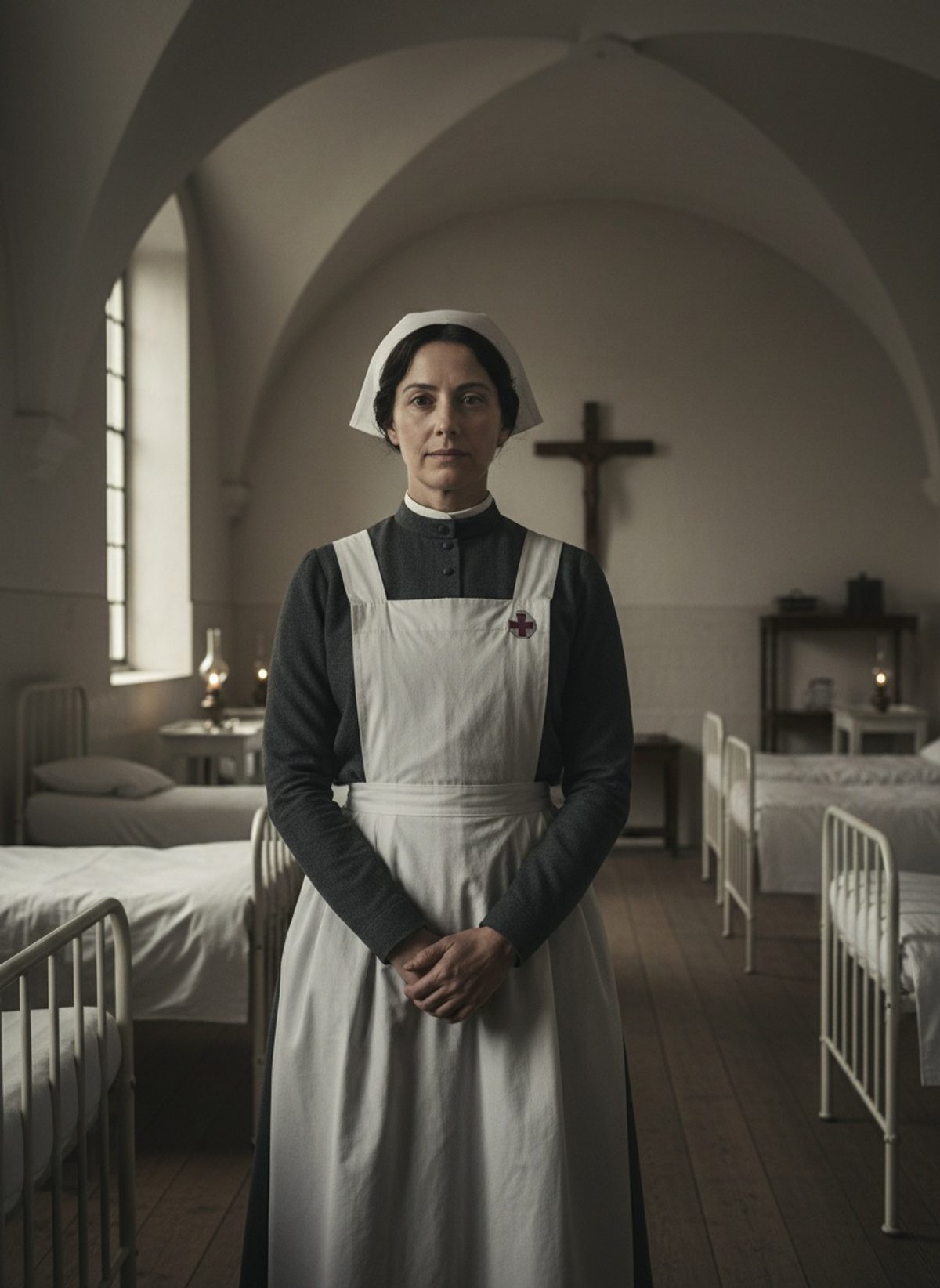
Edith Cavell, a Norfolk-born nurse, found herself at the nexus of a moral and mortal quandary. Operating a small medical school in occupied Belgium, she quickly became a beacon of sanctuary for those lost in the chaos of war. Cavell had sheltered more than two hundred Allied soldiers, orchestrating their perilous journeys to freedom and safety beyond the hostile borders. Her unassuming resolve masked a quiet rebellion—a rebellion driven not by rousing speeches or battlefield tactics but by the unwavering principles of compassion and duty.
Yet the streets of Brussels were treacherous. The shadow of occupation loomed large, and suspicion lingered around every corner. Whispers of Cavell's activities reached German ears, sealing her fate under the inscripted ink of military law. Arrested for harboring and assisting Allied soldiers, Cavell stood trial in the eyes of those who saw no grey amidst the black or white. Her confession, an open acknowledgment of her deeds, bore not the marks of defiance but the calm acceptance of a higher calling. Never one to cower behind a facade, she was as honest in her trial as she was in her life's work. If bravery had a face, it certainly bore the serene countenance of Edith Cavell.
The pages of history are often inked with tales of grand strategies and epic battles. Yet, it is silent heroism—embodied by individuals like Cavell—that often sculpts the moral landscapes that endure beyond the fleeting victories of war. Her actions echoed not from the clamor of the front lines but from the quiet resolve that walked through Brussels' streets, one trusting step at a time. She had known full well the stakes laid bare before her when choosing to defy occupation laws. Risk was an acquaintance she had long befriended, and on that October morning, as the sky melded with the earth in a somber embrace, it was Edith's courage that would stand alone against the inevitable.
Read next: The Day a Cornish Vicar Stood Between a Mob and a Wreck
A Lone March Towards Immortality
In the early hours of October 12, 1915, Edith Cavell walked towards her fate at dawn. The muted glow of gas-lit alleys and the faint rustle of leaves were her only companions as she journeyed to the field where the end awaited. The chill of the morning seemed to bow in respect as she passed, a testament to a spirit that refused to bend under the crushing weight of fear. Yet, it was not fear that filled her heart in those final moments but a resolute calm—a quiet acceptance of what lay beyond. In brisk steps, history began to cast Edith Cavell not as mere mortal flesh but as a timeless emblem of bravery and integrity.
As a chaplain accompanied her, ministering words meant to soothe the tether between flesh and the divine, Edith spoke not of anger nor of regret. "I have no hatred in my heart for any man," she professed, words laden with a profound grace that transcended the barriers of human conflict. Her acceptance of mortality was not resignation but a reaffirmation of the life principles she had steadfastly followed—truth, service, compassion. In a world fractured by hostility, she embraced her humanity to its fullest, a final act of defiance against the divisiveness that sought to claim her life.
Read next: The Day a Racing Son Inherited a Champion's Broken Name
The walk was brief, the wait longer than eternity. Surrounded by soldiers poised with rifles ready, she stood upright, unbending as the moment approached. In a haze of anticipation, the crack of gunfire punctured the dawn. Edith fell, yet it was her spirit that rose, emboldened by a legacy that would whisper through annals far and wide. Here lay not just a nurse but a guardian of humanity who chose risk over safety, actions over words, and love over hatred.
The Legacy of Compassion Beyond Borders
Edith Cavell's story is etched in the annals of history, a narrative that speaks to the indomitable spirit of one willing to face the ultimate sacrifice for the sake of others. In the wake of her passing, she became more than the life she lived or the death she faced; she became a symbol—an emblematic testament to the compassion that transcends the confines of nationhood and allegiance. Britain, and indeed the world, has remembered her not just as a martyr of war but as an everyday hero whose profound impact rests in her unwavering dedication to humanity. Her courage was an echo stronger than any rifle shot, reverberating through the tapestry of time as a reminder of the fragility and beauty of the human spirit.
In recounting the tale of Edith Cavell, we are drawn to reflect on the nature of heroism and the role of individuals who defy their era's constraints. Cavell's unyielding moral clarity challenges the veil of anonymity often assigned to unsung heroes of history. As her story traverses the boundaries of time, it asks us to consider our own capacity for bravery and compassion. It serves to remind us that even in the harshest times, the quiet courage of a single individual can kindle a beacon of hope—a hope that lights the path to a world united by shared humanity rather than divided by conflict.