August 1, 1798. The Egyptian sun dipped below the horizon, casting long shadows over the deceptively calm waters of Aboukir Bay.
The Unyielding Admiral
As the evening descended, the tension was palpable on the decks of Admiral Horatio Nelson's fleet. Earlier that day, Nelson had made a decision that many would have deemed reckless. Finding the French fleet anchored in the shallow waters of Aboukir Bay, he saw an opening despite the lateness of the hour. With only three hours of daylight remaining, conventional wisdom dictated patience, yet Nelson was never one for following convention. His calculated gamble set the stage for an encounter that would reverberate through the annals of history.
The stakes were immense. France's naval domination was key to Napoleon's grand aspiration of establishing an Eastern empire, with Egypt as its cornerstone. L'Orient, the French flagship, was the embodiment of this ambition. A three-decked behemoth, she was the largest warship in the world at the time, bristling with heavy armament and staffed with over a thousand sailors. For Nelson, the destruction of this colossal ship would mean not just a tactical victory but a strategic upheaval that could snatch the dreams of an Eastern empire from under Napoleon's feet.
Battle Unleashed
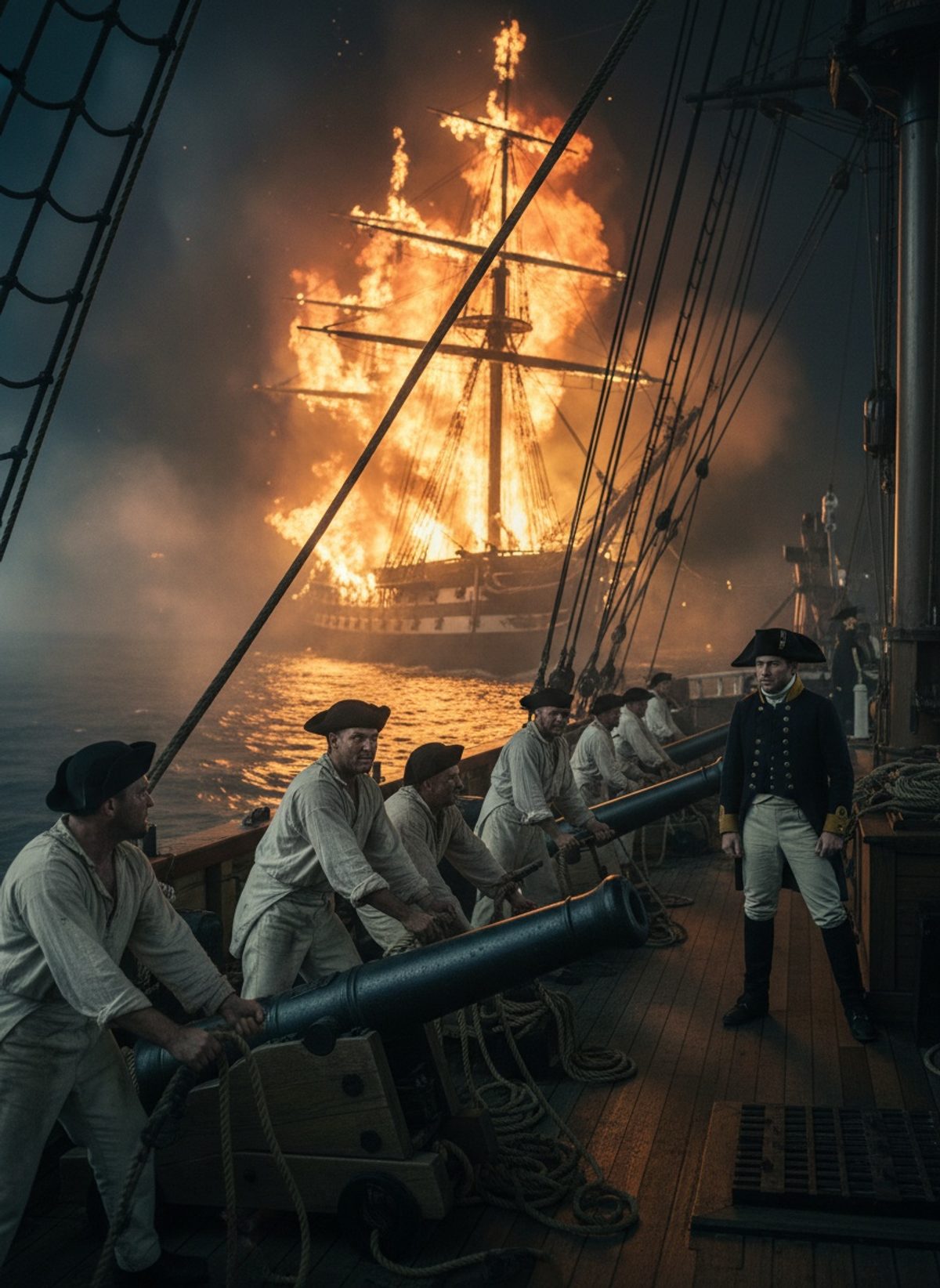
As the British fleet advanced, silence gave way to the deafening thunder of cannon fire. Nelson's ships cleverly navigated the shallow waters to outflank the unsuspecting French. The late afternoon sky became a dazzling theater of fire, smoke, and explosive fury. The French sailors, caught by surprise, scrambled to respond to an enemy who seemed to defy time itself by attacking past the point of prudence.
Read next: The Day England's Last Viking Fleet Burned at Sandwich
Yet amid the chaos, a singular drama unfolded aboard L'Orient. The flagship, a floating fortress, fought valiantly, its mightier guns booming into the approaching night. The irony was ruthless—what should have been a fortress of safety for the French fleet became its Achilles heel. The British guns focused their wrath on her, knowing the blow dealt by her loss would be more than naval—it would be symbolic.
The Unnatural Quiet
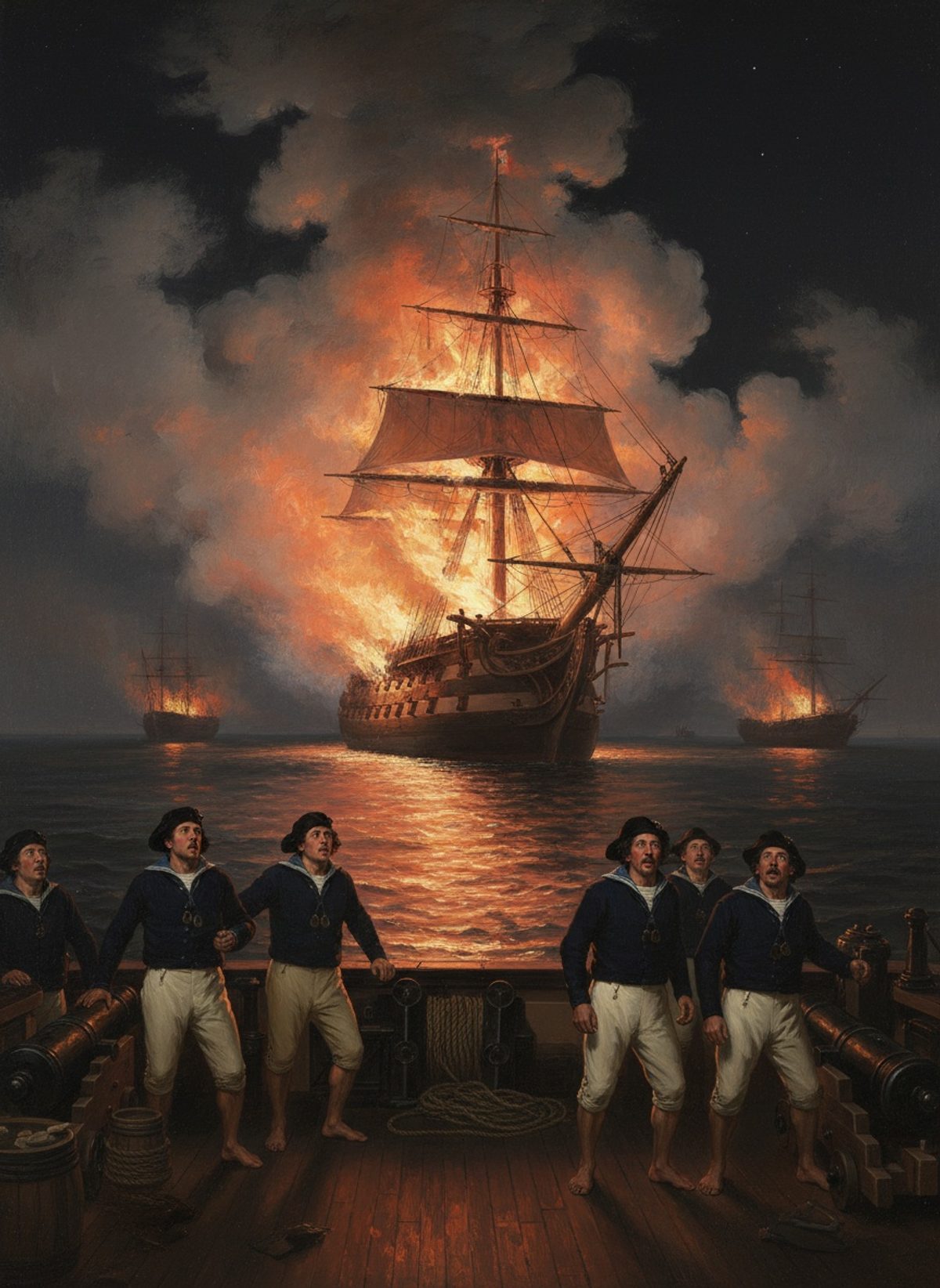
Suddenly, the cacophony ceased. Shortly after sunset, as the darkness wrapped the bay in shadows, a fire was spotted on L'Orient's deck. Tongues of flame licked skyward, initially above the main cabin, then spreading as if guided by an unseen hand determined to pen a fiery finale. The fire, at first a subdued blaze, spiraled into an inferno, devouring everything in its path.
The spectacle brought an uncanny silence. Minutes stretched to hours as both fleets halted their maneuvers and watched, mesmerized by the unfolding tragedy. The eerie quiet was punctuated only by the crackling of the fire and the distant pleas of those aboard, a haunting reminder of the human cost of an empire's ambitions.
The Night of Fire
As if the earth itself exhaled, L'Orient finally succumbed in a cataclysmic explosion. The night sky was momentarily lit as if by a second sun, the roar of the detonation resonating for miles. Nearby ships were rocked by the blast, debris showered onto the waves; immense timbers and the shattered remnants of what was once Napoleon's pride littered the waters.
The destruction of L'Orient was more than a devastating blow to the French fleet—it shattered the veneer of invincibility surrounding the French Empire's naval prowess. It was a turning point, one that anchored Nelson's reputation as a naval commander whose tenacity and tactical genius could alter the course of nations.
Ripples Across History
In the aftermath, Nelson's victory at the Battle of the Nile stood as more than a military triumph but a strategic coup that dismantled French aspirations of empire-building in the East. British control of the Mediterranean was secured, isolating Napoleon's forces in Egypt and halting the expansionist momentousness of the French Revolutionary Wars.
The flames that consumed L’Orient also consumed a dream, sending ripples throughout the world stage. Nelson's timely decision to engage against all odds reshaped geopolitics, altering the course of empires and echoing in strategies and naval doctrines for generations. In choosing action over hesitation, Nelson set in motion a chain of events that would continue to influence the unfolding narrative of history.
The night the French flagship blew apart was more than just a singular moment of brilliant tactics and devastating destruction—it was a turning point that reminds us of the delicate balance upon which the fortunes of entire empires once rested, their fate determined by both the measured and the daring choices of those who stood at their helm.