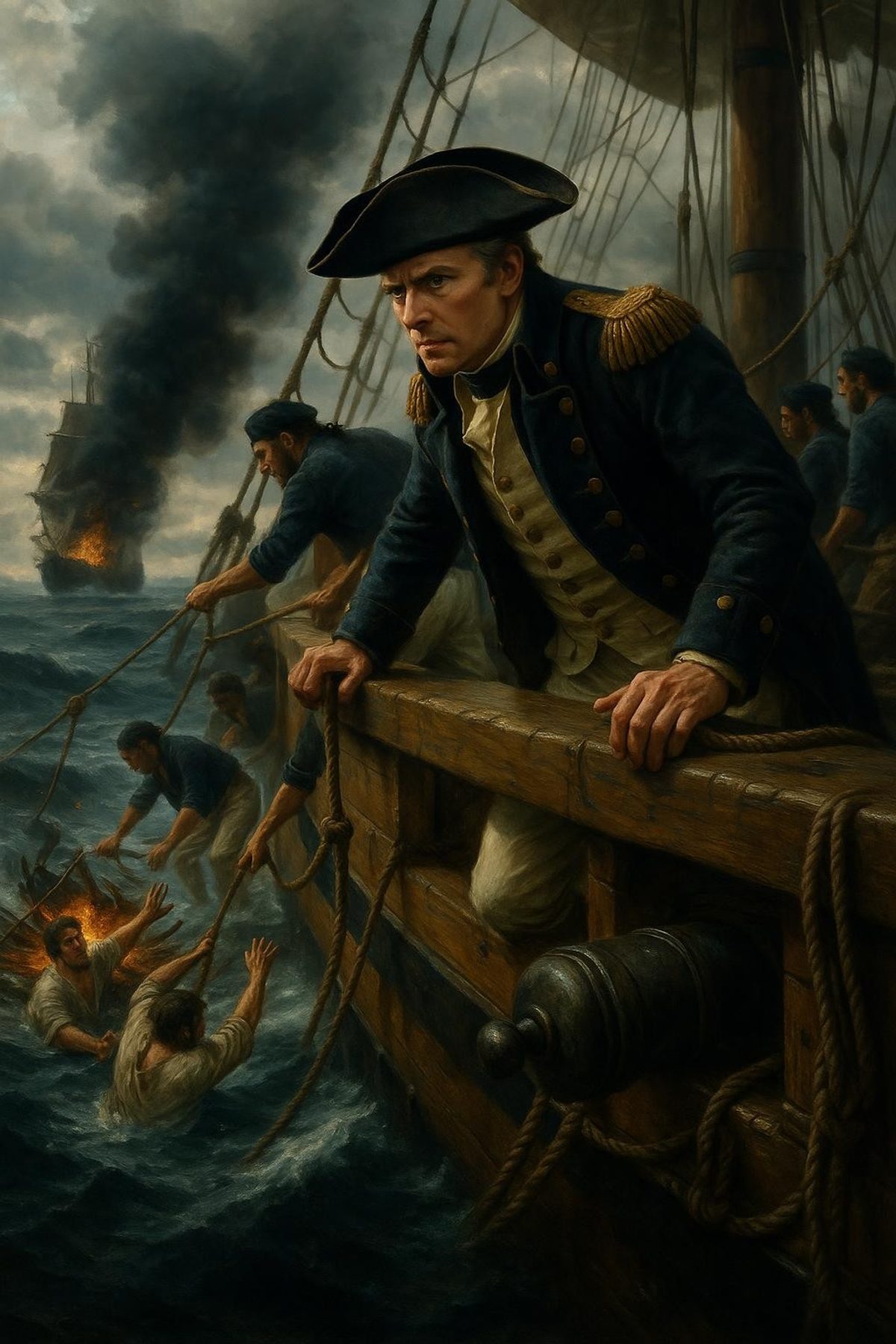
Smoke billowed across the deck of the HMS Captain as the thunder of cannon fire resonated through her wooden frame. Commodore Horatio Nelson, a figure made more imposing by his audacity than his stature, stood with eyes narrowed against the chaos, his gaze fixed on the enemy ahead. The sea churned violently beneath the massive hull of his solitary ship, rushing toward a daunting, nearly impossible challenge. Wind tangled his hair with salt, and his narrowed eyes, clear with determination, locked onto the Spanish fleet, spread across the horizon like a wall of defiance. Without an order, he had steered his ship out of formation, an act that defied every rule he’d been trained to uphold.
The setting was the Battle of Cape St. Vincent, and it was Valentine's Day, with love far from the mind of anyone aboard the 15 British warships. Arrayed against them were 27 Spanish ships of the line, a staggering, intimidating force that threatened British interests and could potentially tip the balance of power in Europe. Nelson saw the oversized Spanish fleet like a giant's arm, holding at bay the ambitions of a tiny island nation. But with the reckless courage that would become his hallmark, he roared orders to his crew, his voice cutting through the chaos, pushing his men to defy what seemed insurmountable odds.
As the air filled with the acrid smell of gunpowder and the cries of men entangled in battle, Nelson's HMS Captain bore down on five enemy ships. His intention was neither chance nor madness; it was strategic genius wrapped in the audacity that only a man like Nelson could command. Straining with exertion under the intense fire, his crew moved with disciplined speed, obeying his commands as if orchestrated by a single heartbeat.
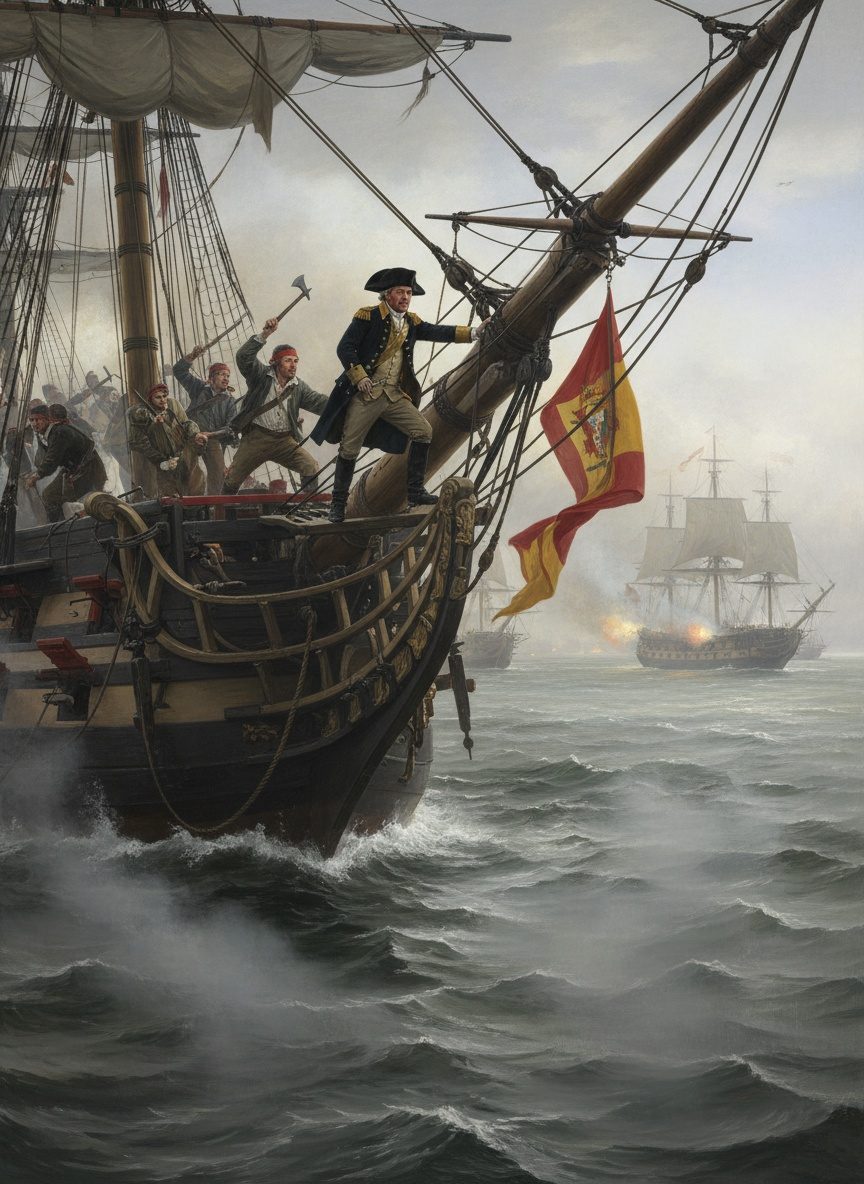
The Captain thrust herself into the melee, her prow ramming the Spanish San Nicolas, effectively locking the two vessels into a wooden embrace. It was a bold and reckless maneuver that bore the signature of Nelson’s impetuous style. The ship shuddered under the impact, wood groaning as it bent to Nelson’s audacious demand. Unfazed by the ferocious bombardment and grapeshot that filled the air like deadly rain, Nelson wasted no time. He leapt onto the Spanish deck, his sword drawn, heart thundering with the thrill of battle and a tactical inspiration that would soon become legend.
Read next: The Day Napoleon Surrendered to the Ship That Shot at Him
Magic lay not only in the daring that cut through the clamoring chaos but in how swiftly Nelson adapted to the raw unpredictability of naval warfare. As if to crown this bold act where the improbable ought to have faltered, Nelson then led his men across the very bones of the San Nicolas onto another prize, the San Josef. In a remarkable twist, he captured two ships at once — moving over the deck of one to seize another, a feat unrecorded in the annals of British naval maneuvers. The concept of chain boarding, an event as yet unwritten in naval strategy, became his legacy.
In that moment of adrenaline and fire, British resolve found a hero. Nelson's tactic was as much psychological warfare as it was martial; it sowed confusion among the Spanish ranks who, perhaps, did not expect the tenacity with which the British, led by the inferno that was Nelson, fought. His actions were not without risk. One misstep could have turned the daring into disaster. But in this instant, amid the intense clamor of a life-or-death struggle, the very sea itself seemed to hold its breath as history rewrote itself in favor of the British fleet.
In stepping out from the shadows of conventional leadership, where orders held the weight of chains and rigidity the anchor, Nelson forged a path of victory on his terms. The very rules he broke lent illumination to the wider strategy, weaving through the enemy lines with a precision born from working expertise on the unpredictable dance of wind and tide. He knew the habits of the sea and the hearts of men, harnessing both to turn the tide of war.
As the battle’s echoes faded, the British emerged with fewer numbers but with untold valor guiding their banners, thanks to the commodore whose reckless gall turned wooden bowsprits into weapons of conquest. The outcome was a miraculous victory, ensuring that Britain's control of the seas remained relentless, a bulwark against Napoleon's ever-growing shadow. Though he acted without orders, Nelson’s instinctual response amidst chaos showed a rare, unyielding clarity that inspired nations — and perhaps historians — to look beyond the scripted war rooms to the heart of battle where legends are born.
Years would peel away but the tale of Nelson's day "out of line" would remain etched into history. It was more than a tactical victory; it was a testament to the potency of intuitive leadership, audacity, and the power of one man’s vision to alter the course of events on a grand scale. We find in the echoes of his exploits the perennial lesson that the true fabric of leadership is stitched not from compliance, but from courage — and that sometimes, the true path to triumph strides confidently, and defiantly, out of line.