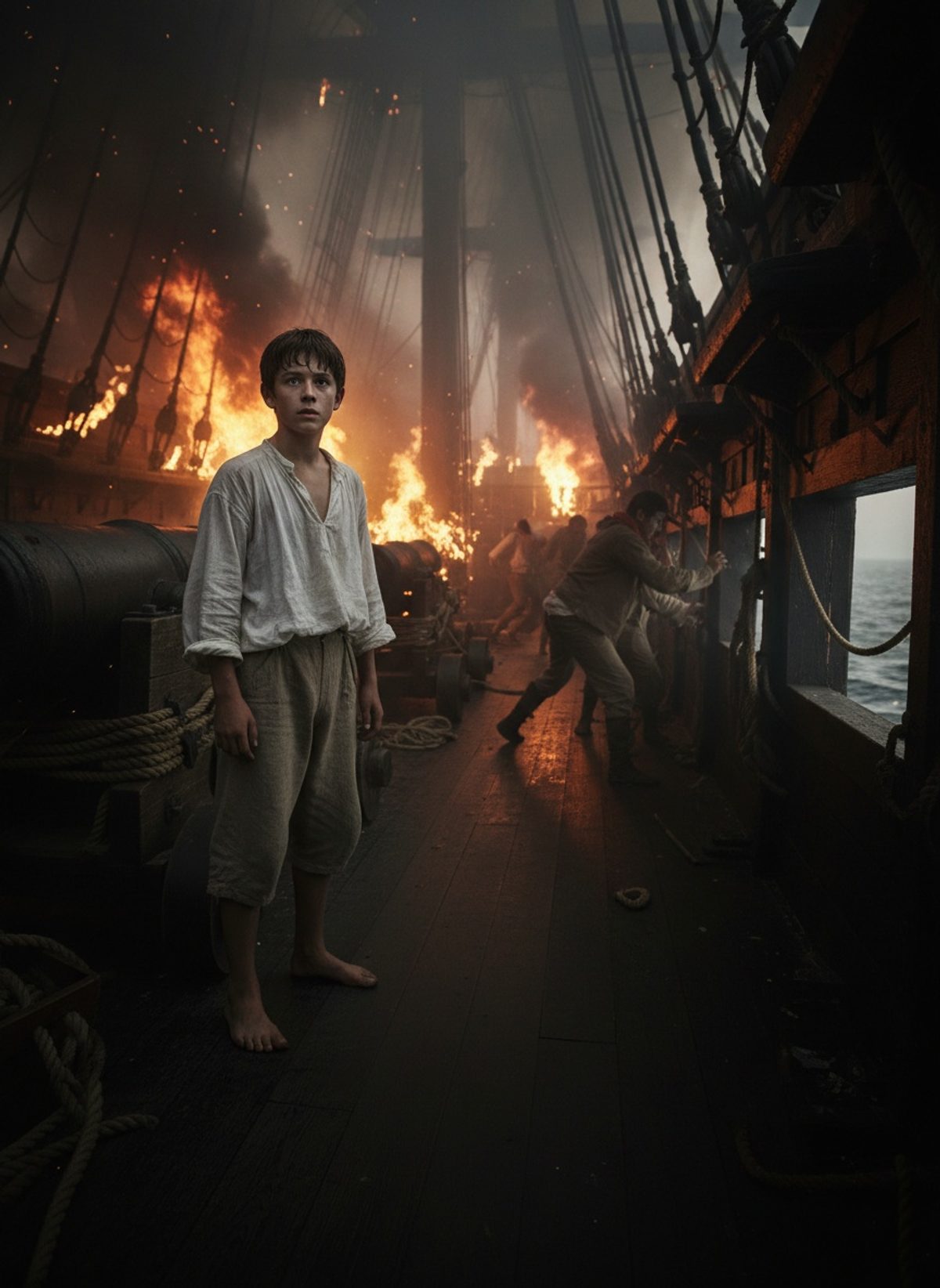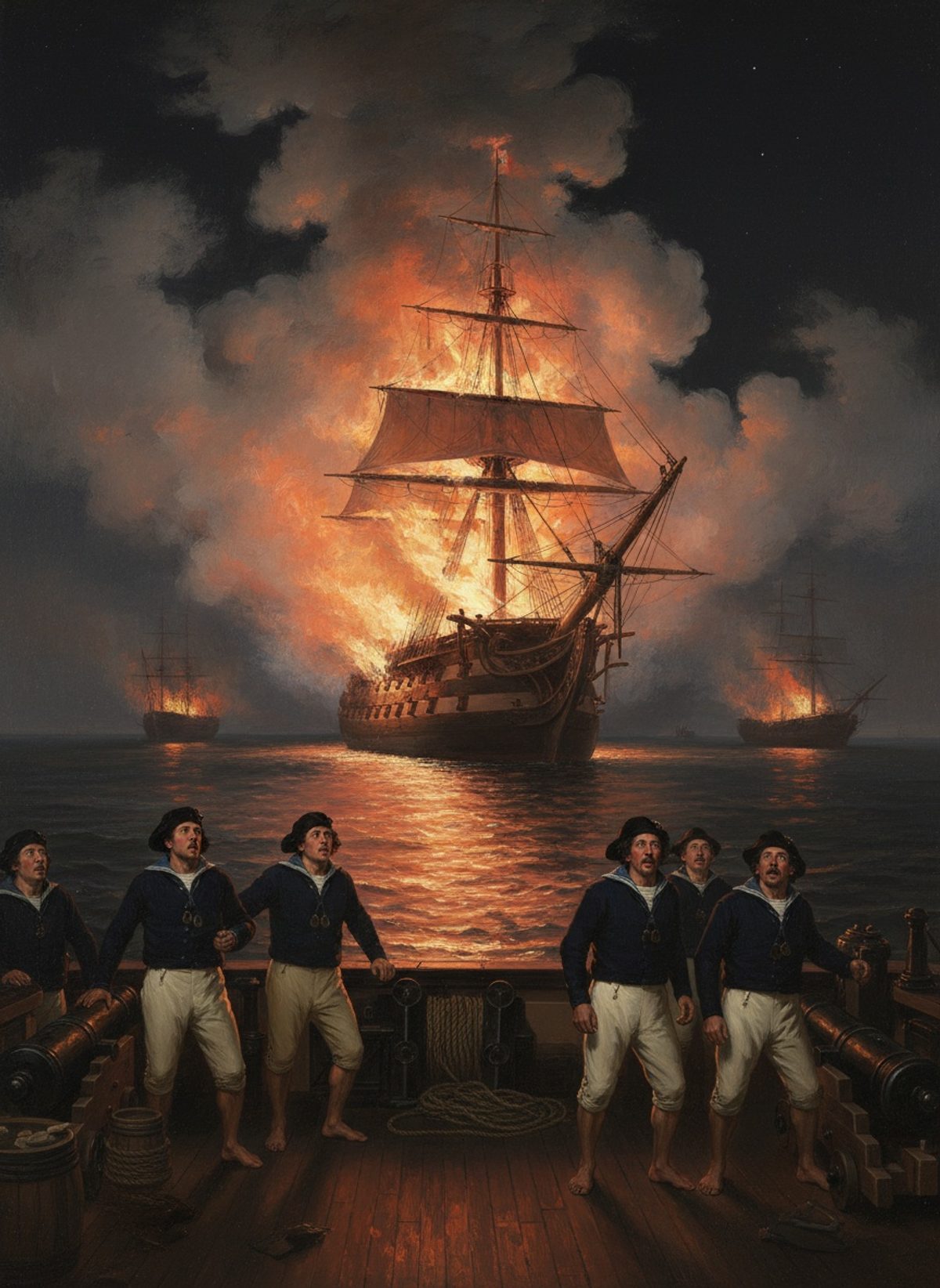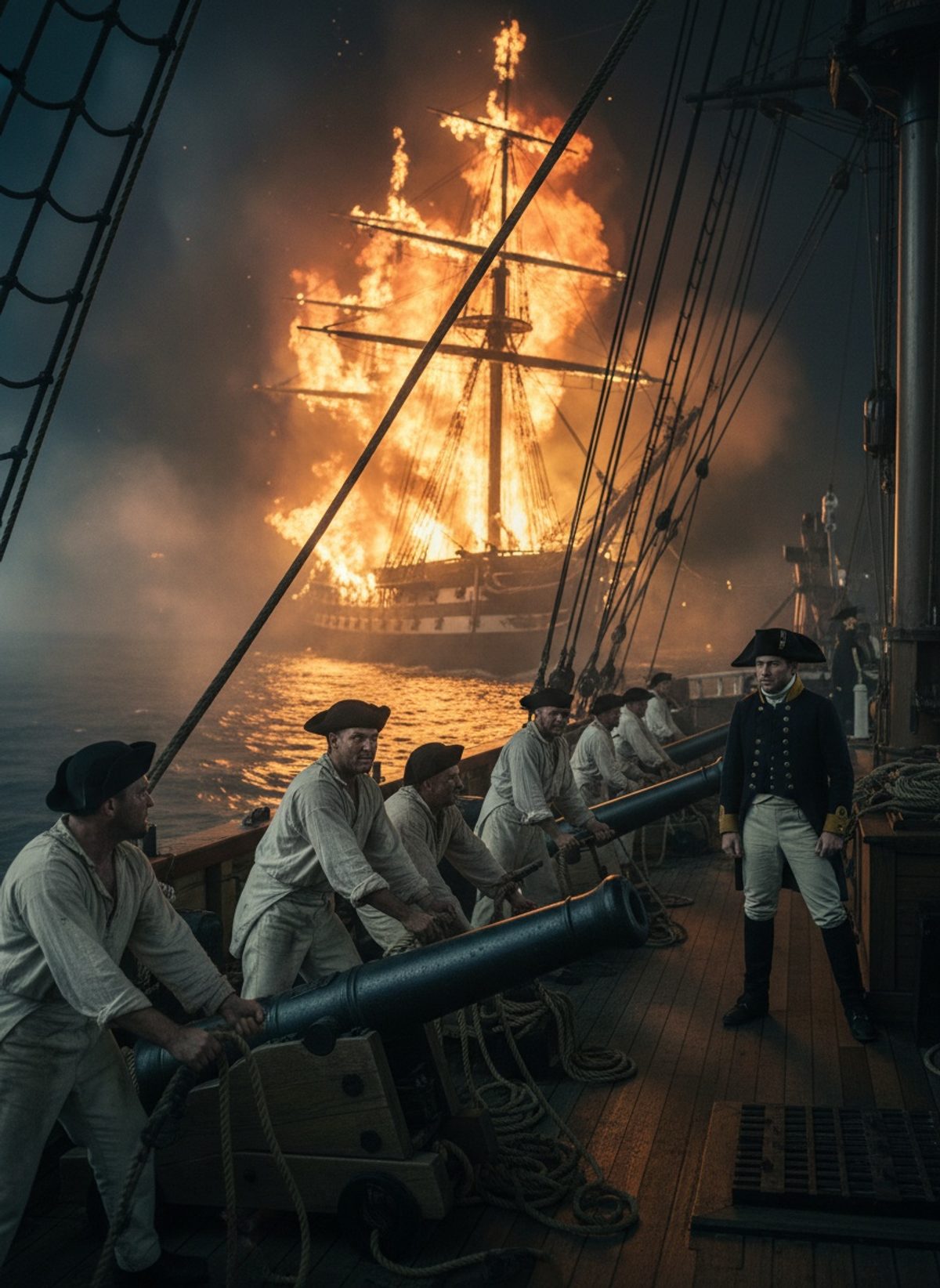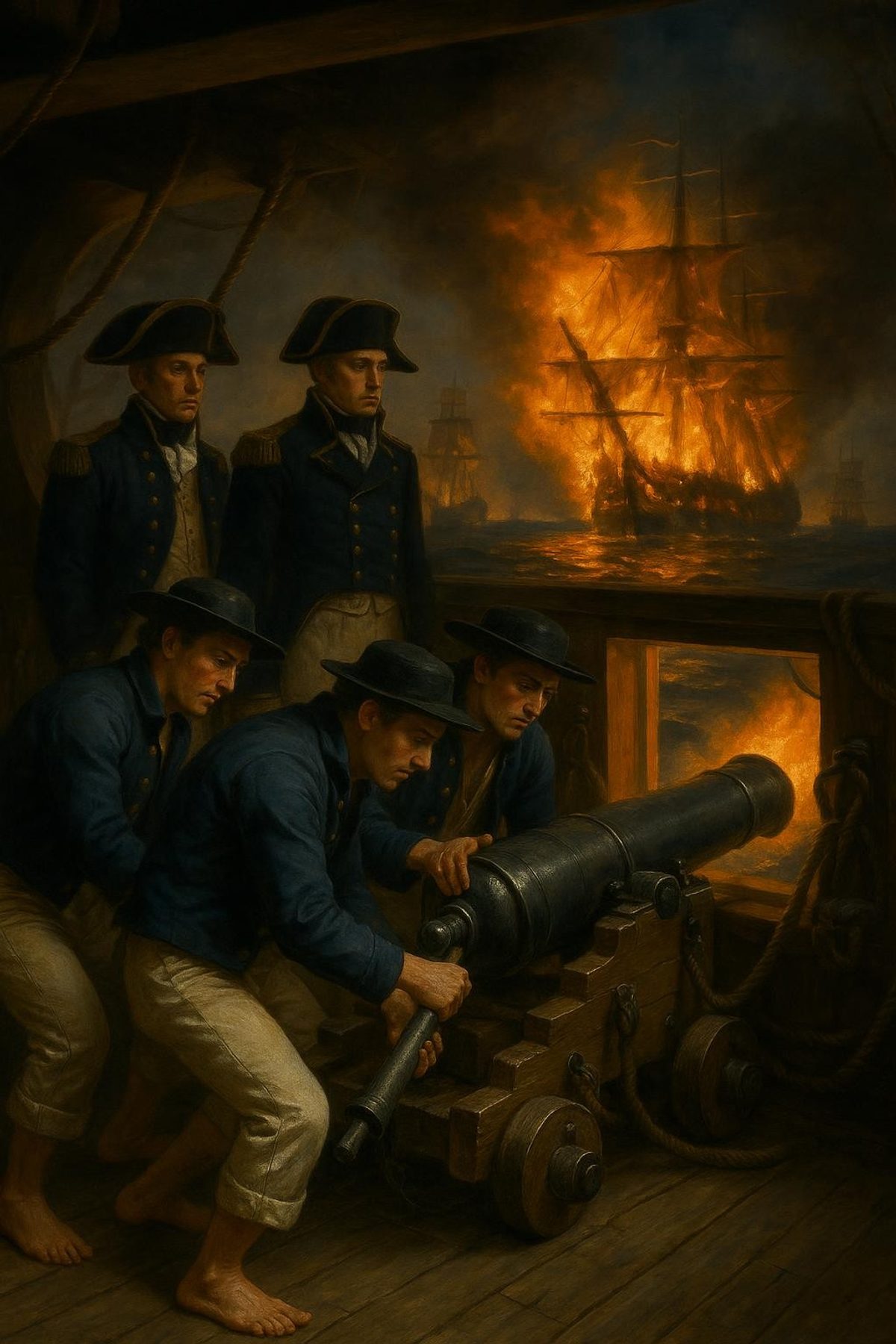
August 1, 1798. The sun dipped behind the Egyptian coastline, casting long shadows across the shimmering waters of Aboukir Bay. Here, beneath the tranquil surface, a scene of naval audacity was about to unfold, shaping the future of empires with a daring maneuver that no one imagined could succeed.
As the British fleet crept into the bay under the command of Admiral Horatio Nelson, they found the French anchored in an imposing line, their mighty warships aligned like unyielding sentinels of wood and iron. The French Navy, under the cover of twilight, presented a formidable barrier, their guns poised and ready. Each ship stood at attention as if daring the British to make a move. The coastline hugged the French fleet closely, daring any man to navigate those uncharted waters. It was a position considered secure by every strategist, thanks to a line of cannons facing seaward, an almost impermeable defense—at least on paper.
But the British had more than calculations on their side; they had the impetuous boldness of Captain Thomas Foley aboard the HMS Goliath. Rather than confronting the French line from the direction everyone expected, Foley had concocted a plan that was nothing short of heretical according to the rules of naval warfare. He proposed to take the Goliath into the uncertain depths between the French line and the shore—a route reportedly blocked by hidden shoals and uncharted dangers.
The decision was made under a sky growing dark with anticipation and an ocean that pulsed with the whispers of history being rewritten. As the Goliath veered from the formation, an unsettling quiet suffused the bay, broken only by the creaks and groans of ships riding the gentle swell. It's impossible to know what passed through Foley's mind as he urged his crew forward, knowing no guarantee lay ahead, only hope distilled in courage and perhaps a little madness.
Read next: The Day William Bligh Fed His Men Across an Empty Ocean
The Goliath moved into the shadowy straits closer to the shoreline, where no British captain had dared to tread. Already the air was thick with the scent of salt and gunpowder. Foley's audacity became a signal for others to follow suit, and thus a new path of engagement began. The rest of Nelson’s fleet observed this as a door swung unexpectedly open and followed through the breach, each ship heightening the tension as if the entire scenario were a powder keg waiting to explode.
In the encroaching darkness, the British fleet found itself nestled between the French ships and land, a place no sensible seaman would find himself knowingly. But strategy had fallen to daring, and daring was about to perform miracles. The French, so tightly aligned to repel an attack from the sea, were unprepared for the rain of hell that befell them from the shoreward side. Guns boomed, and flames licked the sky as the British unleashed their surprise. In the ensuing chaos, iron balls smashed through hulls, masts splintered like mere kindling, and smoke enveloped where fleets once stood.
This unorthodox method of attack disrupted the entire spectrum of French defenses. With their ship’s artillery positioned toward the sea, they were ill-compensated to repel an assault from the landward side, leaving them vulnerable and disorganized. It was as if the night itself had betrayed them, turning their focus outward upon an advancing enemy they could not see, while the true threat breathed fire between their ranks.
The victory in Aboukir Bay was profound. It ensnared Napoleon's army in Egypt, severing lines of retreat and turning the Mediterranean into a British stronghold. The crushing defeat brought glory to Nelson, whose name would forever be entwined with the courage of those who followed him into the unscripted depths to ensure a masterstroke of military genius. France's navy, thought invincible hours before, now lay in tatters, the sound of timbers breaking and men crying out becoming a funeral dirge for their ambitions in the East.
Perhaps the most poignant echo of that night is not in the mere recounting of tactical brilliance or strategic surprise but in the reminder of human audacity's perennial power. Every so often, a moment arises in history when leaders toss aside calculation, skepticism, and even fear, trusting impulse and daring instead. Foley’s decision to lead the Goliath into unknown waters reminds us that the course of events can hinge upon a singular spark of courage, lighting the way for others to follow. So too, one might find that within those silent, uncharted arenas lie opportunities for new victories and stories yet to be told.