The air was heavy with anticipation inside Drury Lane Theatre on a damp evening in 1800. Spiraling above the stage, a mist of stale tobacco intermingled with the scent of wax candles casting flickering shadows. Outside, the cobbled streets glistened from an earlier downpour, passersby huddled under worn umbrellas as they moved through London's bustling heart. Within this opulent theater, the velvet curtains stood ready to part, hiding a drama far more consequential than the evening's entertainment. On this fateful night, a shot would ring out and disrupt the lives of many, setting in motion a judicial battle that would ultimately transform the British legal landscape.
The Crime that Shook a Kingdom
As King George III entered the theater, a collective hush swept across the audience. Decked in the opulence befitting his status, the King settled into the royal box, his presence commanding the attention of all. Then, without warning, the crack of a pistol shattered the expectant calm. James Hadfield, a former British soldier, stood there, smoke curling from his outstretched pistol. Though his shot missed the King, the gravity of his attempt to assassinate the monarch could not be underestimated. Panic rippled through the audience, as they grappled with what had just occurred. Soldiers wrestled Hadfield to the ground, dragging him off to face what seemed an inevitable judgment.
Hadfield's actions were unfathomable to the public and the authorities, his treasonous attempt necessitating the ultimate punishment: death by hanging. This was an era defined by strict adherence to the law, with the voice of justice often echoing as a draconian roar. Little mercy lay in store for those who'd dare lift a finger against the crown. Yet hidden within Hadfield’s violent act lay an untold story — one of battle scars and shattered minds.
James Hadfield was no ordinary outlaw. A veteran of the Napoleonic Wars, his body bore testimony to the brutalities he endured. Injuries sustained in combat left him with a fractured skull and mercilessly altered his mind. The oppressive clangor of warfare resounded in his thoughts long after the battlefields faded. His attempt on the King’s life was not born from political conviction, but rather the tangled depths of a battle-ravaged psyche.
Read next: The Day a Black Sailor Walked Into Court and Freed Himself
The Barrister Who Dared to Defend
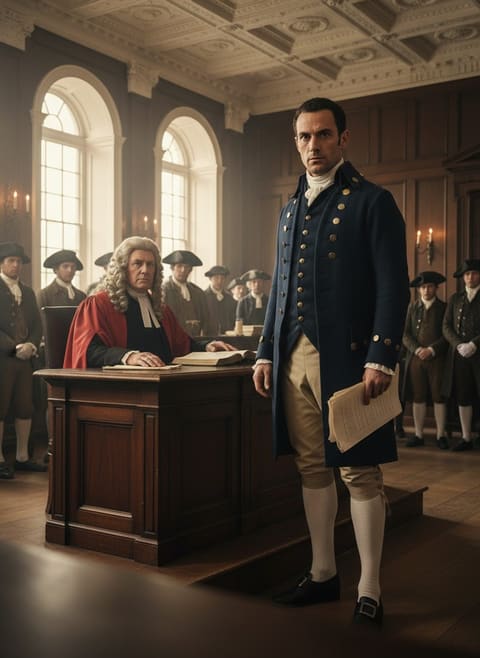
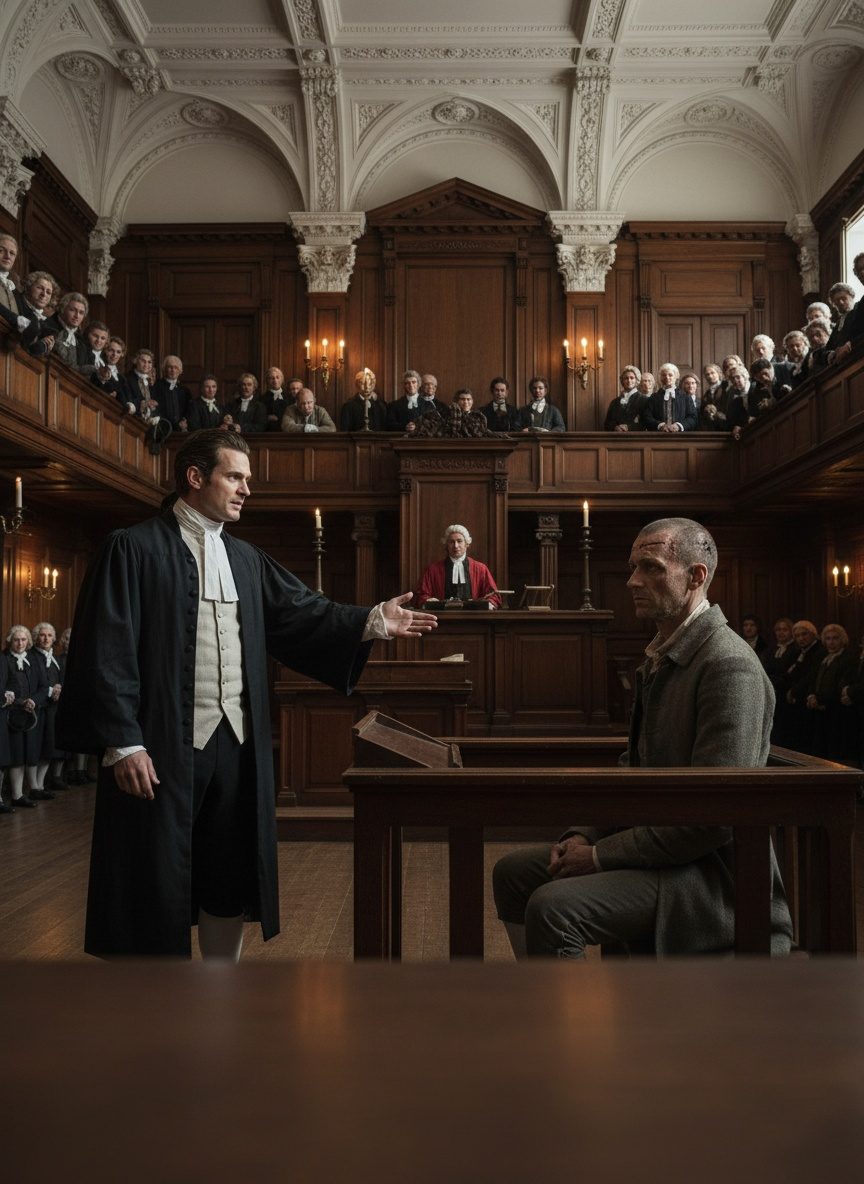
As Hadfield faced trial, the courtroom teemed with a ravenous curiosity. The public yearned for a swift verdict, and most assumed that justice would take the form of the gallows. Yet within this fervor sat a solemn figure, barrister William Garrow, a man with a reputation for defending those most lost to society. His powdered wig and dark robes were unassuming, but his mind was sharp and determined.
In those days, pleading insanity was scarcely an option. The legal system refused to recognize madness as a legitimate defense. However, Garrow saw not the madman the public decried but a soldier who was a casualty of the wars he fought so valiantly. It was in this courtroom that Garrow took on the Herculean task of proving Hadfield’s madness. His defense was unprecedented, weaving together a narrative of mental anguish and neurological decay that had never before been accepted as exculpatory evidence.
Through Garrow's unwavering dedication, a portrait of Hadfield began to emerge, painted with strokes of empathy and humanity. Character witnesses attested to Hadfield's drastic decline following his injuries, detailing how the trauma of war had left him a shadow of his former self. Medical experts were consulted, their testimony revealing the connection between Hadfield's fractured skull and deteriorating rationale. The courtroom held its breath, teetering on the edge of a groundbreaking legal revelation.
With these revelations, Garrow pursued a bold plea: Hadfield was not a murderer, but a victim of battle’s lingering grasp. The barrister argued that just as the body could be broken, so too could the mind, and it was unjust to punish a man for the fractured prism through which he saw the world.
Read next: The Day a London Clerk Walked Into Court for a Dying Slave
A New Legal Chapter
The trial’s conclusion marked a turning point. In a society rigid in its legal traditions, the court conceded to Garrow’s argument. James Hadfield was acquitted not as a criminal but as a man in need of care. His life was spared, condemned instead to the confines of Bedlam, one of Britain's most notorious lunatic asylums. This decision was more than a simple judicial outcome; it was a seismic shift in legal verdicts, laying the groundwork for the insanity defense as we know it today.
This trial prompted the British legal system to reconsider its approach to mental illness, acknowledging, perhaps for the first time, that a shattered mind could absolve a fractured deed. The public began to see beyond the rigid categories of good and evil, starting to understand the spectrum of human frailty introduced by war’s consequences.
The ripple effects of this case continue to echo throughout legal systems across the globe, where the balance between justice and compassion is perpetually weighed. William Garrow's defense set in motion a doctrine that would save many found within the shadows of their own sanity, a reminder of the human capacity to change and to forgive.
In the theater of history, sometimes it is the unexpected actors — a damaged soldier, a daring barrister — who shape the script of progress. They challenge an indifferent system to see the gray within the black and white of a world too often quick to judge. The story of James Hadfield and William Garrow remains a poignant testament to the power of empathy amidst the ironclad scales of justice, showing us that mercy, when wielded wisely, can transform not just laws, but the society they govern.