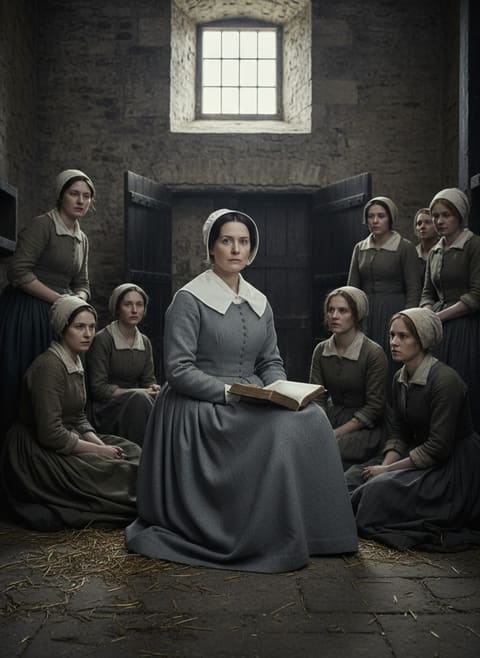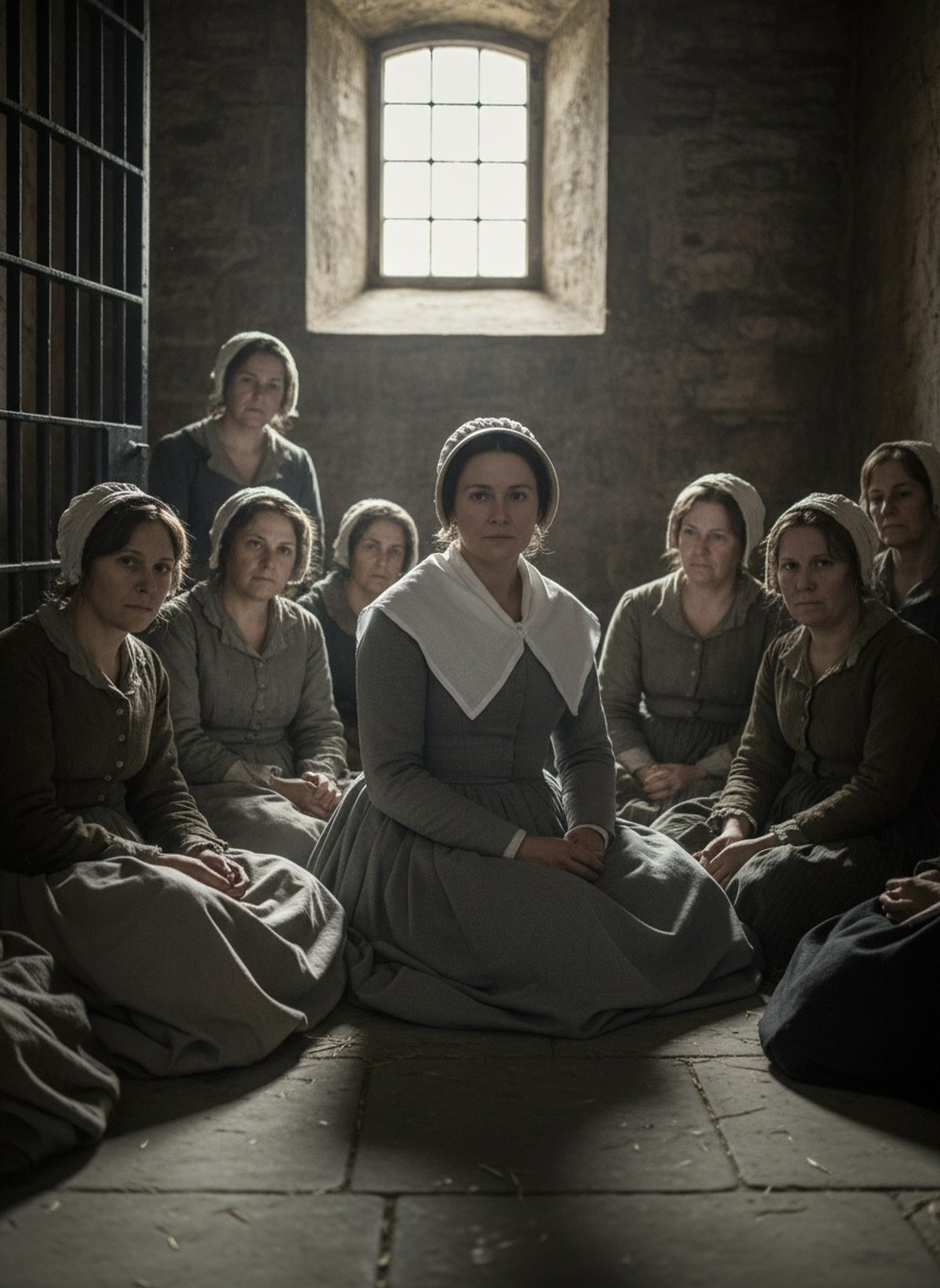
The iron door clanged shut behind her, sealing the outside world away. Inside Newgate Prison, the air was thick with the stench of overuse and neglect, mingling with the murmurs of desperate souls crammed together like livestock. Elizabeth Fry, unfazed by the suffocating air and the weight of oppressive stone walls, made her way deeper into the belly of this infamous Georgian-era institution. Her heart beat steadily—mixed with resolve and empathy—as she approached the main women's ward. Every step took her further from the city's bustling streets above and into a realm most feared and few truly knew.
For anyone else, entering Newgate could have been a one-time ordeal, a fleeting glimpse into the dark underbelly of London's justice system. But Elizabeth, dressed in her simple Quaker garb, was no ordinary visitor. She stepped into the dim, overcrowded room where three hundred women—alongside their children—were packed into space designed for a mere sixty. The scene that greeted her eyes was both chaotic and heart-wrenching: women sprawled on filthy straw-strewn floors, some clutching their infants in a vain attempt to shield them from the squalor.
Immediately upon entering, Elizabeth chose not to observe from a distance, as might have been expected from a woman of her social standing. Instead, she descended onto the floor among the prisoners, humbly taking a seat amidst them. Her presence was like a faint light in their endless twilight—a testament to her compassion and willingness to see these women not as lost causes but as human beings worthy of dignity.
Elizabeth's first visit had happened almost impulsively, but now as she sat enveloped by the presence of so many abandoned souls, she drew strength from a different source: her Quaker upbringing with its core belief in the inherent worth of every individual. In a system that commodified criminals and viewed punishment as preordained penance, her compassion was revolutionary. Fry opened a book and began to read aloud, her voice measured and soothing, offering an escape, even if just for a moment, from the clamor and despair.
Read next: The Day a Black Sailor Walked Into Court and Freed Himself
The literature she shared was not just an act of charity but a strategic gambit, steeped in Quaker ideals of self-improvement and redemption through education and literacy. As stories unfolded from her lips, a semblance of tranquility descended upon the ward, the prisoners settling into attentive listeners. These moments, tender yet profound, planted the seeds of change which, years later, would grow into systemic reform.
Elizabeth Fry's encounters at Newgate Prison mirrored the broader struggle of the time—a battle against an entrenched penal system that offered little in the way of rehabilitation. She returned to Newgate time and again, each visit fortifying her resolve and clarifying her mission. Armed with firsthand accounts and growing support from dissenting voices within society, she took her advocacy to the House of Commons, an institution as formidable as the prison bars she sought to dismantle.
In 1818, her eloquence pierced the formidable ears of Parliament, revealing a reality they could no longer ignore. Her testimony, rich with vivid depictions of the realities and indignities experienced by female prisoners, was a watershed moment. What began as a solitary crusade for compassion and reform now rippled through the corridors of power, sparking debate and igniting the stirrings of legislative change.
The reaction from politicians was mixed. Some lauded her efforts, seeing the merit in transforming punishment into an opportunity for reform; others dismissed her as idealistic. But Elizabeth was undeterred, galvanizing support from influential figures like William Wilberforce, known for his work in the abolition of the slave trade. Her dedication shone a harsh light on the inadequacies of a penal system resistant to change and demanded a national conversation that could not, and ultimately did not, recede into the shadows.
Read next: The Day a London Clerk Walked Into Court for a Dying Slave
Fry’s determined advocacy eventually led to tangible results—the founding of the Association for the Improvement of the Female Prisoners in Newgate at the tender beginning of 1817. This group, led by Fry and comprised largely of Quaker women, sought to implement basic educational and employment training programs within the prison—novel concepts in an era when incarceration often meant little more than punitive suffering.
Under Fry's influence, women and children prisoners not only received education but took part in supervised work programs—sewing, knitting, crafting—activities that did more than just prepare them for release; they instilled a sense of purpose and hope. Over time, these initiatives expanded beyond Newgate, heralding a grassroots revolution in the treatment of prisoners across Britain.
The ripples of Elizabeth Fry’s legacy extended far beyond the grim confines of the prison walls she first dared to enter. Her indomitable spirit, grounded in the principles of justice and mercy, ignited a transformative movement, leading to widespread prison reform and a reimagining of how society viewed crime and punishment. The Penal Servitude Act of 1853 and subsequent Prison Act of 1865 marked significant legal shifts towards rehabilitation, forever tying Fry’s name to the dawning of humane prison reform.
Today, Elizabeth Fry's fearless insistence that society must confront its failures stands as a powerful reminder of the lasting impact one determined individual can make in the face of systemic injustice. Her life's work invites us to look beyond the bars of contempt and punishment and to seek the humanity we share—even with those society wishes to forget. In an era when it was easier to look away, Elizabeth Fry chose to see, to listen, and most importantly, to act.