The air was crisp and heavy with anticipation on that February morning in 1554, a biting chill creeping in off the Thames as London's ancient streets lay shrouded in early dawn shadows. Horse hooves clattered against the cobblestone, the rhythmic drum echoing through alleyways still steeped in pre-dawn dimness. Queen Mary I rode determinedly through the fog, her breath visible, mingling with the steam of her horse’s nostrils. Alone, she steered her course through the heart of a city caught between loyalty and rebellion. Just a month into her tumultuous reign, the stakes could not have been higher. Behind her rode the ripples of a rebellion threatening not just her throne, but the fragile peace of a religiously fractured nation.
In the days prior, panic had gripped her advisors as Thomas Wyatt the Younger and his 10,000-strong rebel force marched inexorably toward the capital, a fiery protest against Mary's marriage to Philip of Spain—a union many feared would shackle England to foreign rule. The Queen's Privy Council, those gray watchdogs of the realm, whispered and worried, urged and implored: she should flee to the fortified walls of the Tower of London, or worse, to the distant safety of the countryside. Yet Mary, steely, a daughter of Tudors, refused to cower before the specter of insurrection. Thus, as dawn broke, she prepared to meet the threat head-on with but one ally: her indomitable spirit.
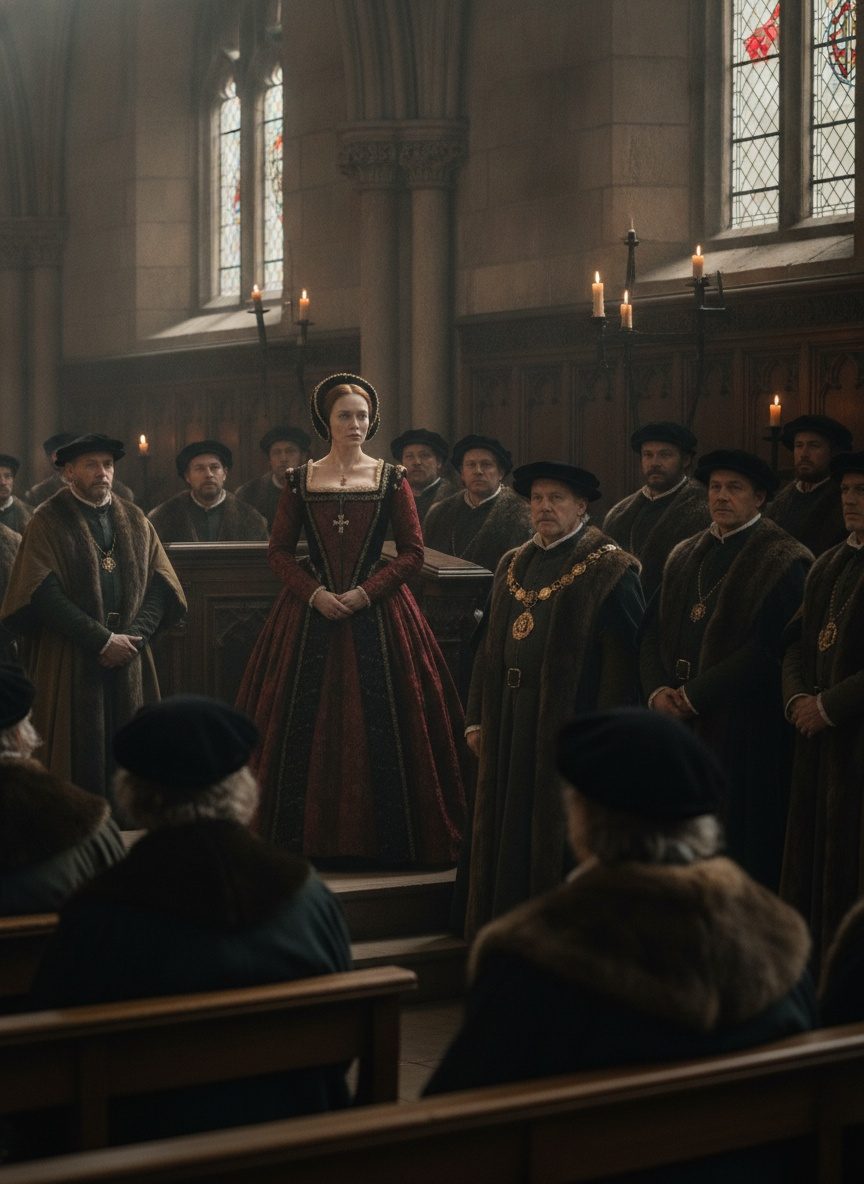
As the city awoke, the Guildhall—a grandiose symbol of London’s mercantile might—stood bathed in the pale light of a new day. Its stone facade seemed to absorb the nervous energy coursing through the city. Within, a congregation of London's leaders gathered, an amalgamation of doubt and determination wrung from sleepless nights spent pondering the fate of their Queen and country. Mary’s arrival was like the eye of a storm, bringing a solemn calm to the room as city fathers and merchants turned toward the presence of their monarch. It was here, amid this venerable company, that Mary intended to deliver what many would come to regard as one of the most forthright speeches in Tudor history.
With a steady voice that both quivered and commanded, Mary addressed her audience, her heart on full display. She cited her rightful claim to the throne, a legacy inexorably tied to her father, Henry VIII, and the precedent he had set. She spoke of her faith—not just in her divine right as Queen, but in the loyalty and courage of her subjects. The woman's voice rose and fell like the city itself, weaving its own tapestry of allegiance and conviction: she would not abandon her country to chaos, even if it meant facing the storm alone.
Read next: The Day a Young Prince Knelt and Refused a Crown
Though history immortalizes this speech almost as much for its spirit as its specifics, few knew the looming specter of uncertainty that lay just beyond those vaulted ceilings. For Mary, this confrontation was not just about the immediate threat to her rule but also a battle for the very soul of England—a country she envisioned as both sovereign and steadfast in its Catholic faith. In a realm where Protestant influence threatened to dissolve the old order, hers was a fight not only for the throne but for a way of life, one imbued with Turdor certainties.
The resolve Mary displayed, and the metaphorical armor she donned, gradually infused confidence into the assembled throng. Murmurs of agreement echoed the walls as her defiance sparked a collective flame of patriotism. Assured by Mary’s promise to defend their city even with her own life, the gates of London remained firmly closed to Wyatt’s rebels. This symbolic stand, forged in the crucible of her conviction, rippled out across the fabric of London’s streets, fostering a renewed sense of unity among a divided populace.
Read next: The Day a Queen Rode Alone Into a Mutinous Army
As history would record, this watershed moment was pivotal. The rebellion, starved of support, waited at the gates, its potential energy petered out as swiftly as it had arrived. Days later, Wyatt’s forces would falter, breaking like waves against stone as they dispersed under the tenacity of royal resolve. Once again, London had held fast, the rebellion collapsing like the spectral threat it was, a testament to the power of a single voice and the unyielding spirit behind it.
While Queen Mary I’s reign was fraught with trials—most famously her severe prosecutions of Protestant heretics and her tortured struggle for a Catholic restoration—this day before the aldermen of London stands apart as a moment of pure monarchal mettle. It is a day that escapes many a textbook, obscured perhaps by the heavy shadows cast by subsequent history; yet it is a tale that illuminates the complexity and courage in the tapestry of Tudor rule. On that February day, it wasn’t just a Queen that triumphed but an ideal—resilient and raw as the wind along the Thames. As we peer back across the centuries, her story reminds us that leadership is not merely throne and title; it’s the courage to stand solitary in the face of overwhelming odds, to speak one's truth when silence tempts most sweetly, and to strive—no matter how dark the hour—toward the light of a unified dawn.