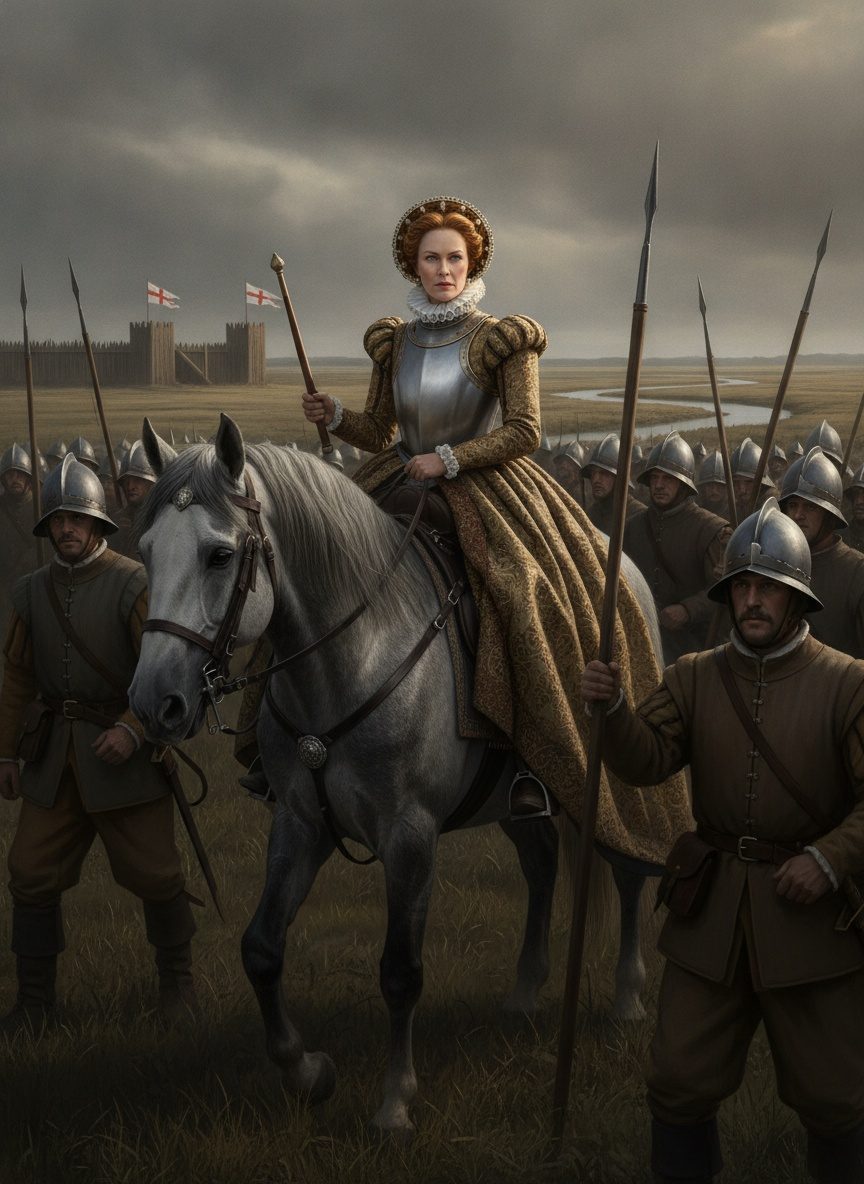
The summer sun hung heavy in the sky over Tilbury, casting long shadows of armored men across the camp. The air bristled with anticipation and anxiety, carrying the distinct clink of metal as soldiers adjusted their armour and gripped their pikes with white-knuckled determination. Just beyond, the grey waters of the Thames churned; a foreboding reminder of the dark threat lingering in the English Channel. It was August 1588, and the fate of England teetered precariously on the brink as the mightiest fleet ever assembled, the Spanish Armada, loomed with destructive purpose.
An Unlikely Scene at Tilbury
Tilbury, a modest fortification on the northern bank of the Thames, had become the nerve center for England's desperate defense against the approaching Spanish forces. Tens of thousands of soldiers, fresh from across the realm, formed a human shield between the enemy and their beloved homeland. Despite the rigorous training and high spirits, few had ever seen the face of Queen Elizabeth I—England's indomitable sovereign. To them, she was as much a myth as monarch, a distant ruler whose decisions sculpted the tides of their lives, yet whom they had never glimpsed in flesh.
Yet, in this moment of crisis, the heart of England was poised to reveal itself in an audacious display of leadership. Despite her advisors' desperate entreaties for safety, Elizabeth rode fearlessly into Tilbury without armor or formal escort, draped in a simple white gown that fluttered in the breeze. There was no formal pageantry or regal entourage; just the striking figure of the Queen atop her steed, commanding attention with her singular presence. The atmosphere shifted palpably, every eye trained upon her, as if the sun itself paused in reverence.
Elizabeth’s decision to appear at Tilbury was as calculated as it was courageous. With England's virile heart under siege, her presence was a beacon of hope, a tangible inspiration to the soldiers who would defend her crown with their lives. Her very presence underlined an essential truth: this was a nation not led from distant fortresses but by a ruler willing to stand shoulder-to-shoulder with her people. The sight of their Queen, unyielding and serene in the face of impending doom, forged a communal bond that steel and powder could not.
Read next: The Day a Young Prince Knelt and Refused a Crown
A Speech for the Ages
The assembled troops stood in rapt silence as Elizabeth paused before them, her gaze sweeping across the ranks of men ready to lay down their lives in her name. She did not shout above the clamor but spoke steadily, her voice carrying a gravitas born from both regality and genuine empathy. Her speech was brief yet eloquent, a masterful blend of vulnerability and strength that spoke directly to the souls of those who would hold the line at Tilbury.
"My loving people," she began, bridging the chasm between monarch and subject with an open heart. The Queen acknowledged the palpable fear that colored the air, the whisper of death that flitted through the ranks. But more than fear, she invoked the spirit of unity and sacrifice, wrapping her soldiers in her words like a mother protecting her children. The most famous line of her speech, now etched into history, rang out as the rallying cry of a nation: "I have the heart and stomach of a king, and of a king of England too."
The metaphorical heart she spoke of was more than a boast. It was an assertion of shared identity, a declaration that her leadership was as potent as any king’s, rooted not in mere tradition but in personal resolve and shared purpose. Elizabeth’s address forged an intimate connection, reminding her men that the cause was collective, the stakes personal. Each word emboldened her listeners, fusing their wills with iron resolve.
In that moment, Elizabeth established herself not just as a queen but a unifying presence. Her speech reverberated through Tilbury, igniting a spark of determination amongst the ranks. She was no mere figurehead but a leader worthy of the loyalty and devotion of her staunchest defenders. Her words transcended the battlefield, echoing through centuries as a testament to leadership defined by courage and affinity between ruler and ruled.
Read next: The Day a Queen Rode Alone Into a Mutinous Army
The Heart of a Sovereign
The days that followed saw the Spanish Armada scattered by winds and fire, their fleet reduced to a fragmented ghost of its former power. Myths and legends grew in its wake, but the strategic fortitude shown by the English navy, combined with fortuitous storms, turned the tides of invasion. Yet, amidst tales of naval tactics and seafaring bravery, the enduring vision of Elizabeth at Tilbury remained the most luminous beacon of resilience.
Back at court, advisors praised her for steeling England's heart, while abroad she was lauded as a political force to be reckoned with. Her actions at Tilbury transcended mere wartime posturing; they encapsulated a profound expression of what it meant to lead with ingenuity and steadfast resolve. Elizabeth had not only safeguarded her realm against foreign incursion but had indelibly shaped the narrative of her reign through acts that fused regality and maternal care.
The day Elizabeth rode into Tilbury unfolded like an epic, not because of the clash of ships or the thunder of cannons but for the indomitable spirit of a Queen who understood the true wealth of her empire. In her refusal to cower, she set a precedence in leadership that whispered through the corridors of time, urging future rulers to meet challenges not with fear but with courage and a heart as resolute as hers.
Echoes of that decisive moment continue to resonate, inviting us to contemplate lessons of unity and resolve in times of crisis. Elizabeth’s presence at Tilbury teaches us that beyond the power of fleets and armies, true sovereignty is found in the bond between a leader and their people, and in the fearless heart that sustains them both.