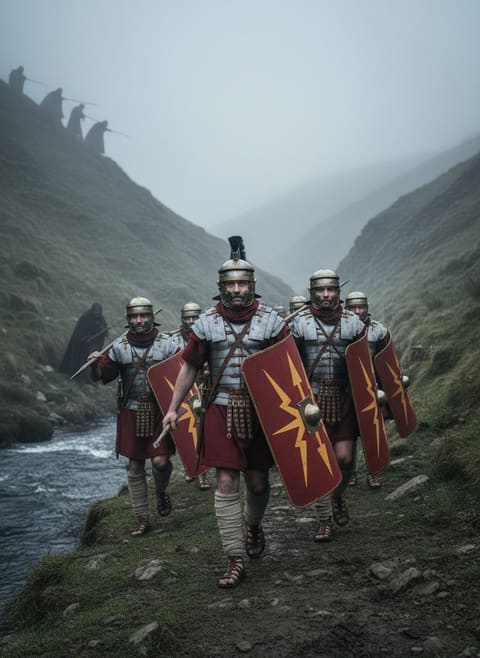
Gnaeus Julius Agricola was a textbook Roman governor. But he wasn't.
The Governor Who Defied Orders
The landscape of Roman Britain was an ever-changing chessboard of territories, alliances, and conflict, with the Emperor's word as law. Yet, in 83 AD, one man found himself at odds with the directives from Rome. Gnaeus Julius Agricola, the governor of Britain and a seasoned tactician, was in the thick of his campaign against the tribes of Caledonia, known today as Scotland. Rome preferred a calculated approach, advising Agricola to consolidate previously acquired territory rather than stretch their supply lines thin in the unpredictable northern reaches. However, Agricola's ambition urged him forward, aiming to bring even this wild land under the Roman yoke.
As Agricola pushed north, his scouts reported troubling news. Nine cohorts, approximately 4,500 legionaries, had been encircled in the dark Scots night. The tribes of Caledonia, expert in guerrilla warfare and well-adapted to the terrain, plotted an ambush that would crush the Roman force. The Emperor Domitian, already displeased with Agricola’s aspirations for further conquest against advisement, had anticipated such a crisis. Perhaps he even welcomed it as a pretext to rein in his bold governor.
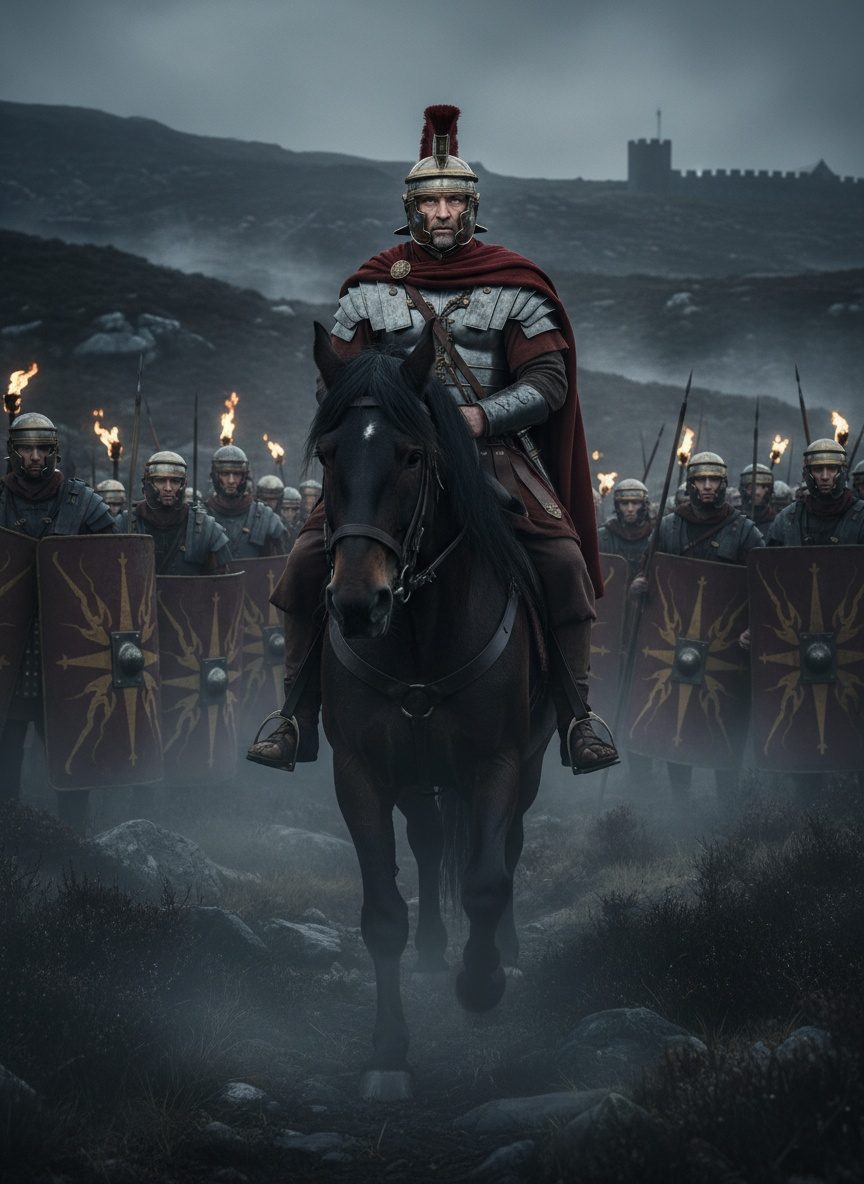
But Agricola was made of sterner stuff. When the news reached him, he faced a moment of reckoning. Rome's interests demanded withdrawal, and his career could very well end if he defied the Emperor's strategic dictate. Yet, the lives of his men—the kinship forged in marches and battles—demanded action. With a resolve that only history would vindicate, he prepared his horse and personally rode into the heart of the impending disaster.
Read next: The Day a Roman Slave Left a Message That Outlasted an Empire
A Night Cloaked in Chaos
The heart of Caledonia was unforgiving terrain. Dense forests and misty hills provided cover for the native tribes to skulk unobserved, waiting for the opportune moment to pounce. Agricola rode under the cloak of darkness, each footfall of his steed a step into uncertainty. What awaited him was the chaos of war, painted in a palette of shadows and sounds where the clamor of clashing swords and desperate cries echoed through the night.
The besieged troops were on the brink of collapse when Agricola charged in. Shouts of recognition and renewed hope arose as their governor arrived, rallying the embattled men. His presence invigorated the troops, injecting a burst of morale that turned wavering lines into shields of iron standing firm against a flood of fierce Caledonian warriors. Night blurred into day as the battle raged on, with Agricola at the helm, wielding not just his sword but the undying loyalty of men ready to fight beyond their limits.
The Caledonians, caught off-guard by the governor’s intervention, found their once swiftly encircling lines fracturing under the relentless pressure of the newly energized Roman cohorts. Bit by bit, the Romans began reclaiming the high ground, forcing the tribes to break formation and retreat into the woods. While victory came at a grievous cost, Agricola's decisive intervention saved a remnant who would have otherwise perished.
Read next: The Day a Roman Officer Freed His Captive and Walked Away
Warriors and Legend
The events of that night became legend, recounted by those who survived and immortalized by the words of Tacitus, Agricola’s son-in-law and historian. While the details were likely refined with the brush of Rome’s propaganda, the core of Agricola’s valor shone through. His actions exemplified the rare breed of leadership willing to place the welfare of men over the machinations of politics, a narrative that resonated down the ages and starkly contrasted with the image of the typical Roman official.
Agricola's victory in Caledonia, albeit short-lived due to subsequent political maneuvers in Rome, bolstered his troops' confidence and strengthened Rome's grasp on Britain for a time. However, it conspicuously placed him at odds with Emperor Domitian, whose anxieties over Agricola’s growing popularity likely sealed the governor's reassignment not long after. Nevertheless, Agricola's choice to defy imperial orders underscored a critical truth: leadership is not merely the execution of commands but the ability to inspire and protect those who follow.
This episode from Roman Britain, often glossed over in the textbooks, embodies the complexity of human motivations that shape history. Agricola chose to stride into the heart of danger, demonstrating that the bonds of brotherhood and the spirit of valiant defiance can occasionally transcend the cold calculus of empire. In a world where the tide of power ebbs and flows incessantly, moments like these remain poignant tales of courage and leadership worthy of remembrance. They remind us that history is often written by the actions of those unafraid to chart a course contrary to the expected — an evergreen lesson from the past to the present.