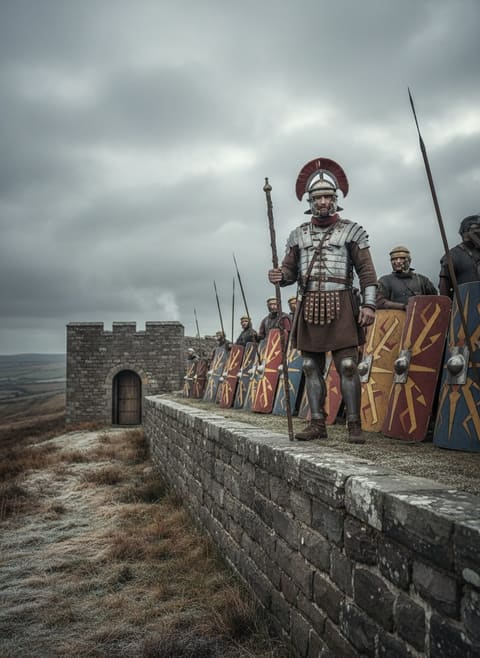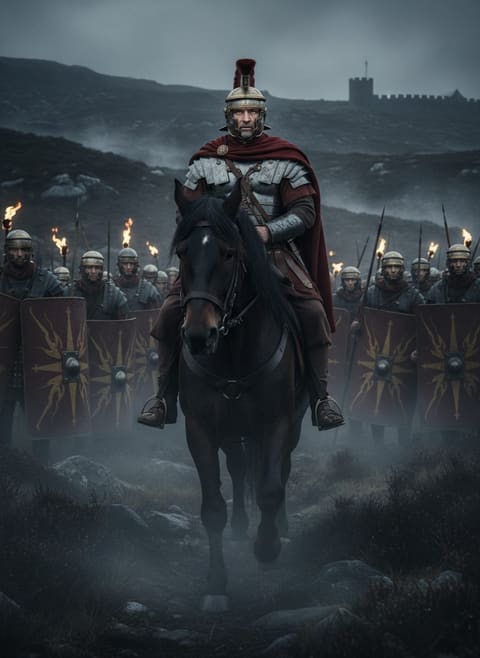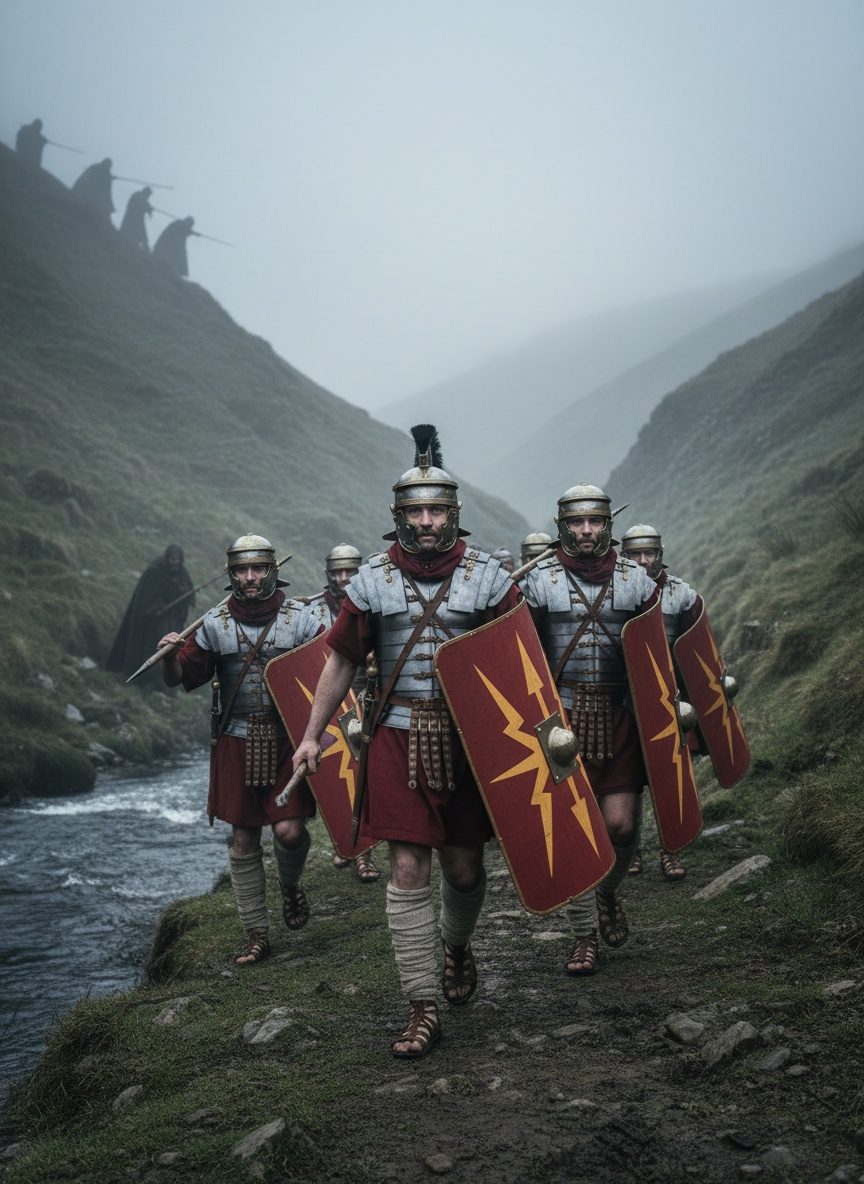
The wind whipped ferociously through the narrow Yorkshire valley, sending a shiver of unpredictability down the spine of a Roman centurion. The sound of clattering armor mingled with muted, anxious whispers as the legion pressed onward, swallowed whole by the steep, verdant slopes. Cold mist hung in the air, blurring the lines between earth and sky, infusing a sense of foreboding that whispered of ancient lands holding their breath.
In these early years of the 1st century CE, Roman Britain was a landscape of blurred lines and shifting loyalties. The message sent north spoke of conquest, of a land to be tamed. However, these hills had belonged to the Brigantes for generations, an indomitable tribe that considered the craggy dales and rolling moors a part of their very identity. Here, the rocks and the rivers were comrades who had stood with them through years of resistance, against Romans and their static lines.
As Roman boots crushed the path beneath them, the earth seemed to conspire against the invaders. This was a land that had held secrets since time immemorial, where every shadow seemed to conceal an ally of the Brigantes. These tribes, skilled and savvy in the art of guerrilla warfare, watched from the hills, unseen in the bracken and heather. To them, the home ground was more than familiar; it was an extension of themselves. They possessed an intimacy with the land that transformed it into a formidable ally.
The legion's approach echoed with the weight of iron and ambition, yet beneath the weighty rhythm, doubt whispered. The tales of Roman dominance that had snaked their way across the Empire reached the ears of those hardened Brigantes, yet they remained unbowed, unwilling to cede an inch without extracting a heavy toll. Here, in the tumultuous north of Britain, the Roman reputation faced its sternest test.
Read next: The Day a Roman Slave Left a Message That Outlasted an Empire
Legend holds that the Roman column, moving north with disciplined precision, suddenly felt the land shift beneath them, as if alive with some ancient spirit of rebellion. The way the mist wound through the trees, the eerie silence preceding a storm—everything signaled a trap waiting to spring. And spring it did. With a suddenness that stole breath more effectively than a swinging sword, the Brigantes emerged. Adorned in war paint that mirrored the dark rock of the landscape, they seemed part of the land itself, wielding spears and stones with deadly accuracy.
What followed was a skirmish etched into the soil with blood, a forgotten battle that spoke to the audacity of the Romans and the unyielding grit of the Brigantes. Within these valleys, the Roman discipline met the raw fury of indigenous resistance, a clash not destined for grand texts but significant in how it mapped the consciousness of an empire stretching too far.
The troops were ill-prepared, caught at a disadvantage by a force that disappeared as quickly as they struck. The landscape itself seemed to bow to the will of the defenders; narrow paths restricted the movement of Roman soldiery, cumbersome in their battlefield regalia, while the Brigantes, nimble and unburdened, darted through their home terrain with ease. Yet the history of Rome was not a litany of easy conquests but of tests like these. As one Roman fell beneath a volley of stones and arrows, another soldier took his place, testament to the empire's dogged persistence.
News of the skirmish, like spectral whispers on the wind, traveled slowly back to Roman command, altering strategic maps that had long thought the north an inevitable prize. To the Romans, the loss was a reminder that unfurled banners and proclamations do not always secure submission. Each lost legionnaire marked a story cut short, a reminder that the Empire's ambitions had its limits. The Brigantes, fierce and hidden, rejoiced not in the absence of Romans but in their own continued presence on the land.
Read next: The Day a Roman Officer Freed His Captive and Walked Away
The battlefields of history often turn invisible once the grass grows back, but in these Yorkshire dales, the memory lingered because it was more than just a tale of arms and tactics. It was a counterpoint in the grand symphony of Roman expansion, a scene excised from triumph to show its cost. It served as a testament that some lands resist even imperial destiny.
As the mist rose from the valleys and the winds softened against the hillsides, the account of this fractured legion exemplified the rugged determination of the Brigantes and the hubris of their invaders. This patch of Yorkshire never forgot the struggle, and in the larger expanse of Roman Britain, the dance between conqueror and conquered added a complex page to the annals of history.
In remembering this encounter, we unearth the resonance of a deeper lesson. In every place where empire seeks dominion, there will be those whose fierce resistance writes lines in the earth that no map can erase. Here in this Yorkshire valley, more than just swords clashed—ideas of sovereignty met the enduring truth that no empire, however mighty, can own the soul of a land.