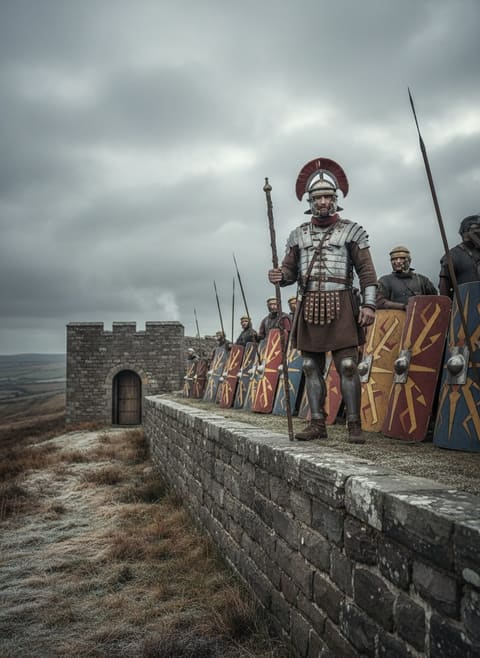
He was a Roman governor who valued dissent over destruction. Governor Paulinus understood the power of restraint.
The Brooding Shadows of Boudicca's Wrath
The rebellion of Boudicca was an eruption of molten fury, scorching its way across Roman Britain, leaving behind a smoldering trail of destruction. It wasn’t just any revolt; it was one that nearly drove Rome from the misty shores of Britannia. In the year 60 CE, Boudicca, queen of the Iceni, catalyzed an uprising that saw three major cities – Camulodunum (modern-day Colchester), Londinium (London), and Verulamium (St Albans) – reduced to ash, their populations decimated. The flames of anger spread like a fierce contagion, igniting the passions of the tribes who had long suffered under Roman dominion. An estimated eighty thousand lives were claimed in this fiery uprising, a mortal wound to the Roman prestige on the island.
In the aftermath of such devastation, Rome's response was predictable: shed blood, then more blood. Revenge was the ancient currency of power, and the Roman Empire had mastered its economy. Quintus Petillius Cerialis, the Legate of the Ninth Legion, thirsted to balance the scales with blood. Cerialis, a seasoned military leader, felt the sting of return blows as his troops tasted bitter defeat at the hands of Boudicca’s forces. A massacre of their own was the logical repartee, echoing Rome’s might across the land and marking a clear message to any who dared rebel again.
Yet, it was within this fraught landscape of vengeance and wrath that one man stood against the tide. Governor Gaius Suetonius Paulinus, commander of the XIV Gemina and XX Valeria Victrix legions, chose a different path. Where others saw the necessity of eradication, Paulinus glimpsed an opportunity for construction. Such restraint was a rarity among his contemporaries, and his choice would set the course for Roman Britain’s endurance.
Read next: The Day a Roman Slave Left a Message That Outlasted an Empire
In the Balance: A Governor's Dilemma
The decision that lay before Paulinus was unlike any other. It was a choice that had the potential to redefine the Roman approach to conquered lands. Historically, the Roman Empire had not been known for its leniency, and instances of punitive measures were numerous. But the situation in Britain required a solution beyond sheer force; it demanded a vision for reconciliation and rejuvenation.
For Paulinus, the allure of rebuilding rather than razing was undeniable. Britannia, despite the inferno of Boudicca’s rebellion, was a province simmering with potential. Vast and rich in resources, it held promise beneath the smoke-stained rubble. The governor understood that to extract the maximum value from the land, a foundation of stability was paramount. The burnt cities were not just strategic Roman settlements; they were potential epicenters of commerce, culture, and control.
The decision to rebuild was not without its critics. Many Roman officials and military leaders saw this as a softness, a blemish on Roman pride. However, Paulinus strategized with a foresight uncommon for his age. A rebuilt province would not only serve Rome’s long-term interests but also demonstrate a breadth of imperial authority that did not solely rely on the sword. It required a delicate balance of strength and diplomacy, calculated to win not just battles but the hearts and minds of the subdued tribes.
The subsequent efforts to reconstruct seized burnt cities and fortify alliances with surviving tribes were critical. Paulinus’ approach sought to restore order without the weight of an oppressive yoke. His was not a vision of tyranny but of opportunity, a novel concept that disrupted traditional Roman inclinations and left an enduring imprint on British soil.
Read next: The Day a Roman Officer Freed His Captive and Walked Away
Echoes of Prudence: A Future Forged Anew
The echoes of Governor Paulinus’ decision resonated far beyond his lifetime, shaping the trajectory of Roman Britain for centuries to come. The island, instead of starkly bearing the wounds of war and continuous revolt, was transformed into a more prosperous and integral part of the Roman Empire. This era of relative peace allowed for the flourishing of Roman architecture, infrastructure, and culture across the British Isles.
Under Roman rule, Britain evolved, seamlessly integrating into the vast network of Roman trade and cultural exchanges. Roads cut through the verdant landscapes, connecting far-flung corners of the province. Urban centers sprouted, adorned with amphitheaters, baths, and temples — manifestations of Roman ingenuity and cultural imposition. This was a time marked by gray-stone walls and bustling forums, where Romans and Britannic tribesmen alike could converge and partake in the day’s affairs.
To view Paulinus simply as a figure of authority wedged in the annals of hastily-recorded history is to overlook the sage understanding he uniquely embodied. His refusal to succumb to brutal exactitude set a precedent often praised but rarely practiced. The restraint he exercised not only salvaged a province but, perhaps inadvertently, sowed seeds of identity amongst its diverse peoples — an identity that, while tethered to Rome, began its journey towards distinctive development.
This narrative thread of mercy woven through the tapestry of Roman conquest offers a potent reflection. It reminds us that sometimes the greatest strength lies not in the power to destroy but in the wisdom to restore. The tale of Governor Paulinus is more than just another episode in the chronicles of empire; it’s a testament to the enduring impact of compassion amidst chaos, a legacy entwined with an island’s soul that withstood the tests of time.