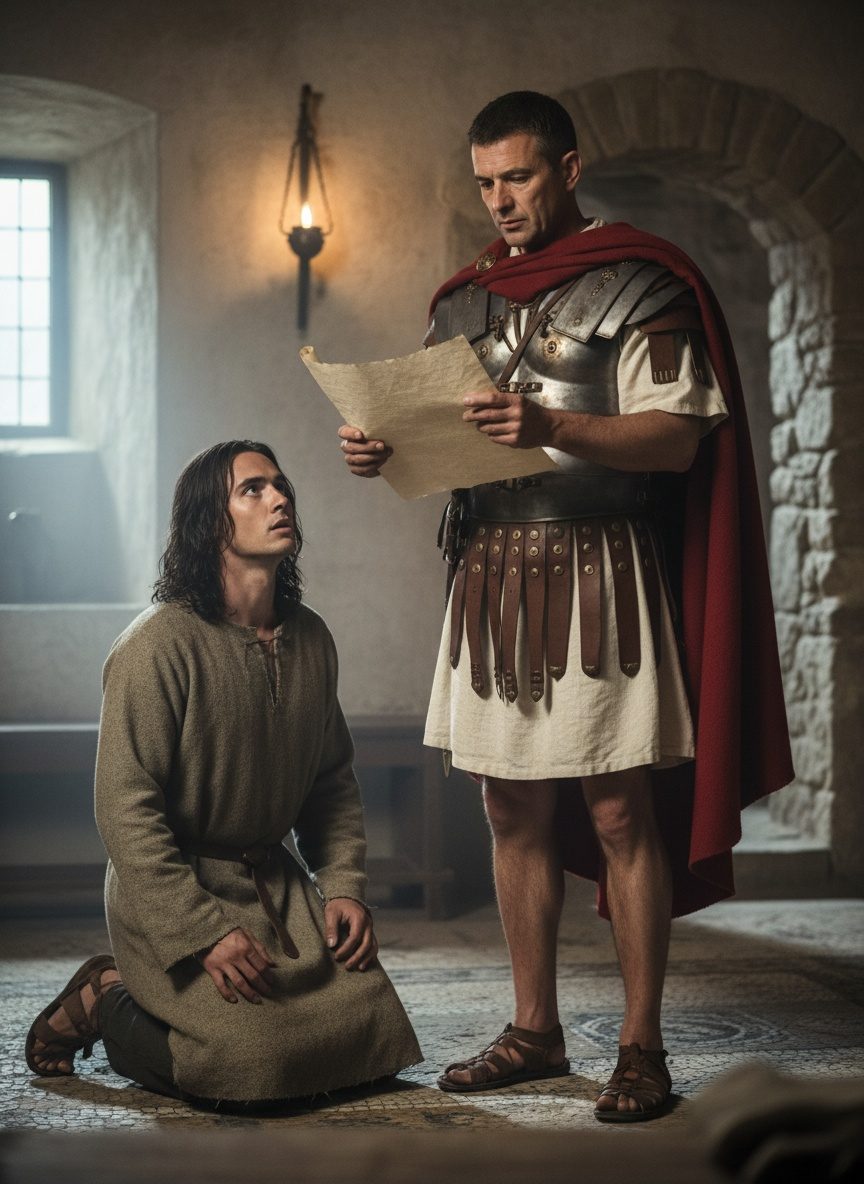
Shivering under the drizzle of a grey sky, Regina felt the familiar clink of chains around her wrists — a constant reminder of her life as a slave far from her Catuvellauni homeland. The air was electric, tinged with the earthy scent of rain-soaked earth and the salty tang of the nearby River Tyne. But even under the oppressive weight of iron, something unexpected sparked within her eyes as they met those of Barates, a Roman auxiliary from Syria, who stood across the muddy courtyard in Arbeia, a bustling fort at the edge of the Roman Empire.
What began as a mere transaction swiftly transformed into a story of unexpected liberation and love. Barates was not just there to purchase another commodity for his household. The rugged paths that led him from Palmyra to Britannia seemed to carry him right to the point of intersection where his destiny would align with Regina's. As a trader familiar with the sharp edges of human exchanges, his eyes bore not just the weariness of a man far from home but flickered with an unspoken promise of freedom.
Regina, baptized with a foreign name to ease her transition into servitude, was once part of the Catuvellauni, a tribe known for its fierce independence and resilience. Britain was a land of mists and mysteries back then, with native tribes engaged in a constant dance with Roman imperial ambitions. Despite this turbulent backdrop, the bond that formed between the trader and the slave girl was as improbable as it was transformative.
Barates saw in Regina a reflection of strength, perhaps kin to his own culture’s storied past, and he took a bold step by purchasing her freedom. In a world where a person's worth was often measured in gold or glory, his decision to buy and then free her was remarkably contrary to the norms of the time. Much to the astonishment of his comrades and the whispering Roman settlers scattered across the fort, Barates married Regina, an act both tender and radical amid the rigid social hierarchy of Roman Briton life.
Read next: The Day a Yorkshire Valley Swallowed a Roman Legion
Their life together unfolded against the daily rhythms of a Roman fort-frontier life infused with a dynamic blend of cultures. Arbeia was no ordinary outpost; it was a nexus of military precision and commercial enterprise, with its dockyards humming with goods and gossip flowing along the Empire’s veins. Barates, ever the merchant, may have found in this bustling port a certain familiar chaos reminiscent of the markets of his homeland, where Aramaic was spoken as easily as Latin.
Regina's new life was one of contrasts — the freedom to wander the fort contrasted with the haunting memories of her chains. Together with Barates, she would have partaken in the rites and revelries, from the vibrant celebrations of Roman festivals to the quieter reflections within their household. But theirs was not merely a union sanctioned by the law. Rather, it was a profound joining of two disparate worlds: the arid expanses of Syria meeting the green vastness of Britain, a harmony between Roman order and British spirit.
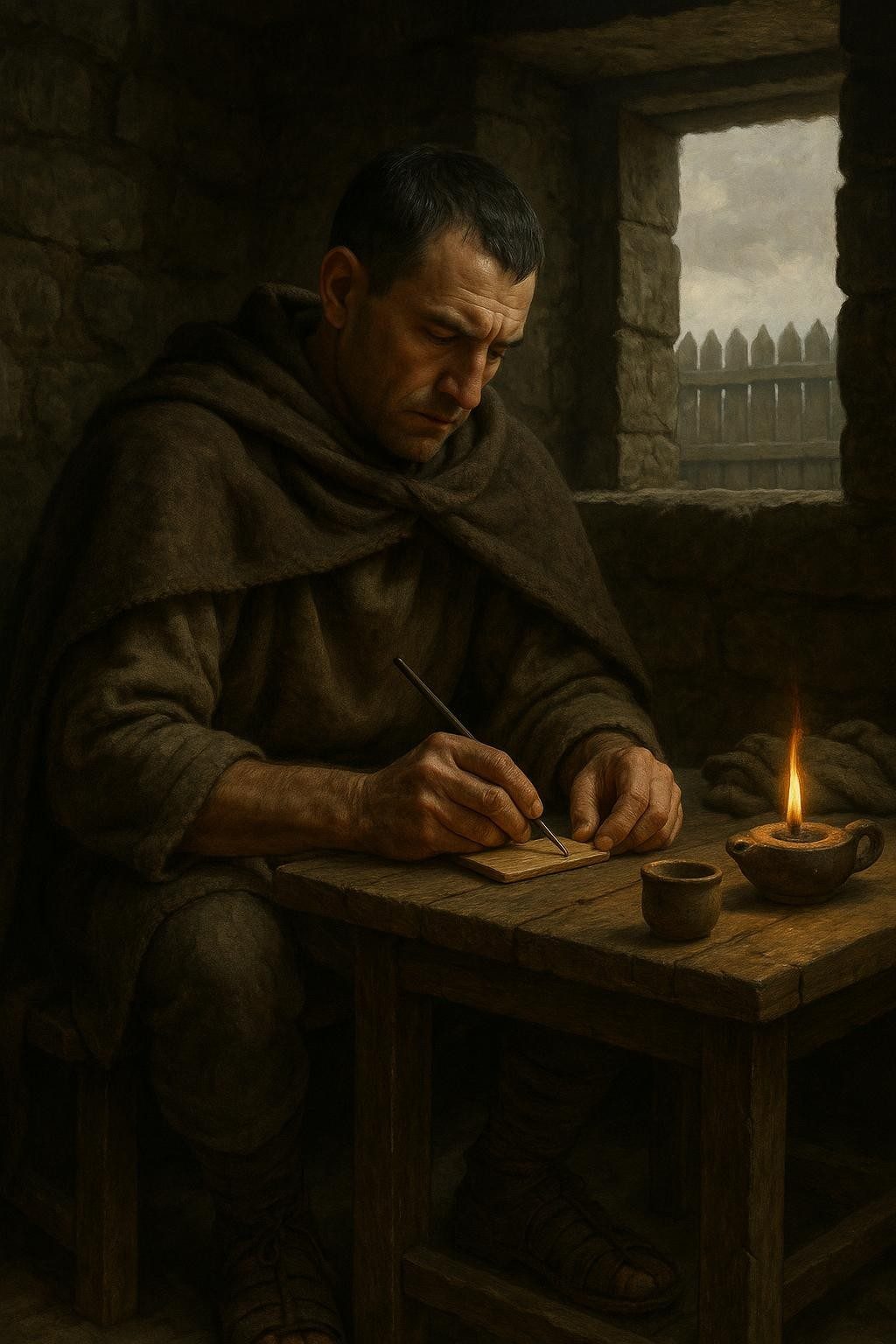
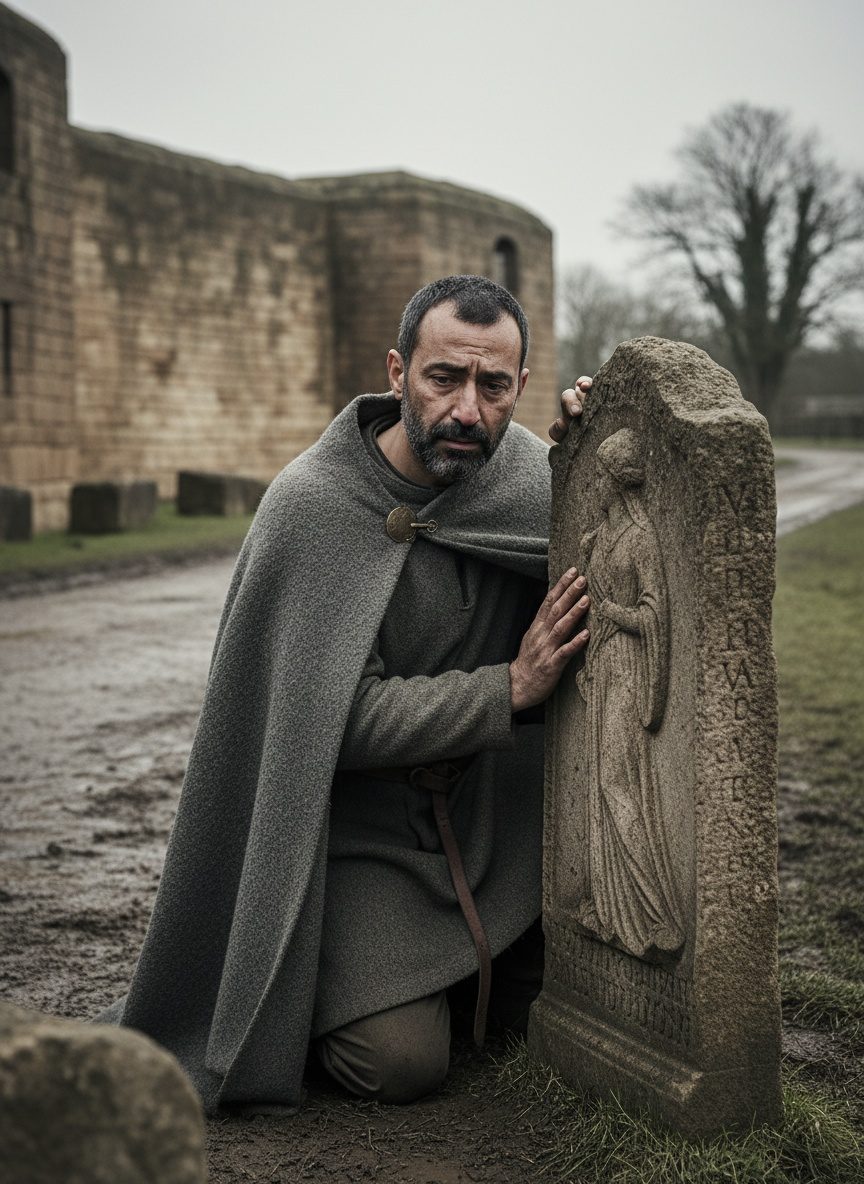
Yet, this tale of liberation and love was cruelly truncated. Regina died young, the reasons lost to time, leaving Barates to etch his grief into stone. The tombstone he carved came to be much more than a mere funerary marker; it was a testament to the life they shared. In Latin, the language of empire, and Aramaic, the language of Barates' heart, he inscribed words that spoke across centuries: to Regina, his freedwoman and wife, with unmatched devotion.
Today, that weathered stone still whispers echoes of a story that defies typical historical narratives. In it, the land of misty hills and towering Hadrian's Wall intersects with the distant sands of Palmyra, encapsulating the vibrant lesion of human migration and interaction. The tender words inscribed, translated through layers of linguistic and cultural divides, afford us an intimate glimpse into the world then. The inscription isn't a grand historical record, but rather an intimate love letter bridging two worlds and echoing through two millennia.
As modern-day historians continue to piece together the tapestry of Roman Britain, Barates and Regina’s story emerges not just as a footnote but as a poignant reminder of the myriad lives that navigated personal choices amidst historical tides that often go unrecorded. In an era usually associated with conquest and subjugation, theirs is a narrative of agency and humanity, a reminder that even on the outpost of an empire, individuals could carve out spaces of freedom and love.
The carved stone, preserved at the Arbeia Roman Fort, offers us a rare window into the soul of antiquity — a tent flap lifted if only momentarily to reveal something profoundly human beneath the battlements. As students of history stroll past the tombstone today, it’s impossible not to pause and consider the vibrant lives that once animated those weathered stones. Barates and Regina's story is more than just an anomaly; it is a call to recognize the complex tapestry of lives often glossed over in grand narratives, urging us to appreciate those gentler stories of connection and love across divided worlds.