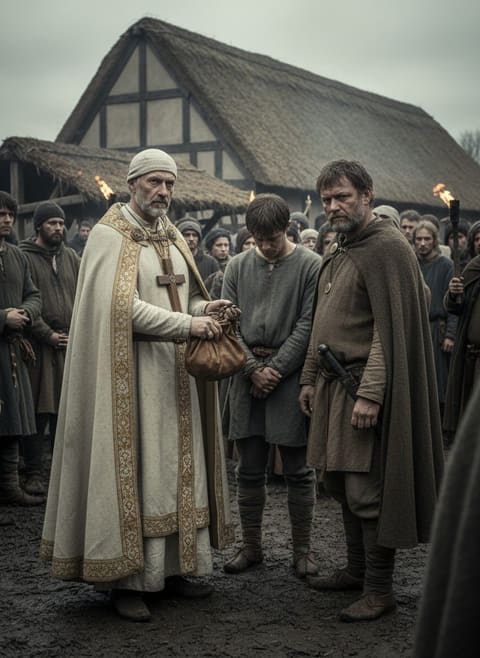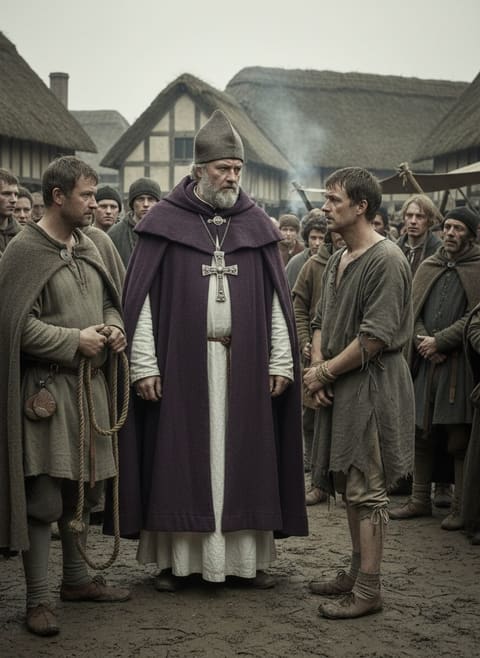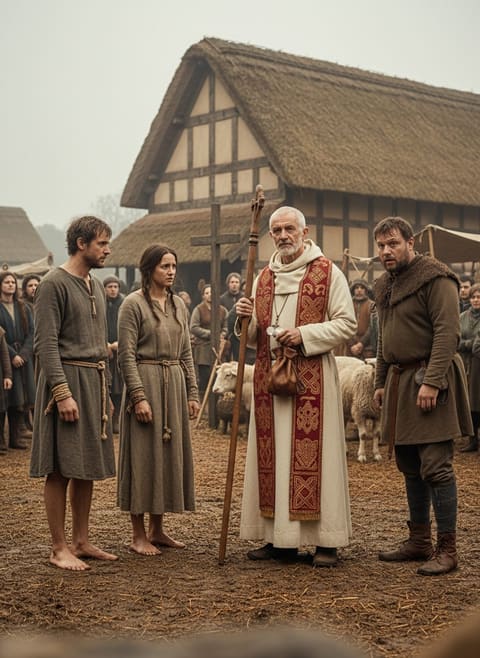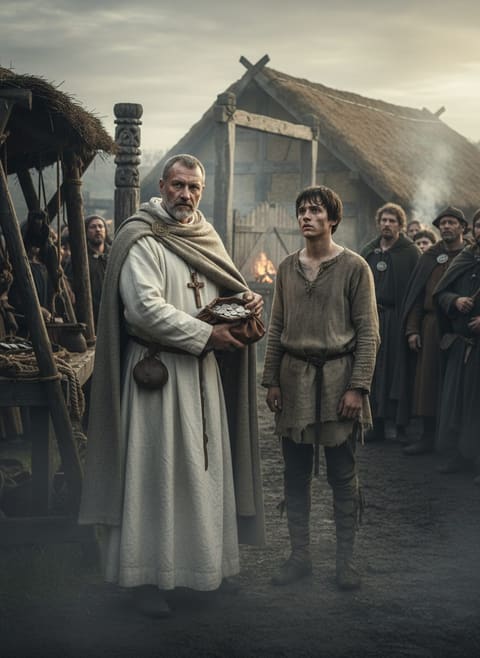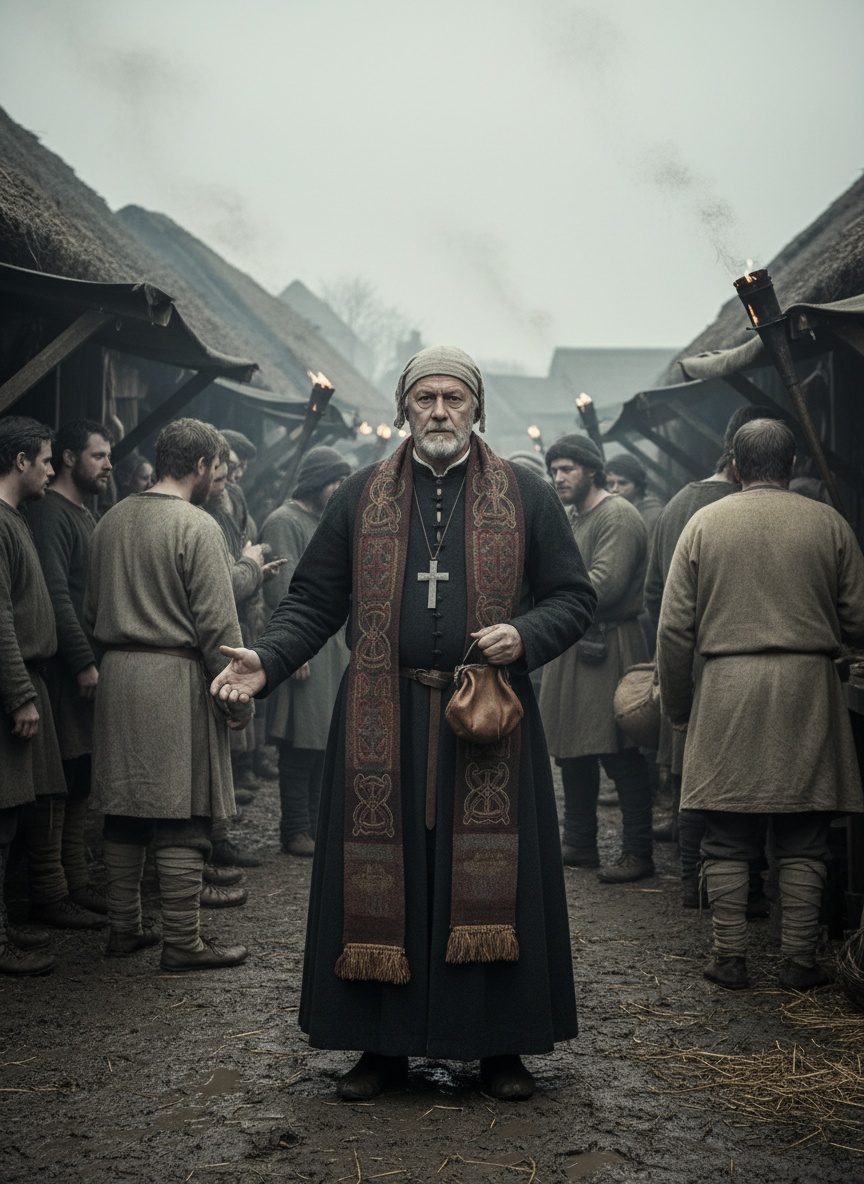
The clang of iron against wood rang out, a metallic symphony underscoring the anguished cries echoing through the bustling market square. Wulfstan of York, shrouded in the coarse robes of his office, pushed forward, the rain-slicked earth sucking at his boots with every step. His eyes, stern and determined, scanned the scene before him: a grim collection of shackled children, their eyes wide with fear and resignation, huddled together under the watchful gaze of their captors.
The Bishop's Stand
In the year 1013, the landscape of England was a turbulent tapestry of rebellion and conquest. Yet amidst the chaotic power struggles of Anglo-Saxon kings and Viking invaders, a new struggle unfolded in the heart of a market square. Wulfstan, the Bishop of York and Worcester, had long railed against the moral decay brought on by the trade of human lives. Slavery, though woven into the fabric of many societies, was a blight he could no longer abide. Renowned for his impassioned sermons and his stirring texts on Christian ethics, Wulfstan had a voice that reached far and wide. But on this day, it was not his voice, but his actions that would speak louder than any decree.
With each audible clink of coin against chain, Wulfstan negotiated freedom for those who had known nothing but bondage. His fingers brushed against the cold metal as he distributed the contents of his purse. But soon, coins alone were not enough — he emptied his pockets, his gaze never wavering from the purposeful task of liberation. As his resources dwindled, desperation set in. The bishop turned to the bystanders that loitered amid the market throng, beseeching them to contribute what they could. His plea was fervent, a palpable force that moved even the most hardened hearts to generosity.
The Road to Freedom
Against the backdrop of exchange and bargaining, an extraordinary transformation unfolded. Children who moments before had clung to each other in fear, now trod the muddy roads of liberation, their shackles traded for a guiding hand. Wulfstan led them away from the jeering calls of slavers and the clinking of yet unsold chains into a new future. These children, forgotten by law and kin, now walked a path toward hope — a distant horizon of freedom promised by a man who had risked his own wealth and wellbeing for their sake.
Read next: The Day a Saxon Abbess Stood Between a King and His Rage
As they wound their way along the path, the landscape itself seemed to carry them to brighter pastures: fields of ripening grain, thatched homesteads where life persisted in its rhythmic cycles. Together they traversed these lands bound not by compulsion, but by a shared purpose that their new benefactor had instilled within them. Each step was a step toward dignity, unburdened by the chains of the past.
A Community Unites
News of Wulfstan's defiant deed rippled through the region, a clarion call to a community more accustomed to living in parallel with the mechanics of slavery than opposing it. Yet something had shifted. Inspired by Wulfstan's actions, local churches and congregations began to mirror his revolutionary stance. Driven by the spirit of his mission, they too started to gather what they could — coins, food, clothing — to support the freed children and those Wulfstan could not rescue that day.
Read next: The Day a Small Island's Language Conquered the World
Wulfstan’s quiet revolution did not end in the bustling squares but found roots in parishes and pastoral lands. Refugees from tyranny were welcomed into an ever-growing family bound not by blood, but by shared faith and newfound freedom. The community, galvanized by the bishop’s deeds, began to open their homes and hearths to those seeking refuge from lives once steeped in darkness.
The Legacy Unfolds
The tale of a bishop who dared to stand alone in a market square slowly faded from collective memory as history plowed forward, driven by great tides of political power and conquests. Yet the ripples of his act, a moment so tender amid a sea of chaos, lingered in the heart of England. Those guided by Wulfstan’s hand carried forward the seeds of compassion and human dignity that he had planted, seeds that would take root in the moral consciousness of a society slowly awakening to the notion of liberty for all.
In our world, where echoes of inequality and the timeless pursuit of justice persist, the story of Wulfstan's walk into that market reminds us of the strength found in individual choices and the profound impact they can have. Though absent from the pages of many textbooks, the tale of Wulfstan of York offers a timeless lesson: the power of conscience when embodied in action. As currents of history continue to unfold, it whispers to us still — that change often begins with a single step, taken in faith, in defiance of the world as it is, toward the world as it could be.